
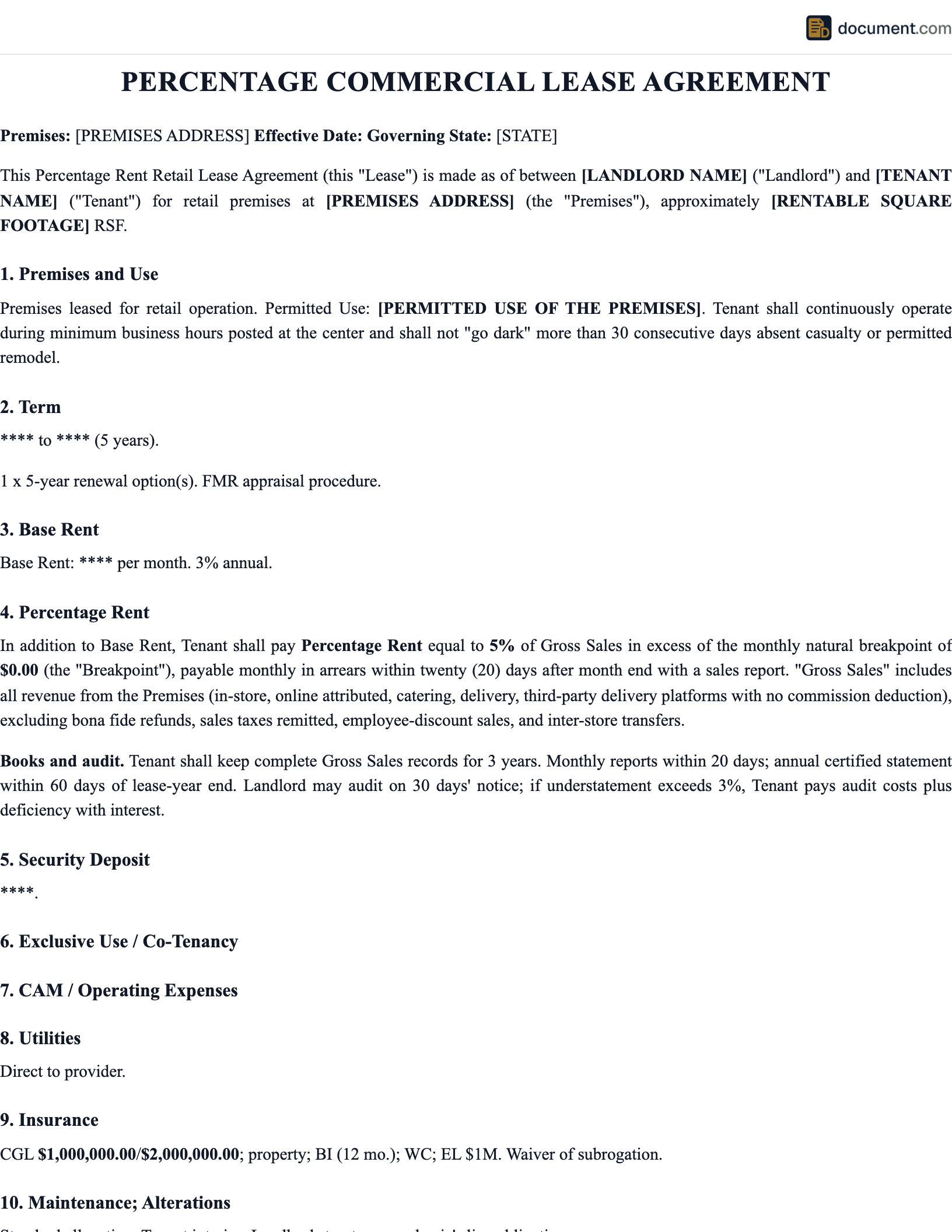



Georgia Percentage Lease Agreement Overview
A Georgia commercial percentage lease combines a fixed base rent with a variable component tied to the tenant's gross sales. The variable rent kicks in when annual sales exceed the breakpoint, generating additional rent at the agreed percentage rate. This structure aligns the landlord's income with the tenant's commercial success and is especially common in Georgia's larger retail environments, where landlords are willing to accept a lower base rent in exchange for a share of sales upside.
Georgia's most significant percentage lease markets are concentrated in metro Atlanta. Major regional malls in Fulton, DeKalb, and Gwinnett Counties use percentage structures for anchor and inline tenants. Outlet centers and lifestyle centers in suburban Georgia rely on percentage rent to share in strong tourist-driven sales volumes. Georgia courts enforce commercial lease terms as written, with no commercial rent tax or documentary stamp tax at execution to complicate the rent structure. The gross sales definition and breakpoint are the two provisions most likely to be disputed during the lease term, so both should be drafted with specificity.
$10
Filing fee
Required
Notarization
0
Witnesses required
Superior
Filing office
Georgia Percentage Lease Requirements
Georgia enforces percentage leases as written contracts. The gross sales definition and the breakpoint calculation are the most contested provisions in Georgia percentage lease disputes. Both must be defined precisely because Georgia courts apply the lease language literally without implying terms the parties omitted.
Define Gross Sales for Georgia Operations Specifically
Georgia's retail market includes both traditional in-store sales and significant online and omnichannel fulfillment activity. A gross sales definition that fails to address whether online orders fulfilled from Georgia store inventory count as gross sales creates a dispute waiting to happen. Atlanta area retailers with buy-online-pick-up-in-store or curbside fulfillment operations should negotiate an explicit exclusion or inclusion before signing.
Key Lease Provisions
- Gross Sales Definition: Complete enumeration of what is included and excluded from gross sales, with explicit treatment of Georgia sales taxes, returns and allowances, employee discounts, gift card sales, online and omnichannel transactions, and any wholesale or affiliate sales
- Breakpoint and Percentage Rate: Whether the breakpoint is natural or artificial, the annual dollar threshold, the percentage rate applied to sales above the threshold, and how partial lease years are handled
- Reporting Obligations: Frequency of gross sales reports (monthly or quarterly), the annual certified statement requirement, the deadline for each report, and the consequence of late or inaccurate reporting
- Audit Rights: Landlord's right to audit tenant records, the lookback period, the overbilling threshold that triggers the tenant's obligation to pay audit costs, and confirmation that a completed audit is final for the audited period
- Co-Tenancy and Exclusivity: Co-tenancy protection tied to named anchor tenants or center occupancy thresholds, and an exclusivity provision defining the protected merchandise or service category
How to Negotiate a Georgia Percentage Lease
Negotiating a Georgia percentage lease requires financial modeling and careful legal drafting. The steps below reflect how experienced Georgia commercial real estate counsel approach these transactions.
Model the Breakpoint and Percentage Rate
Before negotiating, calculate the natural breakpoint at several proposed base rent and percentage rate combinations. Compare those against actual or projected sales for the Georgia location. If the landlord proposes an artificial breakpoint below the natural level, model the additional rent cost at several sales scenarios. Atlanta regional mall locations can have wide sales volume swings depending on anchor tenant mix and overall center performance, so model a realistic range.
Negotiate the Gross Sales Definition
Identify every revenue category your Georgia operation generates and confirm whether it is included or excluded from gross sales. Push for explicit exclusions for Georgia state and local sales taxes, returns and allowances, employee purchases at discount, gift card proceeds at the time of issue, and online orders fulfilled from locations other than the leased Georgia store. If your Atlanta retail operation has omnichannel or buy-online-pick-up-in-store activity, negotiate that treatment specifically.
Secure Co-Tenancy and Exclusivity Provisions
Request co-tenancy protection tied to named anchor tenants at the Georgia shopping center. If an anchor vacates and the center's foot traffic drops materially, a co-tenancy clause should provide a rent reduction right or a termination option after a cure period. Request an exclusivity provision prohibiting the landlord from leasing to a retailer selling the same primary merchandise category at the same center. Georgia courts enforce these provisions as written.
Establish Reporting and Audit Procedures
Agree on monthly or quarterly gross sales reports, an annual certified statement deadline, and clear consequences for late or inaccurate reporting. Negotiate the landlord's audit rights to a defined lookback period of one to two years and limit the tenant's audit cost obligation to situations where the underpayment exceeds a meaningful threshold. Specify that a completed audit is final for the audited period.
Execute and Retain Originals
Execute the lease with authorized signatures from both parties. Georgia does not impose a documentary stamp tax or commercial rent tax on percentage leases. Retain fully executed originals for both parties. Optional recording with the clerk of superior court in the applicable county provides constructive notice.
Georgia Percentage Lease Transaction Costs
Below are the typical costs associated with negotiating and executing a Georgia commercial percentage lease. Georgia does not impose a documentary stamp tax or commercial rent tax on leases.
| Fee / Cost | Typical Amount |
|---|---|
| Attorney (Tenant), lease negotiation | $1,000 - $4,500 |
| Breakpoint Modeling and Sales Projections | $500 - $1,500 |
| Annual Sales Reporting and Certification | $300 - $800 per year |
| Audit Defense (if triggered) | $1,000 - $4,000 |
| Optional Clerk of Superior Court Recording | $25 |
Sample Georgia Percentage Lease Agreement
Below is a preview of our Georgia-specific template. Your customized document will include all fields and provisions required for filing in any Georgia county.
PERCENTAGE LEASE AGREEMENT
STATE OF GEORGIA
Legal Document Template
LANDLORD
Name: [Full Legal Name / Entity]
Property: [Shopping Center Name]
Address: [Property Address]
TENANT
Name: [Business Entity Name]
Trade Name: [DBA / Store Name]
Address: [Current Address]
Tax ID: [EIN]
PREMISES
Suite: [Number]
GLA: [Gross Leasable Area SF]
Use: [Permitted Retail Use]
Exclusive: [Product Category]
FINANCIAL TERMS
Base Rent: $[Amount]/month
Percentage Rate: [%]
Breakpoint: $[Amount]/year
CAM: $[Amount]/SF
Deposit: $[Amount]
Georgia Percentage Lease Agreement FAQ
Answers to common questions about filing a percentage lease agreement in Georgia, including requirements, fees, and procedures.
Official Georgia Resources
Use these official state resources to verify requirements, find your local filing office, and access government forms for Georgia.
Related Georgia Documents
Depending on your situation, you may need additional documents alongside your Georgia percentage lease agreement.
Create your Georgia Commercial Percentage Lease Agreement in under 5 minutes.
Answer a few questions and download a Georgia-compliant document, ready for the state agency.