



Oklahoma Eviction Notice Overview
Oklahoma Uses 5-Day Notice, Not 3-Day
Under 41 O.S. §131, Oklahoma requires a minimum 5-day notice for non-payment of rent. A 3-day notice would be legally insufficient. The only exception is for drug-related criminal activity on the premises, where immediate termination may be available under §132.
Oklahoma's Residential Landlord Tenant Act (41 O.S. §101 et seq.) governs evictions in the state. For non-payment of rent, §131 requires a 5-day written notice to pay or quit. A 3-day notice served in Oklahoma would not satisfy the statutory requirement and the eviction would be dismissed. Oklahoma does allow immediate termination for specific drug-related criminal activity.
Oklahoma's eviction cases are filed in the district court in the county where the property is located. Small claims divisions handle most eviction filings. Tulsa County and Oklahoma County (Oklahoma City) see the highest volume of eviction cases. Oklahoma does not have rent control or local just-cause eviction ordinances, and the state law applies uniformly across all 77 counties.
5 Days
Non-payment notice
$58-$100
Filing fees
Written
Notice required
2-4 wks
Court process
Oklahoma Legal Requirements
Oklahoma's 5-day notice must comply with the Residential Landlord Tenant Act. The notice must clearly demand the specific rent amount and give the tenant the full statutory period to pay or surrender possession.
Required Notice Elements
- Written Notice: Must be in writing per 41 O.S. §131
- 5-Day Period: Five full days from service for the tenant to pay or vacate
- Rent Amount: Exact dollar amount of past-due rent only
- Tenant Names: Full legal names of all tenants on the lease
- Property Address: Complete street address of the rental property
- Consequence Statement: State that failure to comply will result in court action
How to Serve an Eviction Notice in Oklahoma
Oklahoma permits several service methods including personal delivery, certified mail, and leaving the notice at the premises. The method used must be documented for the court filing.
Prepare the 5-Day Notice
Complete all fields accurately. Verify the rent amount against your records.
Personal Delivery
Hand the notice to the tenant. Bring a witness for documentation purposes.
Certified Mail
If personal delivery fails, send via certified mail with return receipt requested.
Leave at Premises
If tenant is not present, leave at the premises in a conspicuous location and mail a copy.
File in District Court After 5 Days
If the tenant does not pay or vacate, file a forcible entry and detainer (FED) action in the district court.
Oklahoma Eviction Timeline
After the 5-day notice expires, the landlord files a FED action in district court. Oklahoma courts typically schedule hearings within 5-10 days. The process is relatively quick compared to many states.
At the hearing, if the landlord prevails, the court issues a writ of execution. The sheriff has 48 hours to execute the writ. Oklahoma's expedited process makes it one of the faster states for completing evictions.
Total time from notice to lockout averages 3-4 weeks for uncontested cases in Oklahoma. Contested cases may take 4-8 weeks. Appeals are possible but must be filed promptly and may require a bond.
Oklahoma Court Fees & Costs
Below are the typical costs associated with the eviction process in Oklahoma. Actual fees may vary by county.
| Fee / Cost | Typical Amount |
|---|---|
| FED Court Filing | $58 - $100 |
| Service of Process | $15 - $40 |
| Writ of Execution | $15 - $40 |
| Attorney Fees (optional) | $400 - $1,500 |
| Sheriff Lockout | $40 - $100 |
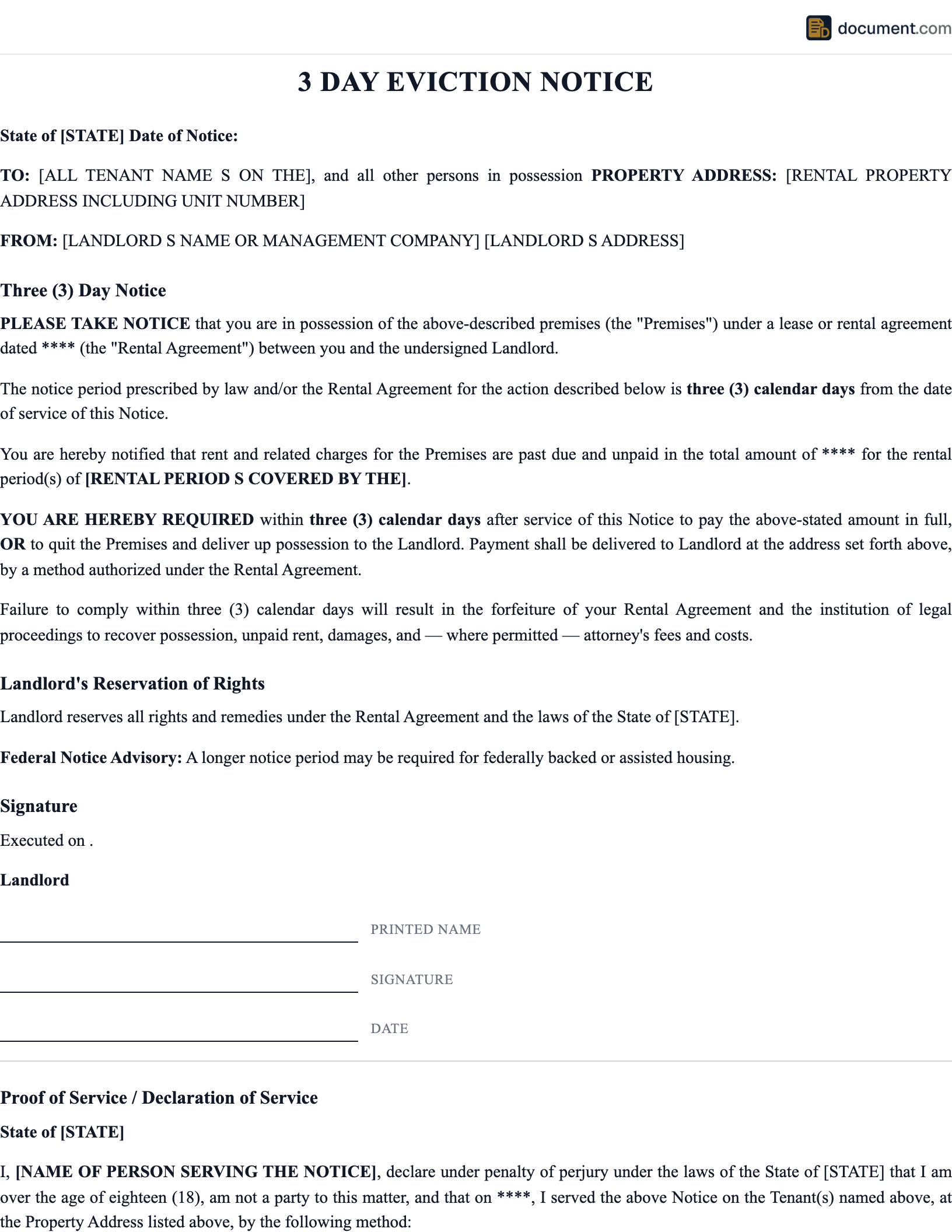
Sample Oklahoma Eviction Notice
Below is a preview of the Oklahoma-compliant eviction notice.
5-DAY NOTICE TO PAY RENT OR QUIT
STATE OF OKLAHOMA
Pursuant to 41 O.S. §131
TO TENANT(S):
Name: [Full Legal Name]
Address: [Oklahoma Property Address]
RENT DEMAND:
Past-due rent: $[Amount]
Period: [Month/Year]
NOTICE
You have FIVE (5) DAYS from service to pay the full past-due rent of $[Amount] for [Month/Year] or surrender possession. Failure to comply will result in the filing of a forcible entry and detainer action.