
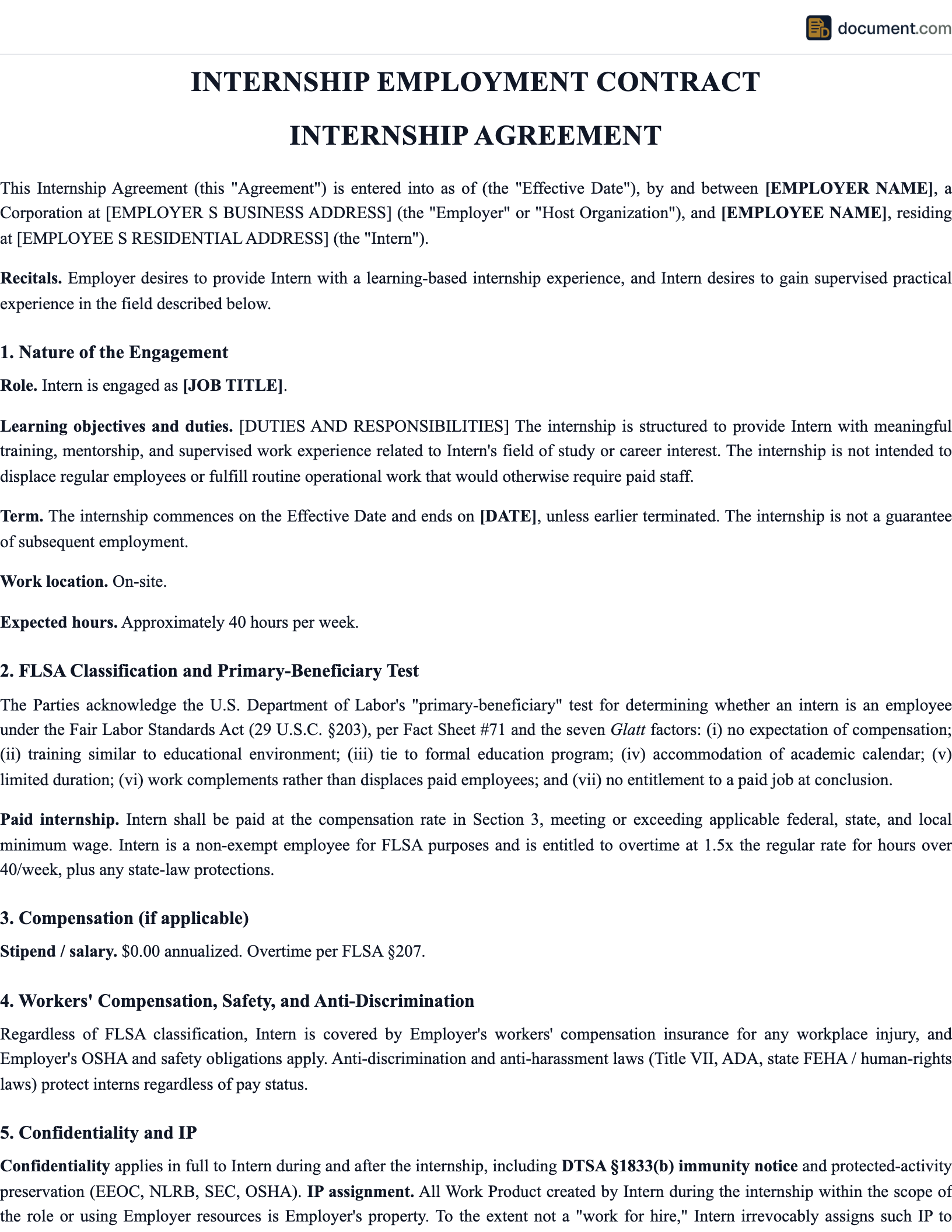



FLSA Primary Beneficiary Test
The U.S. Department of Labor adopted the primary beneficiary test in 2018, bringing federal guidance in line with several federal court of appeals decisions (including Glatt v. Fox Searchlight). The test identifies seven non-exhaustive factors:
The extent to which the intern and employer clearly understand there is no expectation of compensation. Any promise of compensation — express or implied — suggests the intern is an employee.
The extent to which the internship provides training similar to that which would be given in an educational environment, including the clinical and other hands-on training provided by educational institutions.
The extent to which the internship is tied to the intern's formal education program by integrated coursework or the receipt of academic credit.
The extent to which the internship accommodates the intern's academic commitments by corresponding to the academic calendar.
The extent to which the internship's duration is limited to the period in which the internship provides the intern with beneficial learning.
The extent to which the intern's work complements, rather than displaces, the work of paid employees while providing significant educational benefits to the intern.
The extent to which the intern and employer understand that the internship is conducted without entitlement to a paid job at the conclusion of the internship.
No single factor is dispositive. Courts weigh the factors together and consider the economic reality of the relationship. When in doubt, pay the intern — paid internships avoid the analysis entirely.