



What Is a Landscaping Contract?
A landscaping contract is the written services agreement between a landscape contractor and a property owner. It defines scope (mowing, edging, fertilization, pruning, pesticide application, irrigation, hardscaping), pricing, insurance and license disclosure, property-damage allocation, and termination. Landscaping engagements range from weekly mowing under a per-visit fee to multi-year full-service contracts that include hardscaping over the state contractor-licensing threshold (California BPC § 7048 sets the threshold at $500; Florida Stat. § 489.105 at $1,000; Arizona ROC at $1,000) and require a general or specialty license.
Several federal and state regulatory regimes govern landscape work. FIFRA 7 U.S.C. § 136 et seq. regulates pesticide products at the federal level; § 136i requires commercial applicators to be certified by the state lead agency (California DPR, Florida DACS, Texas TDA). State irrigation-licensing statutes apply to installation and major repairs in 14 states (Tex. Occ. Code Ch. 1903 for Texas; Fla. Stat. § 489.105 for Florida; Conn. Gen. Stat. § 25-126 for Connecticut). Tree work above a state or municipal diameter threshold often requires ISA Certified Arborist credentials and a permit; California Public Resources Code § 4290 and many California counties protect heritage oaks. Hardscape grading that alters drainage may trigger NPDES stormwater compliance under the Clean Water Act 33 U.S.C. § 1342.
Landscape contractors face distinctive liability exposure. Mower-thrown debris breaks windows and injures bystanders. Irrigation strikes flood basements. Chemical drift damages neighboring vegetation and creates trespass and nuisance exposure. Standard CGL pollution exclusions (ISO CG 21 49) often exclude pesticide drift; pesticide-pollution liability riders are essential. Underground utility strikes invoke state Damage Prevention Acts that impose treble damages or per-foot penalties on contractors who fail to call 811 before digging (California Gov. Code § 4216; Texas Util. Code Ch. 251; Florida Stat. Ch. 556 imposes up to $50,000 per violation).
State contractor-licensing thresholds
Roughly half the states require a contractor license for landscape work above a dollar threshold, with hardscaping treated separately. California BPC § 7048 requires a CSLB C-27 Landscaping Contractor license for any project over $500 in labor and materials; unlicensed contractors lose the right to compensation under BPC § 7031. Florida requires a state license for irrigation, electrical, and hardscape work over $1,000 (Fla. Stat. § 489.105). Texas imposes no general landscaper-license, but TCEQ irrigation-licensing applies under Tex. Occ. Code Ch. 1903. Arizona ROC requires a license for any work over $1,000 unless the homeowner is performing it themselves.
Mechanic's lien rights and 811 utility-locate compliance
Landscape contractors who install plant material, irrigation, hardscaping, or other improvements to the realty have mechanic's lien rights in most states. California Civil Code § 8400 expressly covers grading, plowing, planting, and irrigation. Florida Statutes Chapter 713 extends rights to landscape architects and contractors. To preserve the lien, the contractor must serve a preliminary notice within statutory deadlines (20 days in California under CCP § 8200; pre-lien Notice to Owner in Florida under Fla. Stat. § 713.06) and record the lien within 90 to 120 days of completion. Routine maintenance generally does not support a lien. Before any digging, contractors must call 811 under state one-call statutes; failure exposes the contractor to treble damages or per-foot penalties for utility strikes.
Seasonal Coverage
Service menus defined for spring, summer, fall, and winter.
Detailed Scope
Mowing, edging, fertilization, pruning, and hardscaping itemized.
Licensed & Insured
Pesticide licensing, liability coverage, and property damage protection.
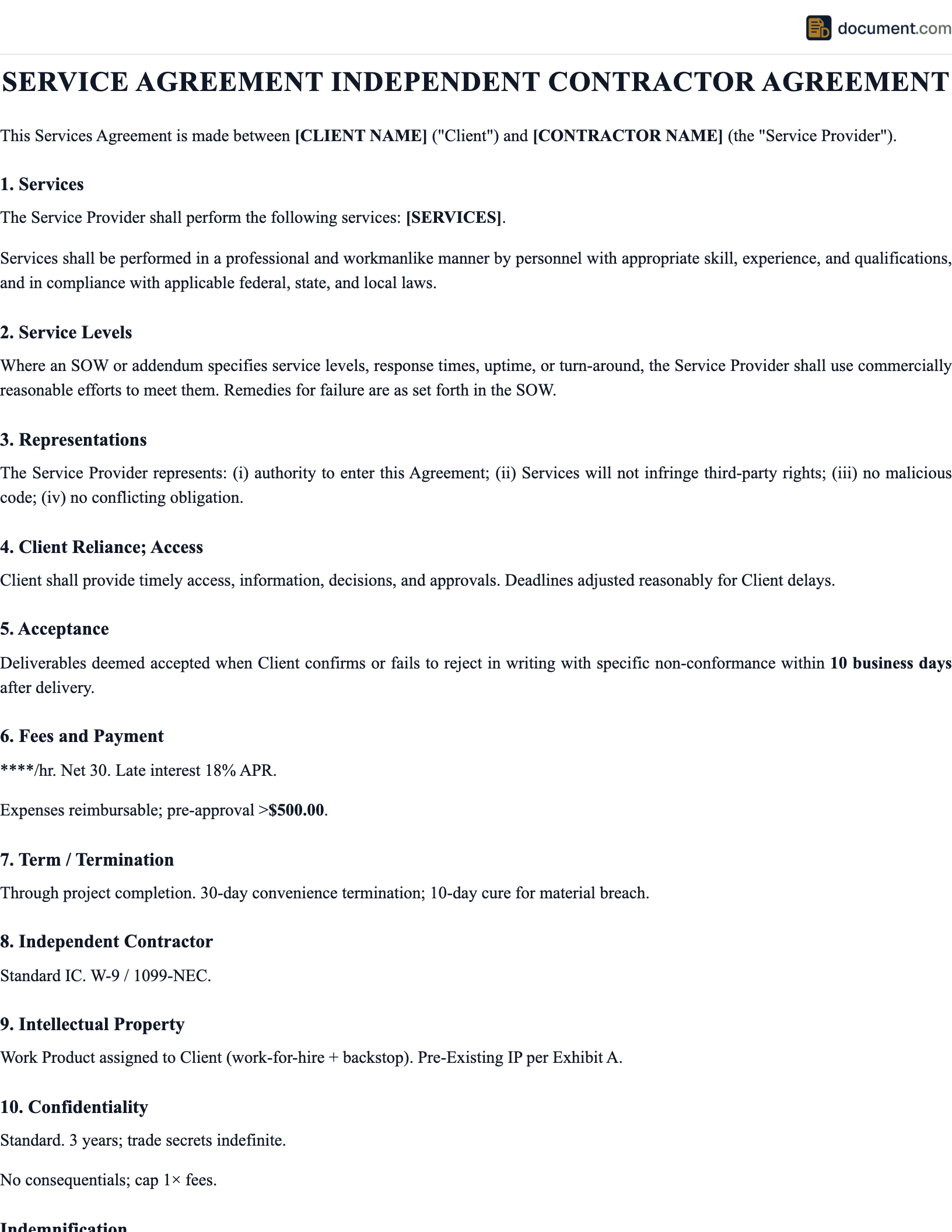
Landscaping Contract Form Preview
Landscaping Service Agreement
Property Maintenance & Grounds Care Contract
1. SERVICES
Landscaper shall provide the following services at : weekly mowing and edging, bi-weekly shrub trimming, monthly fertilization, and seasonal clean-up as detailed in Exhibit A.
2. SCHEDULE
Services shall be performed on a basis from through . Landscaper shall notify Property Owner at least 24 hours in advance of any schedule changes.
3. MATERIALS & EQUIPMENT
All equipment, fuel, and standard maintenance materials shall be provided by Landscaper and included in the contract price. Specialty plants and hardscaping materials shall be billed separately with prior written approval.
4. COMPENSATION
Monthly service fee: $. Payment due on the of each month.
Key Components of a Landscaping Contract
| Component | Purpose | Key Details |
|---|---|---|
| Service Scope | Defines lawn and landscape tasks | Mowing, edging, pruning, fertilization, pest control |
| Seasonal Schedule | Sets frequency and seasonal changes | Weekly/bi-weekly/monthly, seasonal adjustments |
| Materials & Plants | Clarifies supply responsibilities | Included materials, plant procurement, markup |
| Equipment | Addresses tools and machinery | Landscaper-supplied, fuel, maintenance |
| Irrigation | Covers watering system duties | Maintenance, winterization, repair scope |
| Pricing | Structures recurring fees | Monthly retainer, per-visit rate, add-ons |
| Insurance | Requires liability coverage | GL insurance, workers' comp, pesticide bond |
| Termination | Sets exit terms | Notice period, mid-season penalties, auto-renewal |
How to Create a Landscaping Contract
Survey the Property and Define Services
Walk the property with the landscaper to identify all areas requiring service. Create a detailed service list for each season including mowing, edging, pruning, fertilization, pest control, and clean-up tasks.
Set the Schedule and Seasonal Calendar
Determine service frequency for each season. Define the annual calendar including start/end dates for each service type, rain-delay procedures, and holiday schedules.
Agree on Materials and Equipment Terms
Specify whether the landscaper provides all materials or if certain items are client-supplied. Document equipment responsibilities, fuel, and any specialty equipment needed for the property.
Structure Pricing and Payment
Choose monthly retainer, per-visit, or seasonal pricing. Set payment due dates, late-fee provisions, and how pricing adjusts for add-on services or scope changes.
Add Insurance, Licensing, and Legal Terms
Require proof of general liability insurance and pesticide applicator licensing where applicable. Include property-damage reporting procedures, termination terms, and governing-law provisions. Both parties sign.
Frequently Asked Questions
Official Resources
NALP - National Association of Landscape Professionals
Industry standards, certifications, and professional development.
EPA - Pesticide Worker Safety
Federal pesticide application regulations and safety requirements.
SBA - Business Licenses
Federal and state licensing guidance for landscaping businesses.
OSHA - Landscaping Safety
Workplace safety standards for landscaping professionals.
IRS - Self-Employed Tax Center
Tax guidance for independent landscaping contractors.
Call 811 - Before You Dig
National utility-locating service to prevent underground damage.
Ready to Create Your Landscaping Contract?
Select your state, define your landscaping needs, and download a professional landscaping contract in minutes.
Create DocumentNo account required. Free to create and preview.