



Wyoming Disclosure Statement Overview
Wyoming is one of a small number of states that operates under caveat emptor, or buyer beware, in residential real estate transactions. Unlike the majority of states, Wyoming has no statute requiring sellers to complete and deliver a written property disclosure statement. Sellers are not legally obligated to volunteer information about the property's condition, and buyers cannot invoke a disclosure violation if the seller simply stays silent.
That said, silence has limits. Wyoming common law fraud applies to sellers who actively misrepresent or conceal known defects, even without a disclosure statute. And in practice, voluntary disclosure is common throughout Wyoming, particularly in the resort markets of Teton County where transactions routinely involve sophisticated buyers and significant sums. Mineral rights and energy leases are an additional layer of complexity in Wyoming that many buyers from other states do not anticipate, making written documentation of what is included in the sale genuinely important even when the law does not require it.
Not Required
Caveat emptor state
Voluntary
Common in practice
Fraud Applies
Active concealment prohibited
Mineral Rights
Key WY-specific consideration
Wyoming Requirements
Because Wyoming has no statutory disclosure form, there are no government-mandated requirements for content or format. However, sellers who choose to use a voluntary disclosure form should make it thorough and accurate. A poorly completed or misleading voluntary disclosure can actually be worse than no disclosure at all if it later appears the seller was trying to create a paper trail without actually conveying the truth.
Wyoming Specific Note
Wyoming sellers should pay particular attention to mineral rights and energy lease status when completing any disclosure. In many Wyoming counties, mineral rights have been severed from surface rights for generations. A buyer who does not know the mineral ownership status, or whether an oil and gas lease is in effect, may face unexpected surface access obligations from energy companies after closing. This is one of the most common sources of post-closing surprise for buyers new to Wyoming real estate.
What Wyoming Sellers Should Address in a Voluntary Disclosure
- Structural and Mechanical Conditions: Foundation, roof, HVAC, plumbing, and electrical systems
- Mineral Rights: Whether mineral rights are included in the sale or have been severed from the surface
- Oil and Gas Leases: Any active or recent energy leases that may allow access to or affect use of the property
- Water Rights: Status of any water rights associated with the property, particularly important for ranch and agricultural land
- Environmental Conditions: Any known contamination, underground storage tanks, or hazardous materials
- Known Physical Defects: Any conditions the seller is aware of that would materially affect the value or use of the property
How to File in Wyoming
Since Wyoming has no mandatory disclosure process, the steps below reflect best practices for sellers who choose to use a voluntary disclosure form, which is the practical norm in most Wyoming residential transactions regardless of what the law requires.
Research Mineral Rights and Energy Lease Status
Before completing any disclosure, verify the mineral rights status for your property at the county clerk's office. Determine whether mineral rights have been severed and whether any oil, gas, or mining leases are currently in effect. This information belongs on the disclosure and buyers will often discover it independently during title review anyway.
Complete the Voluntary Disclosure Form Honestly
Complete every section based on what you actually know. Wyoming's caveat emptor rule removes the statutory duty to disclose, but it does not protect you from fraud liability for deliberate concealment. A voluntary disclosure that you sign and hand to the buyer is a representation, and courts will hold you to it.
Deliver to the Buyer Before the Offer
Deliver the voluntary disclosure to the buyer before they make an offer or as early in the negotiation as possible. In Wyoming's higher-value markets, sophisticated buyers often request the disclosure before they tour the property. Having it ready is a sign of a prepared seller.
Get the Buyer's Signed Acknowledgment
Even in a voluntary disclosure context, obtain a signed acknowledgment from the buyer confirming they received the form. This is your documentation that the buyer had the information before they made their decision. It reduces post-closing dispute risk substantially.
Consult a Wyoming Real Estate Attorney for Complex Properties
For ranch properties, agricultural land, properties with water rights, or any parcel where energy company access rights may exist, consider having a Wyoming attorney review what should be disclosed before you finalize the form. The complexity of Wyoming's mineral and water rights law makes attorney guidance genuinely valuable for these transactions.
Wyoming Disclosure Costs
A voluntary property disclosure statement in Wyoming involves no government fees. The form is delivered directly from seller to buyer, is not filed with any county office, and requires no notarization. The costs sellers typically incur relate to preparation and due diligence, not government processing.
| Cost Item | Typical Range |
|---|---|
| Disclosure Form Preparation | Free with our template |
| Pre-Listing Home Inspection (recommended) | $300 - $600 |
| Mineral Rights Research (if applicable) | $150 - $500 |
| Wyoming Real Estate Attorney Review (recommended for complex properties) | $200 - $600 |
| Government Recording Fees | None (disclosure is not recorded) |
Seller Liability in Wyoming's Caveat Emptor Environment
Wyoming's caveat emptor rule means sellers are not required to proactively disclose property conditions, but it does not create a license to deceive. Wyoming common law fraud applies whenever a seller makes a material false statement that the buyer relies on to their detriment. Sellers who claim a basement has never flooded when they know it floods every spring, or who state that the roof is in good condition when they know it leaks, are exposed to fraud liability regardless of whether a disclosure form was involved.
Active concealment carries its own consequences. A seller who physically hides a defect before showings, covers water damage with fresh paint, or removes evidence of structural problems to make the property appear better than it is has crossed from permissible silence into fraudulent concealment. Wyoming courts treat active concealment as fraud, and the buyer's remedy can include rescission of the sale and damages.
Mineral rights omissions create a separate category of risk. If a seller knows the mineral rights are severed and an oil company holds an active lease that grants surface access rights, failing to mention that to a buyer is not mere silence. It is the omission of a fact that materially affects the buyer's use and enjoyment of the property. Wyoming courts and real estate professionals take the mineral rights issue seriously, and sellers who gloss over it in the rush to close can face significant post-closing liability.
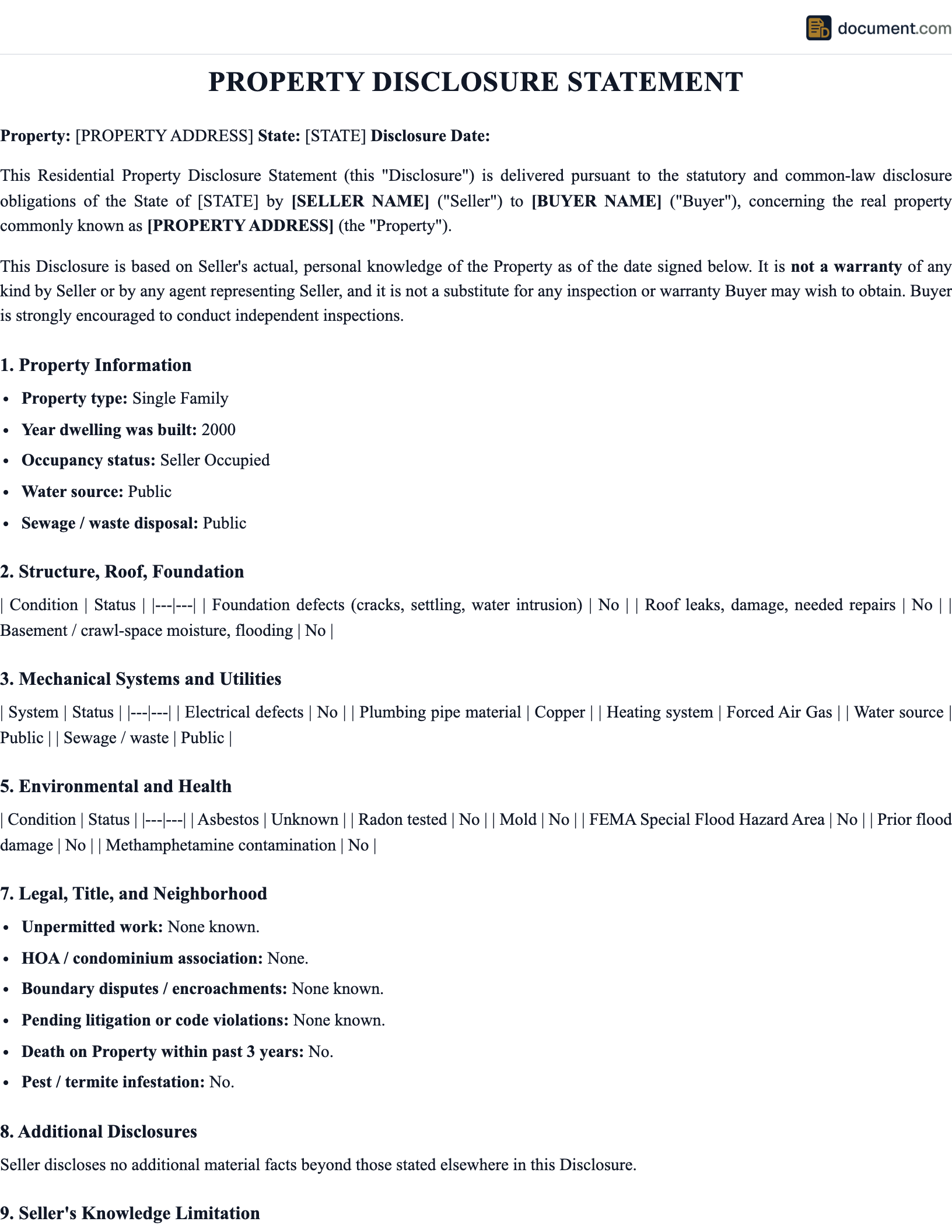
Sample Wyoming Disclosure Statement
Preview of our Wyoming-specific template. Your document will include all fields required for recording in any Wyoming county.
PROPERTY DISCLOSURE STATEMENT
STATE OF WYOMING
Legal Document
PARTY INFORMATION
Name: [Full Legal Name]
Address: [Wyoming Address]
County: [County]
PROPERTY DESCRIPTION
County: [County] State: Wyoming
Legal Description: [Per Recorded Plat]
Parcel No.: [APN]
Wyoming Disclosure Statement FAQ
Common questions about filing in Wyoming, including requirements, fees, and tax implications.
Official Wyoming Resources
Official state resources for verifying requirements and finding your local recording office.
Important Considerations for Wyoming Sellers and Buyers
Wyoming's caveat emptor rule affects both sides of a transaction differently. Sellers have more freedom than they would in mandatory disclosure states, but that freedom comes with a responsibility to avoid active deception. Buyers have less statutory protection and must conduct more thorough independent due diligence to protect themselves.
Mineral rights deserve a separate investigation in almost every Wyoming purchase. The state has a long history of mineral rights severance, meaning the person who owns the surface may not own the oil, gas, coal, or other minerals beneath it. Wyoming buyers should request a mineral rights review as part of the title search and confirm the status of any energy leases before closing.
Jackson Hole and Teton County transactions often involve more formal disclosure practices than the rest of the state. Buyers and sellers in that market typically work with experienced agents and attorneys who treat voluntary disclosure as standard practice. Out-of-state buyers entering Wyoming for the first time should not assume the informal approach that works in smaller Wyoming markets applies equally in the resort context.
Practical Tip for Wyoming Sellers
Use a voluntary disclosure form even though the law does not require it. The cost of completing one is zero. The cost of a post-closing fraud claim in Wyoming can be substantial. Sellers who put their knowledge of the property's condition in writing before the buyer commits are in a far stronger position than those who rely on the caveat emptor rule as a reason to stay silent.
Related Documents
Depending on your situation, you may need additional documents alongside this one. Below are commonly related documents that are frequently used together in real estate transactions.
Important Considerations
Before proceeding with your document, there are several important factors to consider. Each real estate transaction is unique, and understanding the specific requirements and implications of your situation will help ensure a smooth and legally compliant process.
Real estate laws and regulations are subject to change, and local requirements may differ from state-level rules. It is always advisable to verify current requirements with your local recording office before submitting any documents for recording.
If your transaction involves complex circumstances such as multiple parties, commercial properties, trusts, estates, or interstate elements, consulting with a licensed real estate attorney is strongly recommended. An attorney can provide guidance specific to your situation and help you avoid potential legal issues.
Keep copies of all documents related to your real estate transaction in a safe place. Recorded documents become part of the public record, but having your own copies ensures you can reference the terms and conditions at any time. Digital copies stored securely are also recommended as a backup.
Professional Recommendation
While our templates are designed to be comprehensive and legally compliant, we recommend having your completed document reviewed by a licensed attorney before recording, especially for high-value transactions or complex situations. Many attorneys offer flat-fee document review services that provide peace of mind at a reasonable cost.
Related Documents
Depending on your situation, you may need additional documents alongside this one. Below are commonly related documents that are frequently used together in real estate transactions.
Create your Wyoming Property Disclosure Statement in under 5 minutes.
Answer a few questions and download a Wyoming-compliant document, ready for the state agency.