



West Virginia Disclosure Statement Overview
West Virginia's seller disclosure law, codified at WV Code 36-9-1 through 36-9-13, requires residential sellers to deliver a written disclosure statement to buyers before the purchase contract is signed. The document is completed by the seller and handed directly to the buyer. It is not filed with the county clerk, not notarized, and not subject to any recording fee. Its purpose is simple: to tell buyers what the seller knows about the property's condition before they commit.
What makes West Virginia disclosures distinctive is the state's physical environment. Much of the state sits above active or historic coal mine workings, and subsidence risk can be a serious concern for surface property owners even where the mineral rights were severed generations ago. West Virginia also has significant radon potential in certain geologies, limited public water and sewer infrastructure in many counties, and a documented history of methamphetamine-related property contamination that the disclosure law specifically addresses. Sellers who understand these issues approach their form with the seriousness it deserves.
Mandatory
Required under WV Code 36-9
3 Days
Buyer rescission window
Not Required
No notarization needed
Mine Subsidence
Key WV-specific disclosure
West Virginia Requirements
West Virginia sellers must complete a written disclosure covering all conditions they actually know about. The form is not filed with any government office, not notarized, and costs nothing to deliver. What it does require is an honest accounting of the property's condition, including several categories that are specific to West Virginia's physical and regulatory environment.
West Virginia Specific Note
West Virginia sellers must address coal mining subsidence risk, private well and septic system conditions, radon awareness, and methamphetamine contamination history. These are not optional sections. Sellers in coal-producing counties should check the West Virginia Division of Mining and Reclamation records to understand whether their property has any documented subsidence or mining proximity issues before signing the form.
What West Virginia Sellers Must Disclose
- Structural and Mechanical Conditions: Foundation, roof, walls, HVAC, plumbing, and electrical systems
- Coal Mining Subsidence: Any known subsidence damage, mine voids beneath the property, or proximity to active mining operations
- Well and Septic Systems: Whether the property relies on a private well, septic system, or both, and any known deficiencies
- Environmental Hazards: Mold, asbestos, underground storage tanks, and radon if known
- Methamphetamine Contamination: Whether the property was ever used as a methamphetamine manufacturing location
- Legal and Title Issues: Boundary disputes, easements, encroachments, or pending legal proceedings affecting the property
How to File in West Virginia
West Virginia's disclosure process runs directly between the seller and buyer. The form does not go to any county clerk, real estate commission, or government office. The steps below describe how to complete and deliver the disclosure correctly.
Research West Virginia-Specific Conditions Before Filling Out the Form
If your property is in a coal-producing county, check the Division of Mining and Reclamation records for any documented mine workings beneath your parcel before answering the subsidence section. Guessing on subsidence disclosure is one of the most common mistakes West Virginia sellers make.
Complete the Disclosure Statement Truthfully
Answer every section based on what you actually know. If you are unsure about a condition, say so in writing. Do not leave sections blank without explanation. Cover structural, mechanical, environmental, well and septic, and any methamphetamine contamination history.
Deliver to the Buyer Before Contract Signing
The disclosure must reach the buyer before they sign the purchase contract. If it arrives late, the buyer gains a 3-day rescission right that runs from the day they receive it. Delivering before the contract eliminates this timing risk entirely.
Get a Signed Acknowledgment From the Buyer
Ask the buyer to sign and date a receipt confirming they received the disclosure. Keep this acknowledgment with your closing file. In any post-closing dispute about what the buyer was told, this document is your primary evidence.
Update the Disclosure if You Learn of New Conditions Before Closing
West Virginia sellers who discover a new material defect after the initial disclosure must update the form and re-deliver it. This most commonly arises when an inspection reveals something the seller didn't know about, or when a new problem develops during the under-contract period.
West Virginia Disclosure Costs
West Virginia property disclosure statements are delivered from seller to buyer and are never filed with a government office. There are no recording fees, no transfer taxes, and no notarization costs associated with the disclosure form itself. The costs below relate to preparation and any professional due diligence the seller undertakes.
| Cost Item | Typical Range |
|---|---|
| Disclosure Form Preparation | Free with our template |
| Pre-Listing Home Inspection (recommended) | $250 - $500 |
| Radon Test (if applicable) | $100 - $250 |
| Well and Septic Inspection (if applicable) | $300 - $700 |
| Government Recording Fees | None (disclosure is not recorded) |
Seller Liability for Non-Disclosure in West Virginia
A West Virginia seller who knowingly withholds material information from the disclosure form exposes themselves to claims for fraud, negligent misrepresentation, and breach of contract. The remedies available to a buyer who discovers an undisclosed defect after closing include rescission of the sale, compensatory damages for repair costs, and in egregious cases, punitive damages. These claims can follow a seller for years after a transaction closes.
The coal mining subsidence issue deserves particular attention here. If a seller fails to disclose known subsidence damage, mine voids, or related structural effects, and a buyer later discovers the issue, the seller faces liability not only for the cost of structural repairs but potentially for remediation costs, which can be substantial in severe cases. Subsidence-related non-disclosure claims are among the more serious post-closing disputes in West Virginia real estate.
Methamphetamine contamination non-disclosure creates its own category of liability. A property used as a meth cook site that has not been properly remediated is a health hazard. West Virginia sellers who know of prior meth activity and fail to disclose it face the full range of fraud remedies plus potential liability for cleanup costs, which can reach tens of thousands of dollars depending on the severity of the contamination.
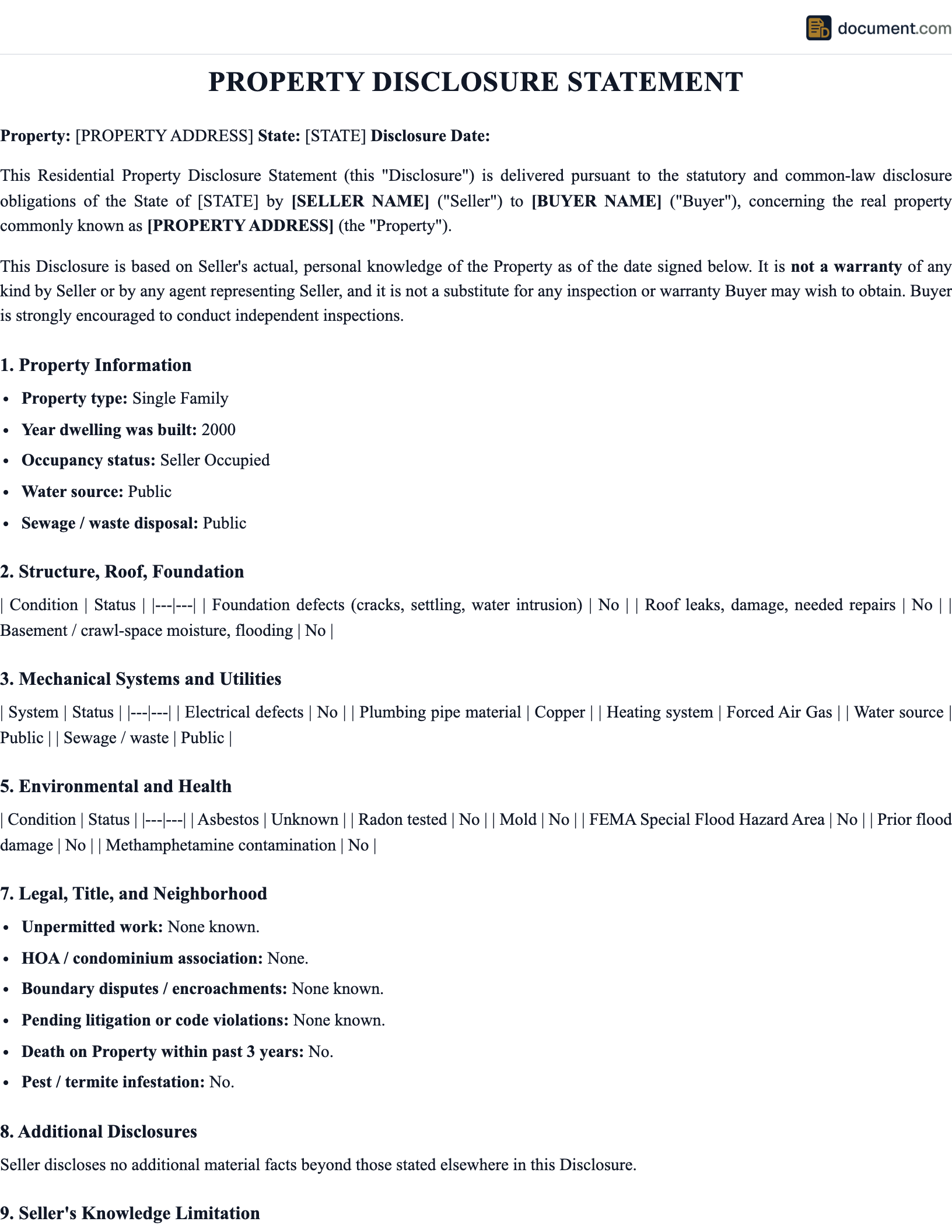
Sample West Virginia Disclosure Statement
Preview of our West Virginia-specific template. Your document will include all fields required for recording in any West Virginia county.
PROPERTY DISCLOSURE STATEMENT
STATE OF WEST VIRGINIA
Legal Document
PARTY INFORMATION
Name: [Full Legal Name]
Address: [West Virginia Address]
County: [County]
PROPERTY DESCRIPTION
County: [County] State: West Virginia
Legal Description: [Per Recorded Plat]
Parcel No.: [APN]
West Virginia Disclosure Statement FAQ
Common questions about filing in West Virginia, including requirements, fees, and tax implications.
Official West Virginia Resources
Official state resources for verifying requirements and finding your local recording office.
Important Considerations for West Virginia Sellers
Coal mining subsidence is not an abstract risk in West Virginia. The state has decades of documented surface damage associated with longwall mining, room-and-pillar mining, and the collapse of historic works. Sellers in counties like Mingo, McDowell, Logan, Boone, and Kanawha should take the subsidence section seriously. If you have any cracks in foundation walls, settling floors, or doors that stick in ways consistent with structural movement, consult a structural engineer before completing the form.
Well and septic system disclosure matters enormously in West Virginia because so much of the state lacks public utility infrastructure. If your property has a private well, buyers will want to know the age of the pump, the last time the water was tested, and any known contamination issues. Sellers who have a recent well water test report and a septic inspection in hand are in a much stronger position than those who simply say "no known issues."
If you are uncertain whether the property was ever used in connection with drug activity, particularly in rural counties where meth lab activity was historically documented, and you have no actual knowledge of such use, you can answer accordingly. The obligation is to disclose what you know. But if you do have knowledge of prior meth activity and stay silent, that silence can unravel a sale and result in significant legal exposure.
Practical Tip for West Virginia Sellers
Consider getting a professional home inspection before listing. In a market where buyers are already cautious about mining-related issues and aging infrastructure, a clean inspection report gives buyers confidence and removes the uncertainty that often kills deals. Sellers who know their property's condition and have documented it are rarely the ones who end up in post-closing litigation.
Related Documents
Depending on your situation, you may need additional documents alongside this one. Below are commonly related documents that are frequently used together in real estate transactions.
Important Considerations
Before proceeding with your document, there are several important factors to consider. Each real estate transaction is unique, and understanding the specific requirements and implications of your situation will help ensure a smooth and legally compliant process.
Real estate laws and regulations are subject to change, and local requirements may differ from state-level rules. It is always advisable to verify current requirements with your local recording office before submitting any documents for recording.
If your transaction involves complex circumstances such as multiple parties, commercial properties, trusts, estates, or interstate elements, consulting with a licensed real estate attorney is strongly recommended. An attorney can provide guidance specific to your situation and help you avoid potential legal issues.
Keep copies of all documents related to your real estate transaction in a safe place. Recorded documents become part of the public record, but having your own copies ensures you can reference the terms and conditions at any time. Digital copies stored securely are also recommended as a backup.
Professional Recommendation
While our templates are designed to be comprehensive and legally compliant, we recommend having your completed document reviewed by a licensed attorney before recording, especially for high-value transactions or complex situations. Many attorneys offer flat-fee document review services that provide peace of mind at a reasonable cost.
Related Documents
Depending on your situation, you may need additional documents alongside this one. Below are commonly related documents that are frequently used together in real estate transactions.
Create your West Virginia Property Disclosure Statement in under 5 minutes.
Answer a few questions and download a West Virginia-compliant document, ready for the state agency.