
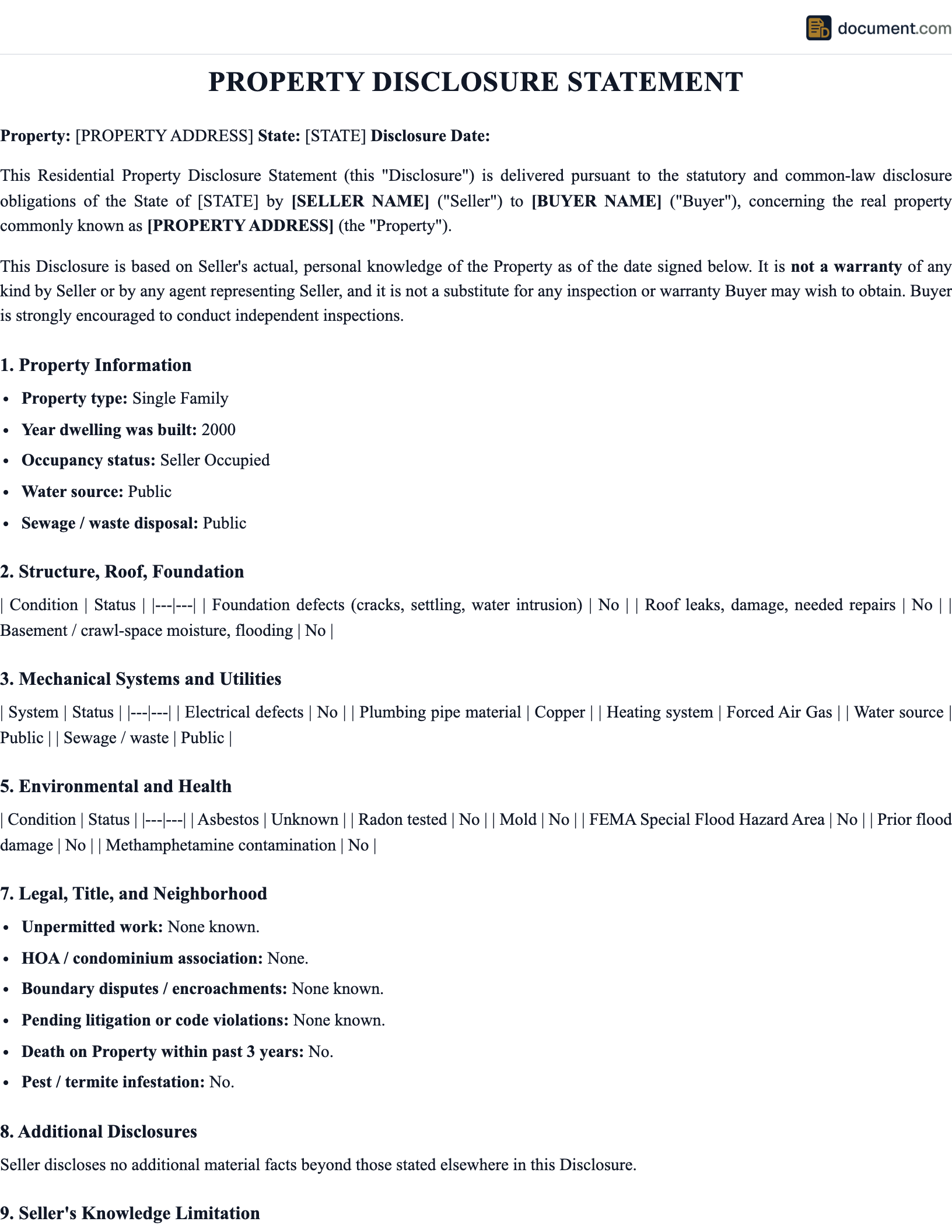



South Dakota Disclosure Statement Overview
South Dakota requires residential sellers to complete a written property disclosure statement before a purchase agreement is signed. This obligation is set out in SDCL 43-4-37 through 43-4-44 and applies to most residential properties offered for sale in the state. The disclosure is a practical document, not a legal technicality. It is the seller's opportunity to honestly communicate the known condition of the home to the buyer before money changes hands.
South Dakota's disclosure form covers structural components, mechanical systems, environmental conditions, and water supply and wastewater issues. The last category matters more here than in many states, because a significant portion of South Dakota homes rely on private wells and septic systems rather than municipal utilities. Sellers must disclose known problems with those systems just as they would a leaking roof or a cracked foundation. Agricultural land is generally outside the scope of these mandatory disclosure rules, but residential properties, including properties with small outbuildings, must comply.
$10
Recording fee
$0.50 per $500
Transfer tax
Required
Notarization
0
Witnesses required
South Dakota Requirements
South Dakota law requires sellers of residential property to disclose all known material defects and conditions before a purchase contract is signed. The disclosure must cover the main categories set out in the statute, and sellers should answer every section honestly based on their actual knowledge of the property.
South Dakota Seller Note
South Dakota sellers must deliver the disclosure form before the buyer signs any purchase agreement. Once delivered, the buyer has 5 business days to rescind. Do not wait until closing to share this document. Properties with private wells or septic systems require those systems to be addressed in the disclosure, as buyers and lenders often scrutinize them closely in rural transactions.
What the Disclosure Must Cover
- Structural systems: Foundation, roof, walls, windows, and exterior components
- Mechanical systems: Plumbing, heating, electrical, and cooling equipment
- Water and wastewater: Private well or cistern location and known condition; septic system age, size, and any known problems
- Flooding and drainage: Any known flooding history, standing water, or drainage problems on the property
- Environmental conditions: Known hazardous substances, underground storage tanks, or contamination
- Lead-based paint: Disclosed separately under federal law for homes built before 1978
How to File in South Dakota
The South Dakota disclosure process is straightforward. The document is delivered directly to the buyer before the purchase contract is signed. There is no recording office involved, no notarization required, and no filing fee. The goal is simply to get accurate information in the buyer's hands before they commit.
Complete the Disclosure Form
Answer every section honestly based on your actual knowledge of the property. Do not leave sections blank. If you are uncertain about a condition, note it rather than skipping it.
Deliver to the Buyer Before Contract
Provide the completed form to the prospective buyer before the purchase agreement is signed. Hand delivery, mail, or electronic delivery through your agent are all acceptable.
Allow the Buyer's Rescission Period
South Dakota buyers have 5 business days after receiving the disclosure to cancel the purchase agreement. This window must be respected. The transaction proceeds after it closes without incident.
Obtain Buyer's Signed Acknowledgment
Have the buyer sign and date an acknowledgment that they received the disclosure. Keep this in your transaction file. It documents that you fulfilled your legal obligation.
Update If Conditions Change
If you discover a new defect after the disclosure is delivered but before closing, provide an updated form promptly. Failing to disclose new issues discovered during the contract period carries the same risk as omitting them from the original form.
South Dakota Fees & Costs
Typical costs for filing in South Dakota. Actual fees may vary by county.
| Fee / Tax | Amount |
|---|---|
| Recording Fee | $10 |
| Transfer Tax | $0.50 per $500 |
| Notarization | $5 - $25 per signature |
| Certified Copy | $1 - $10 per page |
| Attorney Review (optional) | $150 - $500 |
Seller Liability and Legal Consequences in South Dakota
South Dakota sellers who fail to disclose known material defects are exposed to serious legal risk after closing. A buyer who discovers a concealed problem, whether it is a failing septic system, a history of water damage, or a structural defect the seller clearly knew about, can pursue legal action for misrepresentation or fraud. Courts do not require sellers to be experts, but they do require honesty about what sellers actually know.
The typical remedies available to a South Dakota buyer include recovery of repair costs, compensation for diminished property value, and in serious cases, rescission of the entire sale. Rescission means the buyer can attempt to unwind the transaction and recover their purchase price. That outcome is far more damaging to a seller than simply having disclosed the problem upfront and negotiating accordingly.
Disclosure protects sellers as much as buyers. A properly completed disclosure statement establishes a clear record of what the seller knew at the time of sale. It limits after-the-fact disputes about whether a defect was concealed or simply unknown. South Dakota sellers who approach the disclosure form carefully and honestly are in a much stronger legal position than those who guess at questions, leave sections blank, or assume a buyer's inspection will catch everything anyway.
Sample South Dakota Disclosure Statement
Preview of our South Dakota-specific template. Your document will include all fields required for recording in any South Dakota county.
PROPERTY DISCLOSURE STATEMENT
STATE OF SOUTH DAKOTA
Legal Document
PARTY INFORMATION
Name: [Full Legal Name]
Address: [South Dakota Address]
County: [County]
PROPERTY DESCRIPTION
County: [County] State: South Dakota
Legal Description: [Per Recorded Plat]
Parcel No.: [APN]
South Dakota Disclosure Statement FAQ
Common questions about filing in South Dakota, including requirements, fees, and tax implications.
Official South Dakota Resources
Official state resources for verifying requirements and finding your local recording office.
Important Considerations for South Dakota Sellers
Rural properties in South Dakota come with disclosure considerations that urban sellers rarely encounter. If your property has a well, you should be able to speak to its age, any water quality testing you have done, and any problems you have experienced with it. If you have a septic system, buyers and their lenders will want to know its approximate age and whether it has ever been pumped, repaired, or replaced. Do not treat these as throwaway questions on the form.
South Dakota sellers should also think carefully about flooding and drainage history. Parts of the state experience significant snowmelt and seasonal flooding, and if water has ever entered the basement or collected near the foundation, that history belongs on the disclosure. It may have happened only once, but it is still information a buyer needs.
If you are selling agricultural land that is adjacent to or combined with a residential property, check whether the residential component triggers disclosure requirements. The agricultural exemption is specific, and a property that includes a farmhouse is not automatically exempt from the residential disclosure statute.
Practical Tip for South Dakota Sellers
Gather any repair records, inspection reports, or permits you have for the property before completing the disclosure form. These documents will help you answer questions accurately and give your buyer confidence that you are being transparent. Sellers who can back up their disclosures with paperwork are less likely to face disputes after closing.
Related Documents
Depending on your situation, you may need additional documents alongside this one. Below are commonly related documents that are frequently used together in real estate transactions.
Working With a Real Estate Attorney in South Dakota
South Dakota does not require an attorney to be present at closing, but sellers dealing with complicated properties should consider a consultation before listing. This is especially true for properties with known defects, prior environmental issues, shared water systems, or boundary disputes that have not been fully resolved.
An attorney can help you understand which items are legally required to be disclosed versus which are simply good practice to include. They can also advise you if a condition you are aware of might constitute a material defect even if it seems minor to you. The legal standard is whether the condition would affect a reasonable buyer's decision, not whether you personally think it is a big deal.
Keep signed copies of the disclosure form and any buyer acknowledgment with your closing documents. Even after the sale is complete, these records are important protection if a dispute arises months or years later about what you disclosed.
Professional Recommendation
South Dakota real estate attorneys typically charge flat fees for disclosure and contract review, which is modest compared to the exposure of a post-closing lawsuit. For properties with known issues or complex histories, that review is worth the cost.
Related Documents
Depending on your situation, you may need additional documents alongside this one. Below are commonly related documents that are frequently used together in real estate transactions.
Create your South Dakota Property Disclosure Statement in under 5 minutes.
Answer a few questions and download a South Dakota-compliant document, ready for the state agency.