



North Dakota Disclosure Statement Overview
Under NDCC 47-10-04, North Dakota sellers of residential property must provide a written disclosure statement to the buyer before the purchase contract is signed. The disclosure goes directly to the buyer and is not recorded with any county or state office. It is a private communication between the parties to the transaction, and its accuracy is the seller's legal responsibility.
North Dakota's geography shapes what the disclosure covers. Agricultural land is treated separately under the statute, and sellers of farm properties may face different requirements than sellers of residential homes. For residential transactions, the form covers structural and mechanical conditions as expected, but North Dakota adds specific importance to flooding history and drainage, which are recurring concerns across much of the state. In the oil-producing western counties, sellers are also expected to address any mineral leases or oil and gas activity on or near the property. Buyers get 3 days after receiving the disclosure to cancel the contract without penalty.
$10
Recording fee
None
Transfer tax
Required
Notarization
0
Witnesses required
North Dakota Requirements
North Dakota sellers must complete the disclosure form and deliver it to the buyer before the purchase contract is signed. The form must be answered truthfully based on the seller's actual knowledge at the time of disclosure. Sellers are not required to hire inspectors to complete the form, but cannot conceal conditions they know about. The disclosure is not notarized and is not recorded with any county office.
North Dakota Specific Note
Agricultural land is treated differently under NDCC 47-10-04. Sellers of residential property must complete the full disclosure form. Sellers in western North Dakota should pay particular attention to oil and gas sections of the form, as mineral leases and Bakken formation activity directly affect buyer decisions. Flood history and drainage conditions must be disclosed honestly, especially in counties along the Red River valley and other flood-prone areas.
What North Dakota Sellers Must Disclose
- Structural conditions: Foundation, roof, exterior walls, and any known settling or structural damage
- Mechanical systems: Heating, plumbing, electrical, and water supply and sewage systems
- Flooding and drainage: Any known history of flooding, water intrusion, or drainage problems on the property
- Oil and gas activity: Known mineral leases, surface use agreements, or active oil and gas operations near the property
- Environmental hazards: Radon, underground storage tanks, contamination, or other known environmental issues
- Agricultural classification: Whether any portion of the property is classified as agricultural land, which affects disclosure requirements
How to Deliver the Disclosure in North Dakota
North Dakota's disclosure process is straightforward. The seller completes the form and delivers it to the buyer before the purchase contract is signed. No government filing is required. Here is what the process looks like in practice.
Complete the Disclosure Form
Fill out the form honestly, covering structural conditions, mechanical systems, flood history, drainage, and any oil and gas activity if the property is in a Bakken region county. Answer every question based on your actual knowledge.
Sign the Form
All sellers listed on the deed must sign the disclosure form. No notarization is required. Keep an unsigned copy for your own records before the buyer receives the original.
Deliver to the Buyer Before Contract
Deliver the signed disclosure to the buyer or their agent before the purchase contract is signed. In-person delivery or delivery through the listing agent is most common. Document the exact date of delivery to establish the start of the 3-day rescission window.
Allow the Buyer 3 Days to Review
The buyer has 3 days from receipt to cancel the contract without penalty. Respect this window. If the buyer raises questions based on the disclosure, address them honestly rather than pressuring a fast decision.
Retain the Disclosure in the Closing File
Your real estate agent and closing company will include the signed disclosure in the transaction file. Keep your own copy after closing. North Dakota does not have a specific statute of limitations tailored to disclosure claims, so retaining records for several years is advisable.
North Dakota Fees & Costs
Typical costs for filing in North Dakota. Actual fees may vary by county.
| Fee / Tax | Amount |
|---|---|
| Recording Fee | $10 |
| Transfer Tax | None |
| Notarization | $5 - $25 per signature |
| Certified Copy | $1 - $10 per page |
| Attorney Review (optional) | $150 - $500 |
Seller Liability for Non-Disclosure in North Dakota
North Dakota sellers who knowingly conceal material defects or provide false information on the disclosure form face civil claims for fraud and misrepresentation. A buyer who discovers an undisclosed condition can seek damages for repair costs and diminished property value. In cases where a seller deliberately concealed a serious problem, courts can award additional damages to reflect the severity of the misconduct.
Flooding and drainage issues are the category most likely to produce disclosure litigation in North Dakota. Sellers who know the property takes on water during spring melt or heavy rain and fail to disclose it are in a legally precarious position. Many buyers in North Dakota ask specifically about flood history, and a seller who answers falsely or dismisses a known problem is taking a significant risk.
Oil and gas disclosures are increasingly important in western North Dakota. Sellers who have signed surface use agreements or have mineral leases in place that affect the buyer's land use should disclose those arrangements. Buyers who discover after closing that an active oil company has existing rights to access the surface of their property typically have a strong non-disclosure claim against the seller.
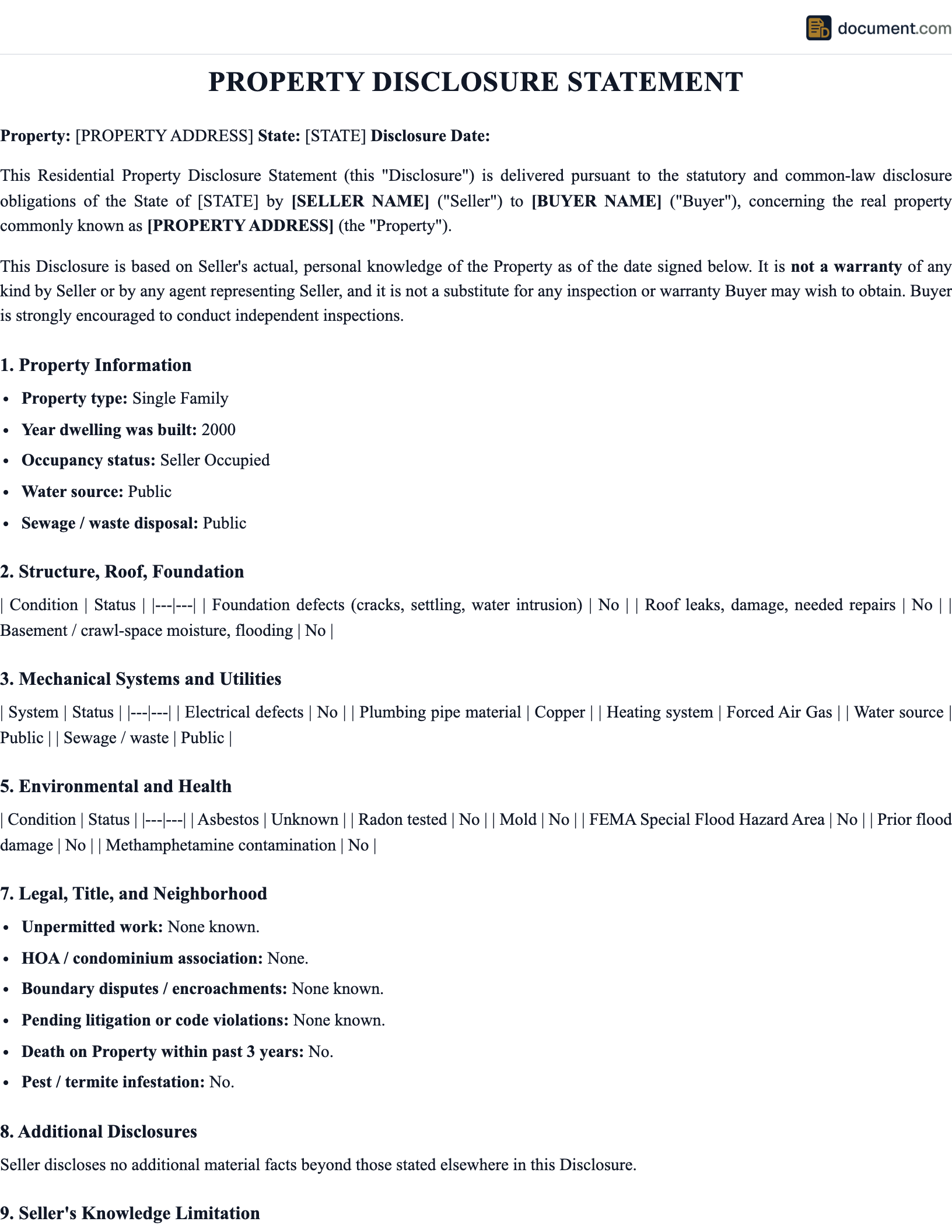
Sample North Dakota Disclosure Statement
Preview of our North Dakota-specific template. Your document will include all fields required for recording in any North Dakota county.
PROPERTY DISCLOSURE STATEMENT
STATE OF NORTH DAKOTA
Legal Document
PARTY INFORMATION
Name: [Full Legal Name]
Address: [North Dakota Address]
County: [County]
PROPERTY DESCRIPTION
County: [County] State: North Dakota
Legal Description: [Per Recorded Plat]
Parcel No.: [APN]
North Dakota Disclosure Statement FAQ
Common questions about filing in North Dakota, including requirements, fees, and tax implications.
Official North Dakota Resources
Official state resources for verifying requirements and finding your local recording office.
Important Considerations for North Dakota Sellers
Flood history is the single most important disclosure topic for most North Dakota sellers, particularly those in the Red River Valley, the James River basin, and areas around Devils Lake. Spring flooding can affect a property's basement, crawlspace, septic system, and surrounding land. Buyers purchasing in these areas know the risk, but they are entitled to honest information about whether this particular property has experienced problems. Do not assume buyers will figure it out from a map.
Sellers in Divide, McKenzie, Williams, Mountrail, and other Bakken-area counties should have a solid understanding of any oil and gas arrangements affecting their property before listing. Pull any mineral lease documents or surface use agreements and review them with your attorney. Disclosing these arrangements clearly and attaching copies for the buyer's review is the safest approach and often makes the transaction go more smoothly.
Agricultural land classification is another area where North Dakota sellers sometimes underestimate complexity. If your property has acreage that is farmed or has historically been classified as agricultural for tax purposes, confirm how the disclosure rules apply to that portion of the property. Mixing residential and agricultural elements in a single sale can complicate which disclosure requirements govern.
Seller Tip
North Dakota winters are hard on homes. Before completing the disclosure form, walk through the property after a freeze-thaw cycle if possible, or look at any maintenance records from recent winters. Pipe issues, foundation cracks from frost heave, and roof damage from ice dams are among the most common conditions that buyers discover after closing. Addressing them proactively in the disclosure protects you legally and can actually speed up the transaction.
Related Documents
Depending on your situation, you may need additional documents alongside this one. Below are commonly related documents that are frequently used together in real estate transactions.
Important Considerations
Before proceeding with your document, there are several important factors to consider. Each real estate transaction is unique, and understanding the specific requirements and implications of your situation will help ensure a smooth and legally compliant process.
Real estate laws and regulations are subject to change, and local requirements may differ from state-level rules. It is always advisable to verify current requirements with your local recording office before submitting any documents for recording.
If your transaction involves complex circumstances such as multiple parties, commercial properties, trusts, estates, or interstate elements, consulting with a licensed real estate attorney is strongly recommended. An attorney can provide guidance specific to your situation and help you avoid potential legal issues.
Keep copies of all documents related to your real estate transaction in a safe place. Recorded documents become part of the public record, but having your own copies ensures you can reference the terms and conditions at any time. Digital copies stored securely are also recommended as a backup.
Professional Recommendation
While our templates are designed to be comprehensive and legally compliant, we recommend having your completed document reviewed by a licensed attorney before recording, especially for high-value transactions or complex situations. Many attorneys offer flat-fee document review services that provide peace of mind at a reasonable cost.
Related Documents
Depending on your situation, you may need additional documents alongside this one. Below are commonly related documents that are frequently used together in real estate transactions.
Create your North Dakota Property Disclosure Statement in under 5 minutes.
Answer a few questions and download a North Dakota-compliant document, ready for the state agency.