
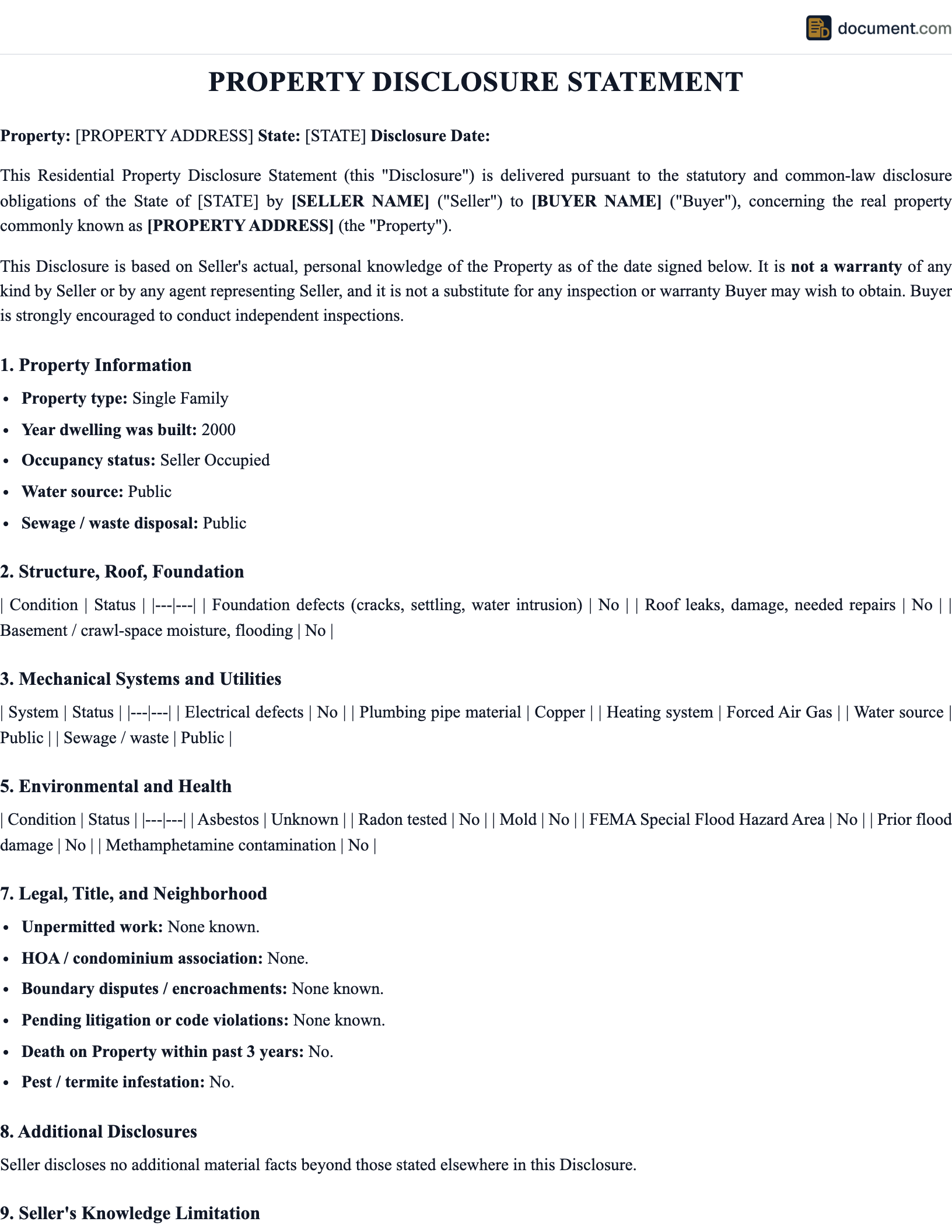



Massachusetts Disclosure Statement Overview
Massachusetts occupies an unusual position in real estate disclosure law. The state has never enacted a general mandatory seller disclosure statute, which puts it in a small group of states where caveat emptor still carries real weight. In practice, this means sellers are not automatically required to fill out a standard disclosure form, but it does not mean they can conceal what they know. Courts in Massachusetts have consistently held that sellers who make false or misleading statements about property conditions face liability for fraud and for violations of the state consumer protection law.
What Massachusetts does require is a set of specific, targeted disclosures that are in some ways more demanding than what other states mandate. The Title 5 septic system inspection requirement is the most distinctive of these: it applies to most homes on private septic systems and must be completed before closing, not just at closing. Add to that the lead paint disclosure requirement, smoke and CO detector certificates, and the agent duty to disclose material defects, and the overall disclosure picture in Massachusetts is more complex than the absence of a general statute might suggest.
$75
Recording fee
$2.28 per $500
Transfer tax
Required
Notarization
0
Witnesses required
Massachusetts Requirements
Massachusetts does not have a single mandatory property disclosure form that sellers must complete, but several targeted disclosure and compliance requirements apply to most residential sales. Understanding each one is essential before listing a home or signing a purchase and sale agreement.
Massachusetts Specific Note
The Title 5 septic inspection is one of the most important pre-sale requirements in Massachusetts. If a property has a private septic system and the inspection is skipped or reveals a failing system, the closing cannot proceed without a repair plan or escrow arrangement. Budget both the time and the cost of this inspection early in the process.
Key Disclosure Requirements
- Lead Paint (Title X): Mandatory for homes built before 1978; buyers receive disclosure form and EPA pamphlet and have 10 days to inspect
- Title 5 Septic Inspection: Required before closing when the property uses a private on-site sewage system; failing systems must be repaired or escrowed
- Smoke and CO Detector Certificate: The local fire department must certify working smoke detectors and carbon monoxide detectors before the deed can be recorded
- Agent Material Defect Duty: Under MGL Chapter 112 Section 87AAA, licensed agents must disclose known material defects regardless of whether the seller uses a voluntary disclosure form
- Voluntary Disclosure Form: Not legally required but widely used; once completed, the seller is bound by its contents and dishonest answers create greater liability than no form at all
How to File in Massachusetts
A property disclosure statement in Massachusetts is delivered directly to the buyer, not filed with any government office. The process focuses on timing the delivery correctly and coordinating the various state-specific inspections and certificates that must accompany a residential sale.
Complete the Voluntary Disclosure Form
Fill out every section honestly. Note any known defects in structure, systems, water, drainage, or environmental conditions. Incomplete or evasive answers can be treated as misrepresentation if a dispute arises later.
Deliver to the Buyer Before Contract
Provide the disclosure form to the buyer before they sign the offer or purchase and sale agreement. Keep a signed acknowledgment showing the buyer received it and on what date.
Schedule the Title 5 Septic Inspection
If the property uses a private septic system, hire a licensed Title 5 inspector promptly. The inspection report must be filed with the local board of health and submitted to the buyer. Allow time for any repairs if the system needs work.
Provide the Lead Paint Disclosure if Applicable
For homes built before 1978, complete the EPA-required lead paint disclosure form and provide the buyer with the "Protect Your Family from Lead in Your Home" pamphlet. Give the buyer 10 days to conduct a lead inspection unless they waive it in writing.
Obtain the Smoke and CO Detector Certificate
Contact the local fire department to schedule an inspection of smoke and carbon monoxide detectors. The certificate they issue must be in hand before the deed can be recorded at closing.
Massachusetts Fees & Costs
Typical costs for filing in Massachusetts. Actual fees may vary by county.
| Fee / Tax | Amount |
|---|---|
| Recording Fee | $75 |
| Transfer Tax | $2.28 per $500 |
| Notarization | $5 - $25 per signature |
| Certified Copy | $1 - $10 per page |
| Attorney Review (optional) | $150 - $500 |
Seller Liability for Non-Disclosure in Massachusetts
Massachusetts sellers who misrepresent or conceal material property conditions face legal exposure on several fronts. Common law fraud claims are available where a seller knowingly made a false statement that induced the buyer to purchase. Negligent misrepresentation claims are possible even where there was no intent to deceive, if the seller stated something as fact without reasonable basis to believe it was true.
The more powerful tool for buyers in Massachusetts is Chapter 93A, the Consumer Protection Act. Courts have applied 93A to residential real estate transactions where sellers or their agents engaged in unfair or deceptive conduct. A successful 93A claim can result in up to three times the actual damages plus attorney fees, which makes it a serious litigation threat for sellers who try to hide problems.
The voluntary disclosure form creates its own liability dynamic. A seller who fills one out and lies about known conditions is in a worse position than a seller who disclosed nothing, because the false form becomes direct evidence of intent to deceive. Sellers unsure whether to include something should err on the side of disclosure and let buyers draw their own conclusions from the inspection process.
Sample Massachusetts Disclosure Statement
Preview of our Massachusetts-specific template. Your document will include all fields required for recording in any Massachusetts county.
PROPERTY DISCLOSURE STATEMENT
STATE OF MASSACHUSETTS
Legal Document
PARTY INFORMATION
Name: [Full Legal Name]
Address: [Massachusetts Address]
County: [County]
PROPERTY DESCRIPTION
County: [County] State: Massachusetts
Legal Description: [Per Recorded Plat]
Parcel No.: [APN]
Massachusetts Disclosure Statement FAQ
Common questions about filing in Massachusetts, including requirements, fees, and tax implications.
Official Massachusetts Resources
Official state resources for verifying requirements and finding your local recording office.
Important Considerations for Massachusetts Sellers
The absence of a mandatory disclosure statute in Massachusetts is not a free pass. Sellers still carry real legal risk from common law fraud and Chapter 93A claims, and the specific mandatory requirements around septic systems, smoke detectors, and lead paint add layers of compliance that sellers must manage actively.
The Title 5 inspection is the item most likely to derail a Massachusetts closing if not handled early. Sellers on private septic should schedule the inspection as soon as the property goes under agreement, or even before listing if the system's condition is uncertain. A failed inspection does not automatically kill the sale, but it creates a repair obligation that buyers will factor into the price.
Sellers who choose to complete a voluntary disclosure form should treat it seriously. Read each question carefully and disclose any condition you know about, even if you believe it is minor. If a condition has been repaired, describe the repair. Courts pay close attention to what sellers knew and when, and a complete, accurate disclosure form is one of the best defenses against a post-closing lawsuit.
Massachusetts buyers who waive inspections in competitive market situations are waiving one of their main protections. Sellers should still provide accurate disclosures even when buyers waive inspections, because waiving an inspection does not waive the right to sue for fraud.
Seller Tip
If you are unsure whether a past repair fully resolved a problem, disclose the original condition and the work performed. A buyer who learns about a disclosed prior issue through their own inspection is much less likely to pursue litigation than one who discovers an undisclosed problem after closing. When in doubt, say more rather than less.
Related Documents
Depending on your situation, you may need additional documents alongside this one. Below are commonly related documents that are frequently used together in real estate transactions.
Important Considerations for Massachusetts Sellers
The absence of a mandatory disclosure statute in Massachusetts is not a free pass. Sellers still carry real legal risk from common law fraud and Chapter 93A claims, and the specific mandatory requirements around septic systems, smoke detectors, and lead paint add layers of compliance that sellers must manage actively.
The Title 5 inspection is the item most likely to derail a Massachusetts closing if not handled early. Sellers on private septic should schedule the inspection as soon as the property goes under agreement, or even before listing if the system's condition is uncertain. A failed inspection does not automatically kill the sale, but it creates a repair obligation that buyers will factor into the price.
Sellers who choose to complete a voluntary disclosure form should treat it seriously. Read each question carefully and disclose any condition you know about, even if you believe it is minor. If a condition has been repaired, describe the repair. Courts pay close attention to what sellers knew and when, and a complete, accurate disclosure form is one of the best defenses against a post-closing lawsuit.
Massachusetts buyers who waive inspections in competitive market situations are waiving one of their main protections. Sellers should still provide accurate disclosures even when buyers waive inspections, because waiving an inspection does not waive the right to sue for fraud. Keep copies of all disclosures and acknowledgments in a safe place long after closing.
Seller Tip
If you are unsure whether a past repair fully resolved a problem, disclose the original condition and the work performed. A buyer who learns about a disclosed prior issue through their own inspection is much less likely to pursue litigation than one who discovers an undisclosed problem after closing. When in doubt, say more rather than less.
Related Documents
Depending on your situation, you may need additional documents alongside this one. Below are commonly related documents that are frequently used together in real estate transactions.
Create your Massachusetts Property Disclosure Statement in under 5 minutes.
Answer a few questions and download a Massachusetts-compliant document, ready for the state agency.