



Maine Disclosure Statement Overview
Maine requires residential sellers to provide a written property disclosure to buyers before any purchase and sale agreement is signed. The governing statute is 33 MRSA Section 173, and the form must be completed based on the seller's actual knowledge of the property's condition. The disclosure goes directly to the buyer and is not filed with any government office, not recorded at the county register of deeds, and does not involve any fee. Maine gives buyers 5 days to rescind after receiving the disclosure, which is among the more generous rescission windows in the country.
Maine has some distinctive disclosure considerations that sellers should keep in mind. The state's granite bedrock makes radon testing genuinely important statewide, not just in certain regions. Waterfront and shoreland properties carry specific zoning and environmental conditions that need to be disclosed. And the prevalence of older oil-heated homes means underground storage tank history is a frequent disclosure issue that buyers and their lenders take seriously.
$13
Recording fee
$2.20 per $500
Transfer tax
Required
Notarization
0
Witnesses required
Maine Requirements
Under 33 MRSA Section 173, Maine sellers of residential real property must complete a written disclosure statement and deliver it to the buyer before a purchase and sale agreement is signed. The buyer then has 5 days after receipt to rescind the contract. The form must be answered based on the seller's actual knowledge, and sellers are not required to investigate or warrant conditions beyond what they know.
Maine Specific Note
Radon is a significant health concern throughout Maine due to the state's granite geology. Sellers who have radon test results must disclose them. For waterfront and shoreland properties, compliance with Maine's Shoreland Zoning Act is a key disclosure consideration. Underground fuel oil tanks must also be disclosed if the seller has any knowledge of their existence or prior leaks.
What the Maine Disclosure Must Cover
- Structural: Foundation, roof, walls, floors, and any known water intrusion or settlement issues
- Mechanical systems: Heating, plumbing, electrical, and the presence and condition of any fuel oil tanks
- Environmental: Radon test results, asbestos, lead paint in pre-1978 homes, and any known contamination
- Water and septic: Public or private well, water quality, and septic system condition and location
- Shoreland zoning: For waterfront properties, known zoning compliance status, easements, and access rights
- Legal conditions: Easements, encroachments, deed restrictions, and any pending legal proceedings affecting the property
How to Deliver the Maine Disclosure Statement
The Maine property disclosure form is delivered privately from seller to buyer. It does not go to the county register of deeds, is not notarized, and does not carry any recording or filing fee. Follow these steps to complete the process correctly under 33 MRSA Section 173.
Complete the Maine Disclosure Form
Go through every section and answer honestly based on what you know about the property. If you have radon test results, a recent septic inspection report, or documentation of past repairs, gather those before sitting down to fill out the form. They will help you answer accurately and are useful to share with interested buyers.
Sign and Date the Form
The seller signs and dates the completed disclosure form. Maine does not require notarization of the property disclosure statement. Your signature represents your honest statement of the property's condition based on your knowledge at the time of signing.
Deliver to the Buyer Before Contract Signing
Provide the completed form to the buyer or their agent before a purchase and sale agreement is executed. Documentation of delivery is important. A dated receipt, an email with the form attached, or a notation in the transaction file confirming when delivery occurred is good practice.
Allow the Buyer's 5-Day Rescission Period
After receiving the disclosure, the buyer has 5 days to rescind the contract. This is one of the longer rescission windows in the country and reflects Maine's consumer-protective approach. Be prepared to answer buyer questions and provide supporting documentation during this window.
Keep Signed Copies Through and After Closing
Retain the signed disclosure statement with your closing file. Both parties should keep copies. This document may become important if the buyer raises concerns after closing about conditions that were or were not disclosed.
Maine Fees & Costs
Typical costs for filing in Maine. Actual fees may vary by county.
| Fee / Tax | Amount |
|---|---|
| Recording Fee | $13 |
| Transfer Tax | $2.20 per $500 |
| Notarization | $5 - $25 per signature |
| Certified Copy | $1 - $10 per page |
| Attorney Review (optional) | $150 - $500 |
Seller Liability for Non-Disclosure in Maine
Maine sellers who fail to disclose known material defects, or who provide false information on the disclosure form, can face liability under 33 MRSA Section 173 and Maine's common law on misrepresentation. A buyer who discovers a concealed defect after closing can bring a civil claim seeking damages to cover repair costs. In more serious cases of intentional concealment, courts have awarded additional damages beyond the cost of repairs.
Maine courts take a practical view of what sellers should have known. A seller who lived in a home for 20 years and never disclosed a known basement flooding problem will have a difficult time arguing they were unaware of it. By contrast, a defect that was genuinely hidden, occurred after the seller purchased the property, or was discovered only through specialized testing generally does not create liability if the seller honestly answered 'unknown' on the disclosure form.
Sellers should note that Maine's environmental disclosure obligations, particularly around oil tanks and radon, carry their own regulatory layer on top of the civil disclosure statute. An underground oil tank leak that was not disclosed can trigger both civil claims and potential environmental liability under Maine's underground oil storage tank laws, making this one of the most important disclosure areas for older Maine homes.
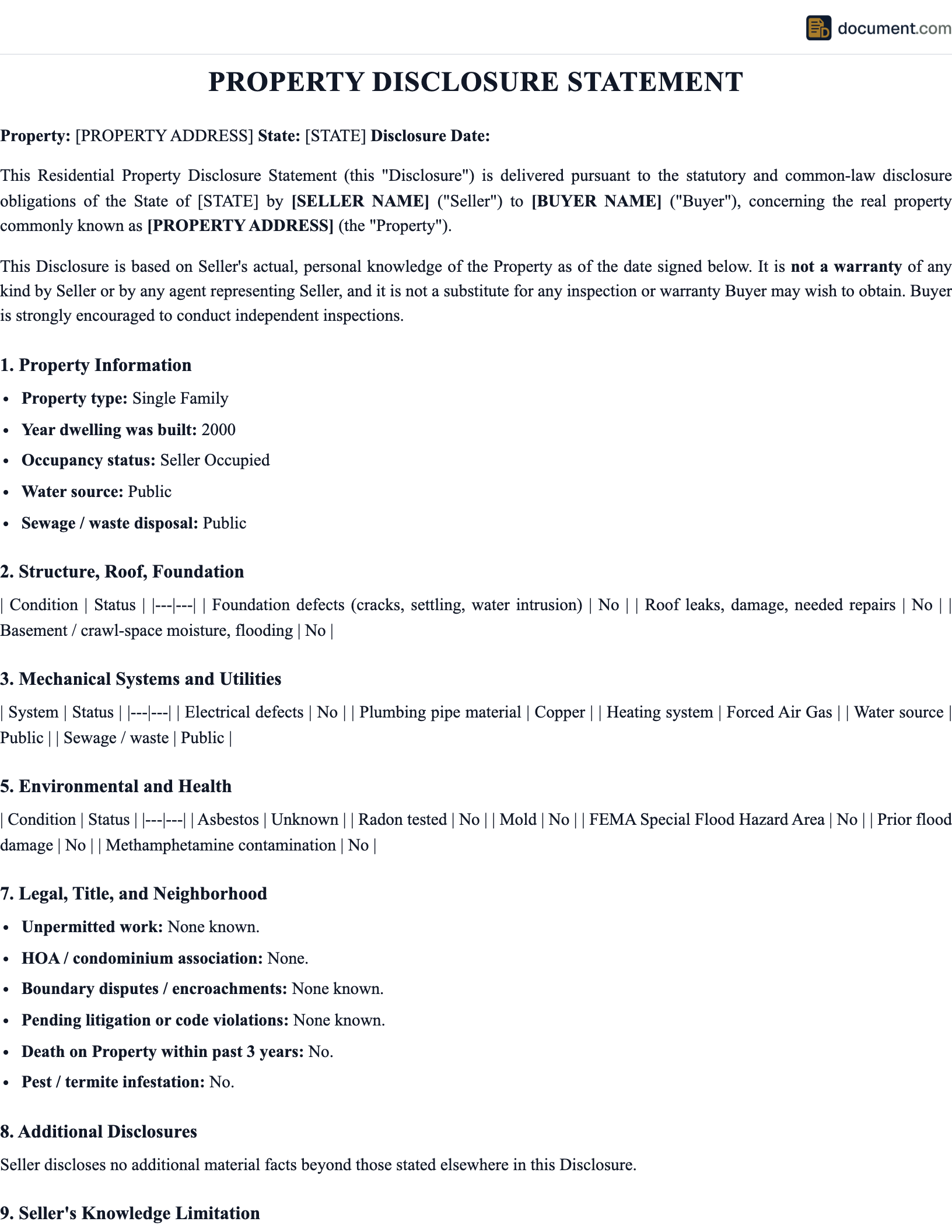
Sample Maine Disclosure Statement
Preview of our Maine-specific template. Your document will include all fields required for recording in any Maine county.
PROPERTY DISCLOSURE STATEMENT
STATE OF MAINE
Legal Document
PARTY INFORMATION
Name: [Full Legal Name]
Address: [Maine Address]
County: [County]
PROPERTY DESCRIPTION
County: [County] State: Maine
Legal Description: [Per Recorded Plat]
Parcel No.: [APN]
Maine Disclosure Statement FAQ
Common questions about filing in Maine, including requirements, fees, and tax implications.
Official Maine Resources
Official state resources for verifying requirements and finding your local recording office.
Important Considerations for Maine Sellers
Maine sellers of older homes should think carefully about a few recurring disclosure issues. Many Maine homes were built before modern building codes and rely on private wells and septic systems rather than municipal services. A seller who has had a well tested for water quality and has records of prior septic pumping or inspection should make those documents available alongside the disclosure form. Buyers financing with FHA or USDA loans will often have requirements about well water quality and septic condition that can affect the transaction if these systems have not been recently evaluated.
For sellers of lakefront, oceanfront, or riverfront properties, Maine's Shoreland Zoning Act creates specific disclosure obligations that do not arise with inland homes. Any structures within the shoreland zone that were built or modified without proper permits, any erosion control issues, or restrictions on dock maintenance or vegetation removal should be disclosed. Buyers of Maine waterfront properties often engage environmental consultants to review the property's compliance status, and a complete disclosure can prevent delays.
Maine's climate also means sellers should think about winter-specific issues. A home that has experienced frozen pipes, ice dam roof damage, or frost heave in the foundation needs to disclose those conditions. These are not rare problems in Maine, and buyers who have purchased here before will know to ask. Getting ahead of those questions in the disclosure form builds trust and keeps the transaction moving.
Maine Seller Tip
If your property has an underground oil tank, whether currently in use or formerly in use, disclose it. Maine's environmental regulations around underground petroleum storage are serious, and a tank that has leaked can create liability that follows the property through multiple ownership transfers. Having the tank professionally assessed and producing documentation of its current condition before listing is the smartest approach.
Related Documents
Depending on your situation, you may need additional documents alongside this one. Below are commonly related documents that are frequently used together in real estate transactions.
Working with a Maine Real Estate Attorney
Maine does not require attorney involvement in residential real estate closings, and many Maine transactions proceed through real estate agents and title companies without a lawyer on either side. That said, Maine's disclosure statute and the specific environmental and shoreland zoning considerations that apply to many Maine properties make attorney involvement worth considering for complex transactions.
Sellers of waterfront properties in particular may benefit from a pre-listing consultation with a Maine real estate attorney who is familiar with shoreland zoning law and the Maine Shoreland Zoning Act. Understanding what has and has not been properly permitted on a waterfront lot before listing can prevent significant problems during the buyer's due diligence period.
After closing, retain all transaction documents including the signed disclosure form, the purchase and sale agreement, any inspection reports, radon test results, and environmental assessments. Maine's statute of limitations on misrepresentation claims runs from the date of discovery rather than the closing date, which means potential liability can extend beyond the immediate post-closing period for latent defects that only become apparent years later.
Professional Recommendation
Maine sellers with waterfront properties, environmental concerns, or complex disclosure situations should have the disclosure form reviewed by a licensed Maine real estate attorney before delivering it to the buyer. The 5-day rescission window gives buyers significant time to evaluate the disclosed conditions, and a well-prepared disclosure reduces the risk of last-minute contract complications.
Related Documents
Depending on your situation, you may need additional documents alongside this one. Below are commonly related documents that are frequently used together in real estate transactions.
Create your Maine Property Disclosure Statement in under 5 minutes.
Answer a few questions and download a Maine-compliant document, ready for the state agency.