
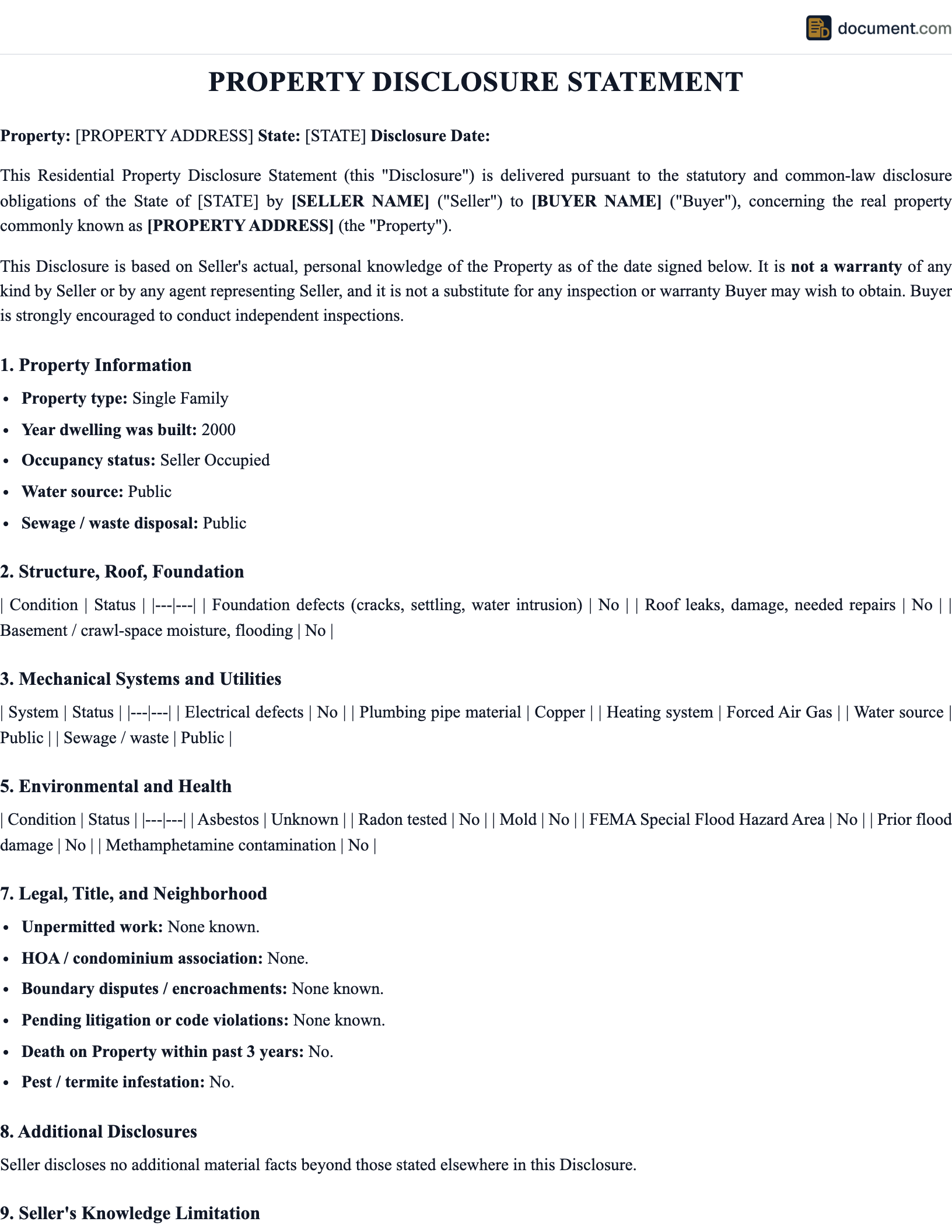



Indiana Disclosure Statement Overview
Indiana law under IC 32-21-5 requires sellers of residential real property to complete a written disclosure form and give it to the buyer before the purchase agreement is signed. The disclosure travels directly from seller to buyer. It is not recorded at the county recorder's office and is not a public document.
Indiana's disclosure form is notable for explicitly asking sellers about building code violations and pending legal actions affecting the property, topics that some other states address less directly. The 2-business-day rescission window is one of the shortest in the country, which means buyers need to act quickly if something in the disclosure concerns them. Sellers should understand that accurately completing the form is one of their most important obligations in any home sale, and that omissions discovered after closing frequently lead to litigation. Manufactured homes involve separate considerations and sellers of those properties should verify which specific requirements apply.
2 Bus. Days
Buyer rescission period
IC 32-21-5
Governing statute
Required
Before contract signing
Residential
Property coverage
Indiana Requirements
The Indiana disclosure form must be completed and given to the buyer before the purchase contract is signed. Timing matters because the buyer's 2-business-day rescission right runs from receipt of the form. Sellers who deliver the form after contract execution create a rescission opportunity for the buyer that would not otherwise exist.
Indiana's 2-Day Rescission Window Is One of the Shortest in the Country
Indiana buyers have only 2 business days to rescind after receiving the seller's disclosure form. Sellers should make sure the form is complete and accurate before delivery because there is very little time for back-and-forth clarification once the buyer has the form in hand. Delivering a vague or incomplete form and then clarifying it later may extend the buyer's window to rescind.
What the Indiana Disclosure Form Must Cover
- Structural Condition: Foundation, roof, walls, floors, and any known water intrusion or settling
- Mechanical Systems: Heating, cooling, plumbing, electrical, and any appliances conveyed with the property
- Environmental Hazards: Lead paint, asbestos, radon, underground storage tanks, and known soil contamination
- Code Violations: Any known building code violations, open permits, or citations from local authorities
- Legal Actions: Pending litigation, zoning disputes, easement conflicts, or homeowners association disputes affecting the property
- Manufactured Home Status: If the property is or includes a manufactured home, sellers should verify whether additional disclosure requirements apply
How to Deliver the Disclosure in Indiana
The Indiana property disclosure is given directly to the buyer before the purchase agreement is signed. It is not filed with any government office. The process under IC 32-21-5 is straightforward but timing is critical given Indiana's short 2-business-day rescission window.
Complete the Indiana Disclosure Form Thoroughly
Fill out every section of the state form based on your actual knowledge. Indiana's form uses a yes, no, or unknown format. Only mark unknown if you genuinely do not know. Leaving fields blank or marking unknown when you actually know the answer creates liability, not protection.
Check for Open Permits or Code Violations
Before delivering the disclosure, contact your local building department to confirm whether any open permits or code violations exist on the property. Undisclosed code violations are a significant source of Indiana post-closing disputes, and some buyers specifically check for them during the inspection period.
Deliver the Form Before the Buyer Signs the Purchase Agreement
Provide the completed disclosure to the buyer before the purchase agreement is executed. Keep a record of delivery with timestamp if delivering electronically. Your agent's transaction management platform will typically log this automatically.
Obtain Written Acknowledgment from the Buyer
Have the buyer sign an acknowledgment confirming they received the disclosure and the date they received it. Given Indiana's 2-day rescission window, knowing exactly when the clock started running can matter if a dispute arises later.
Update the Disclosure If New Information Comes to Light
If you become aware of a new material defect after delivering the original form but before closing, you must amend and re-deliver the disclosure promptly. The buyer gets a new 2-day rescission window from receipt of the amendment.
Indiana Disclosure at a Glance
Key facts about Indiana's property disclosure requirements for sellers of residential real property.
| Requirement | Details |
|---|---|
| Governing Statute | IC 32-21-5 |
| Who Must Disclose | Sellers of residential real property |
| Delivery Timing | Before buyer signs purchase contract |
| Buyer Rescission Period | 2 business days from receipt |
| Code Violations | Must be specifically disclosed |
Seller Liability and Legal Consequences in Indiana
Indiana sellers who intentionally misrepresent or fail to disclose a material condition face civil liability under IC 32-21-5 and general fraud and misrepresentation principles. Buyers can recover the actual costs caused by the undisclosed condition, including repair costs and any loss in property value. Indiana courts have not placed strict caps on disclosure damages, and significant concealment can lead to substantial judgments.
Code violations are a particularly sensitive area. If a seller is aware of an outstanding code violation from a prior renovation or addition but does not disclose it, and the buyer later faces a municipal enforcement action or is unable to obtain financing because of the violation, the seller may owe the buyer the full cost of bringing the property into compliance plus related expenses. Indiana's explicit statutory requirement to disclose code violations gives buyers strong grounds for these claims.
Indiana real estate licensees face their own obligations to encourage accurate disclosure and to avoid helping sellers conceal known defects. An agent who steers a seller toward incomplete disclosures or who actively helps hide a material condition risks disciplinary action by the Indiana Professional Licensing Agency in addition to civil liability alongside the seller.
Sample Indiana Disclosure Statement
Preview of our Indiana-specific template. Your document will include all fields required for recording in any Indiana county.
PROPERTY DISCLOSURE STATEMENT
STATE OF INDIANA
Legal Document
PARTY INFORMATION
Name: [Full Legal Name]
Address: [Indiana Address]
County: [County]
PROPERTY DESCRIPTION
County: [County] State: Indiana
Legal Description: [Per Recorded Plat]
Parcel No.: [APN]
Indiana Disclosure Statement FAQ
Common questions about filing in Indiana, including requirements, fees, and tax implications.
Official Indiana Resources
Official state resources for verifying Indiana disclosure requirements and accessing property-related information.
Important Considerations for Indiana Sellers
Indiana sellers who have done any renovation work on the home should trace whether permits were pulled and final inspections were completed. DIY additions, finished basements, added bathrooms, or electrical upgrades done without the required permits are common sources of post-closing disputes. If you are not certain whether prior work was permitted, a call to the local building department before listing is worthwhile.
Sellers of older Indiana homes should be prepared to address the condition of the electrical panel and plumbing system. Knob-and-tube wiring and galvanized pipes are common in homes built before the mid-20th century, and buyers' lenders may have underwriting restrictions on these materials. Disclosing their presence upfront avoids surprises during the inspection contingency period and reduces the likelihood of a last-minute renegotiation.
If the property has had any flooding, basement water, or drainage issues, sellers should document the history fully. Buyers in Indiana frequently add water-related conditions as a specific contingency in purchase agreements. Sellers who disclose a prior water issue along with documentation of the repair are in a much stronger position than sellers who leave the question blank and hope the inspector does not notice.
Indiana's Short Rescission Window Means the Form Must Be Right the First Time
With only 2 business days for the buyer to rescind, sellers cannot afford to deliver a vague or incomplete form and fix it later. An Indiana real estate attorney who reviews the disclosure before delivery can catch gaps that might otherwise give a motivated buyer an argument that the form was materially misleading, which could extend or revive a rescission right the seller thought had closed.
Related Documents
Depending on your situation, you may need additional documents alongside this one. Below are commonly related documents that are frequently used together in real estate transactions.
Important Considerations for Indiana Sellers
Indiana sellers who have done any renovation work on the home should trace whether permits were pulled and final inspections were completed. DIY additions, finished basements, added bathrooms, or electrical upgrades done without the required permits are common sources of post-closing disputes. If you are not certain whether prior work was permitted, a call to the local building department before listing is worthwhile.
Sellers of older Indiana homes should be prepared to address the condition of the electrical panel and plumbing system. Knob-and-tube wiring and galvanized pipes are common in homes built before the mid-20th century, and buyers' lenders may have underwriting restrictions on these materials. Disclosing their presence upfront avoids surprises during the inspection contingency period and reduces the likelihood of a last-minute renegotiation.
If the property has had any flooding, basement water, or drainage issues, sellers should document the history fully. Buyers in Indiana frequently add water-related conditions as a specific contingency in purchase agreements. Sellers who disclose a prior water issue along with documentation of the repair are in a much stronger position than sellers who leave the question blank and hope the inspector does not notice.
Indiana's Short Rescission Window Means the Form Must Be Right the First Time
With only 2 business days for the buyer to rescind, sellers cannot afford to deliver a vague or incomplete form and fix it later. An Indiana real estate attorney who reviews the disclosure before delivery can catch gaps that might otherwise give a motivated buyer an argument that the form was materially misleading, which could extend or revive a rescission right the seller thought had closed.
Related Documents
Depending on your situation, you may need additional documents alongside this one. Below are commonly related documents that are frequently used together in real estate transactions.
Create your Indiana Property Disclosure Statement in under 5 minutes.
Answer a few questions and download a Indiana-compliant document, ready for the state agency.