
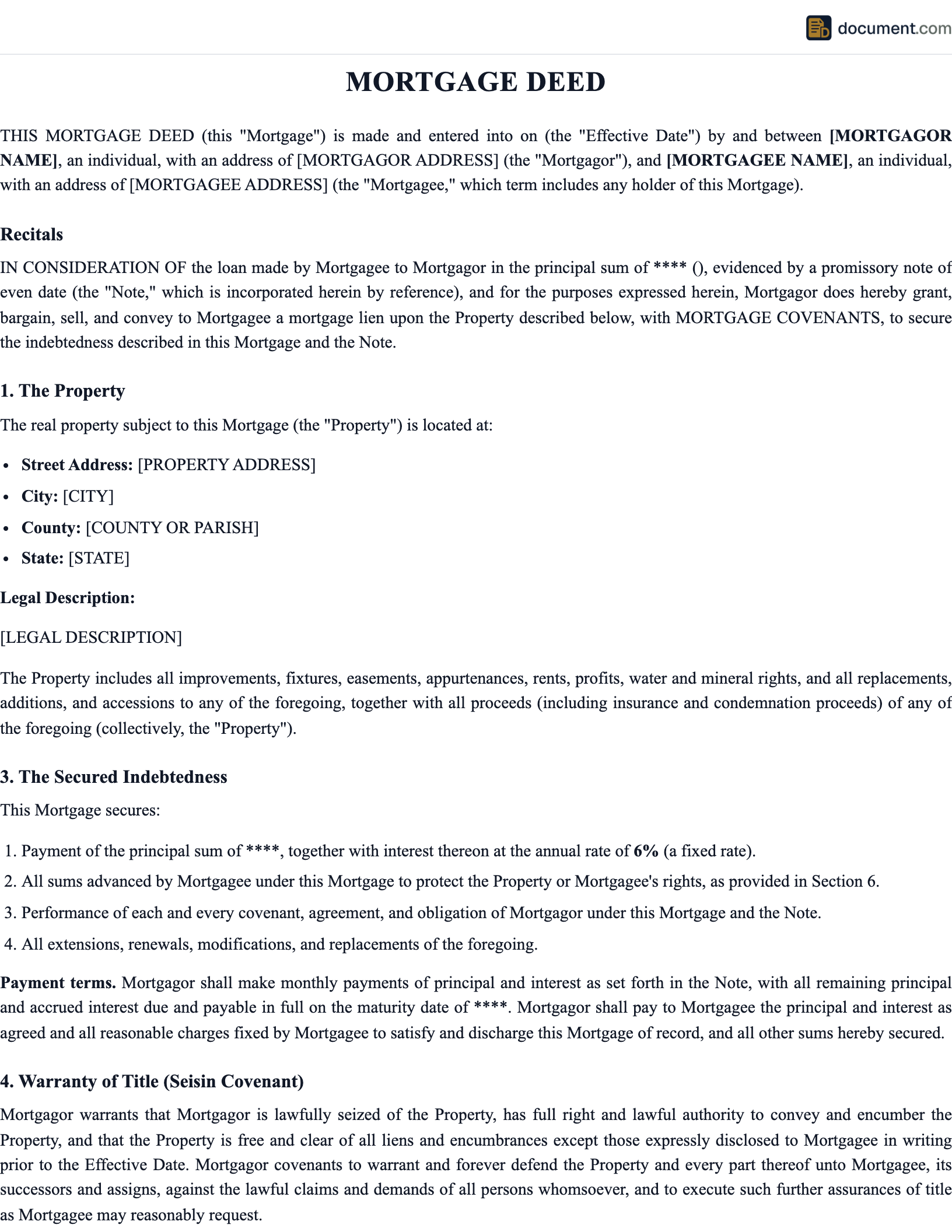



Rhode Island Mortgage Deed Overview
Rhode Island occupies a genuinely unusual position in American mortgage law. It is classified as a mortgage state, yet it allows nonjudicial foreclosure through a power-of-sale process embedded in Rhode Island General Laws Chapter 34-11. This hybrid system means most Rhode Island mortgages include a power-of-sale clause, giving the lender the right to foreclose without court involvement if the borrower defaults. Before exercising that right, however, the lender must provide a 30-day notice of default, and owner-occupied borrowers have the right to request mediation.
Rhode Island has no counties functioning as recording jurisdictions. Property records are maintained at the city and town level, and there are 39 municipalities, each with its own land evidence clerk. This decentralized system is the norm in New England and requires borrowers and lenders to identify the correct municipality before recording. Some Rhode Island properties, particularly in older urban areas like Providence and Newport, carry title histories with colonial-era complications that can affect a clean mortgage lien.
$30
Recording fee
$2.30 per $500
Transfer tax
Required
Notarization
0
Witnesses required
Rhode Island Requirements
Mortgage deeds in Rhode Island must be notarized and submitted to the land evidence records of the city or town where the property is located. There is no county recording office in Rhode Island. Documents should include the complete legal description, the names and addresses of the mortgagor and mortgagee, and the amount secured. Formatting requirements vary somewhat by municipality, so confirming the specific town or city clerk's requirements before submitting is worthwhile.
Rhode Island Specific Note
Rhode Island records real property documents at the city or town level, not at a county courthouse. Identify the correct municipality before attempting to record. Rhode Island's conveyance tax of $2.30 per $500 applies to deeds that transfer ownership, but mortgage instruments do not typically trigger the conveyance tax. Recording fees are set locally and vary by municipality. If the property is owner-occupied and the borrower is in default, the lender must comply with the state's mediation notification requirement before completing a power-of-sale foreclosure.
Document Requirements
- Notarization: Must be notarized by a Rhode Island notary public or authorized notary
- Witnesses: Rhode Island requires 0 additional witness(es)
- Legal Description: Complete legal description as it appears on the current deed of record
- Parcel Number: Assessor's parcel number or tax ID
- Return Address: Mailing address for returning the recorded document
- Formatting: Standard formatting with adequate margins, black ink, minimum 10-point font
How to File in Rhode Island
Recording in Rhode Island goes through the city or town land evidence clerk, not a county office. Identify the correct municipality first, since using the wrong town clerk will delay the recording and may leave the lien unrecorded in the correct records.
Prepare the Document
Complete the mortgage deed with the full legal names and addresses of all parties, the complete legal description of the property as it appears in the current land evidence records of the applicable municipality, the amount of the loan being secured, and a return mailing address. Include a power-of-sale clause if a nonjudicial foreclosure option is desired.
Notarize the Mortgage
The mortgagor must sign before a Rhode Island notary public. Bring government-issued photo ID to the notarization appointment. Rhode Island does not require witnesses beyond the notary. Remote online notarization is available under state law for parties who cannot appear in person.
Submit to the City or Town Clerk
Bring or send the executed and notarized mortgage deed to the land evidence office of the city or town where the property is located. In Rhode Island, this is not a county recorder but a municipal land evidence office. Call the specific municipality to confirm office hours, acceptable payment methods, and whether they accept e-recording or mail submissions.
Pay the Recording Fee
Recording fees in Rhode Island are set by each city and town individually and are not uniform across the state. Fees are typically charged per page. Mortgage instruments are generally not subject to Rhode Island's conveyance tax, which applies to ownership transfers rather than mortgage recordings. Confirm the exact fee schedule with the specific municipality before submitting.
Receive the Recorded Instrument
After recording, the land evidence office assigns an instrument or book-and-page number and returns the document to the address provided. Keep the recorded original with the loan documents. When the loan is paid in full, a discharge of mortgage must be recorded with the same municipality to release the lien from the land evidence records.
Rhode Island Fees & Costs
Typical costs for filing in Rhode Island. Actual fees may vary by county.
| Fee / Tax | Amount |
|---|---|
| Recording Fee | $30 |
| Transfer Tax | $2.30 per $500 |
| Notarization | $5 - $25 per signature |
| Certified Copy | $1 - $10 per page |
| Attorney Review (optional) | $150 - $500 |
Rhode Island Tax Implications
Rhode Island imposes a real estate conveyance tax of $2.30 per $500 of the property value on ownership transfers, paid when a deed conveying title is recorded. Mortgage instruments, however, transfer a security interest rather than title, so they are generally not subject to the conveyance tax. Recording fees for mortgage documents are set by individual municipalities and are modest compared to the conveyance tax on a typical home sale.
Mortgage interest on a principal or second residence may be deductible on federal income taxes for borrowers who itemize deductions. Rhode Island generally conforms to federal adjusted gross income for state income tax purposes, which means federal mortgage interest deductions flow through to some extent on Rhode Island returns, subject to state-specific modifications. Rhode Island residents with large mortgages should consult a Rhode Island tax professional to confirm the current state treatment.
Property taxes in Rhode Island are assessed and collected at the municipal level. Rhode Island has no statewide property tax. Tax rates vary significantly among the 39 cities and towns, and some municipalities offer homestead exemptions or other relief programs for owner-occupants. Borrowers should confirm the current tax rate and any applicable exemptions with the local tax assessor before closing to ensure the estimated tax escrow in the mortgage reflects actual obligations.
Sample Rhode Island Mortgage Deed
Preview of our Rhode Island-specific template. Your document will include all fields required for recording in any Rhode Island county.
MORTGAGE DEED
STATE OF RHODE ISLAND
Legal Document
PARTY INFORMATION
Name: [Full Legal Name]
Address: [Rhode Island Address]
County: [County]
PROPERTY DESCRIPTION
County: [County] State: Rhode Island
Legal Description: [Per Recorded Plat]
Parcel No.: [APN]
Rhode Island Mortgage Deed FAQ
Common questions about filing in Rhode Island, including requirements, fees, and tax implications.
Official Rhode Island Resources
Official state resources for verifying requirements and finding your local recording office.
Important Considerations
The city and town recording system is the feature of Rhode Island real property law that surprises out-of-state lenders and borrowers most often. There are no county recording offices in Rhode Island. Recording must be done with the land evidence clerk of the specific municipality where the property sits. Filing with a neighboring town or any other office will not provide constructive notice and will not establish priority against subsequent interests.
Older properties in Providence, Newport, Bristol, and other historic Rhode Island communities sometimes have title issues rooted in colonial-era grants, heirs property, and other complications that do not show up in a standard title search period. Title companies handling these properties typically review a longer chain of title and may require affidavits or other documentation to address gaps. Buyers and lenders dealing with properties in older neighborhoods should budget for a more thorough title examination.
Rhode Island's residential foreclosure mediation program gives owner-occupants the right to request mediation before the power-of-sale process is completed. Borrowers facing default on an owner-occupied property should be aware of this right and contact a HUD-approved housing counselor or Rhode Island Legal Services as soon as a default notice is received. The mediation period provides a window to explore alternatives, but the window closes if the borrower does not request mediation in time.
Rhode Island Practice Note
Rhode Island is a small state with a tight-knit real estate legal and title community. Attorney involvement in closings is common, particularly in Providence County and Newport County. For properties with any title complexity or where the mortgage document needs to include nonstandard provisions, working with a Rhode Island real estate attorney familiar with the specific municipality's land evidence records will save time and prevent recording errors.
Related Documents
Depending on your situation, you may need additional documents alongside this one. Below are commonly related documents that are frequently used together in real estate transactions.
Important Considerations
The city and town recording system is the feature of Rhode Island real property law that surprises out-of-state lenders and borrowers most often. There are no county recording offices in Rhode Island. Recording must be done with the land evidence clerk of the specific municipality where the property sits. Filing with a neighboring town or any other office will not provide constructive notice and will not establish priority against subsequent interests.
Older properties in Providence, Newport, Bristol, and other historic Rhode Island communities sometimes have title issues rooted in colonial-era grants, heirs property, and other complications that do not show up in a standard title search period. Title companies handling these properties typically review a longer chain of title and may require affidavits or other documentation to address gaps. Buyers and lenders dealing with properties in older neighborhoods should budget for a more thorough title examination.
Rhode Island's residential foreclosure mediation program gives owner-occupants the right to request mediation before the power-of-sale process is completed. Borrowers facing default on an owner-occupied property should be aware of this right and contact a HUD-approved housing counselor or Rhode Island Legal Services as soon as a default notice is received. The mediation period provides a window to explore alternatives, but the window closes if the borrower does not request mediation in time.
Rhode Island Practice Note
Rhode Island is a small state with a tight-knit real estate legal and title community. Attorney involvement in closings is common, particularly in Providence County and Newport County. For properties with any title complexity or where the mortgage document needs to include nonstandard provisions, working with a Rhode Island real estate attorney familiar with the specific municipality's land evidence records will save time and prevent recording errors.
Related Documents
Depending on your situation, you may need additional documents alongside this one. Below are commonly related documents that are frequently used together in real estate transactions.
Create your Rhode Island Mortgage Deed in under 5 minutes.
Answer a few questions and download a Rhode Island-compliant document, ready for the state agency.