



What Is an Eagle Scout Letter of Recommendation?
An Eagle Scout letter of recommendation is a formal reference letter submitted as part of the Eagle Scout rank advancement process within the Boy Scouts of America (now Scouts BSA). Eagle Scout is the highest rank attainable in Scouting, earned by approximately 6% of all Scouts, and the board of review that evaluates each candidate relies heavily on reference letters to assess whether the Scout has demonstrated the leadership, character, and commitment to service that the rank demands. The reference letters provide perspectives from multiple areas of the candidate's life — family, faith, education, employment, and community — creating a comprehensive picture of who the Scout is and how they have grown through their Scouting experience.
The Eagle Scout rank requirement traces back to 1911, making it one of the oldest and most respected youth achievement programs in the United States. To earn Eagle Scout, a candidate must earn at least 21 merit badges (including 13 required Eagle-required badges), serve actively in their troop for at least six months after achieving the Life Scout rank, demonstrate Scout spirit through adherence to the Scout Oath and Law, plan and lead an Eagle Scout service project that benefits the community, and pass the Eagle Scout board of review. The reference letters speak directly to the Scout spirit and character elements of these requirements, providing the board with evidence from people who have observed the Scout's development firsthand.
The distinction of Eagle Scout carries lifelong significance. Eagle Scouts are recognized in military promotions (entering at a higher rank), college admissions, scholarship competitions, and professional advancement. The board of review takes its responsibility seriously because the Eagle Scout badge represents a commitment to the values of the Scout Oath ("On my honor I will do my best to do my duty to God and my country and to obey the Scout Law; to help other people at all times; to keep myself physically strong, mentally awake, and morally straight") that the Scout is expected to uphold throughout their life. Reference letters that demonstrate how the candidate has lived these values through specific actions carry the most weight with the review board.
Leadership Development
Documents how the Scout has grown as a leader through troop activities and community service.
Scout Values
Demonstrates adherence to the twelve points of the Scout Law through specific personal examples.
Community Service
Highlights the Scout's service project and ongoing commitment to helping others in the community.
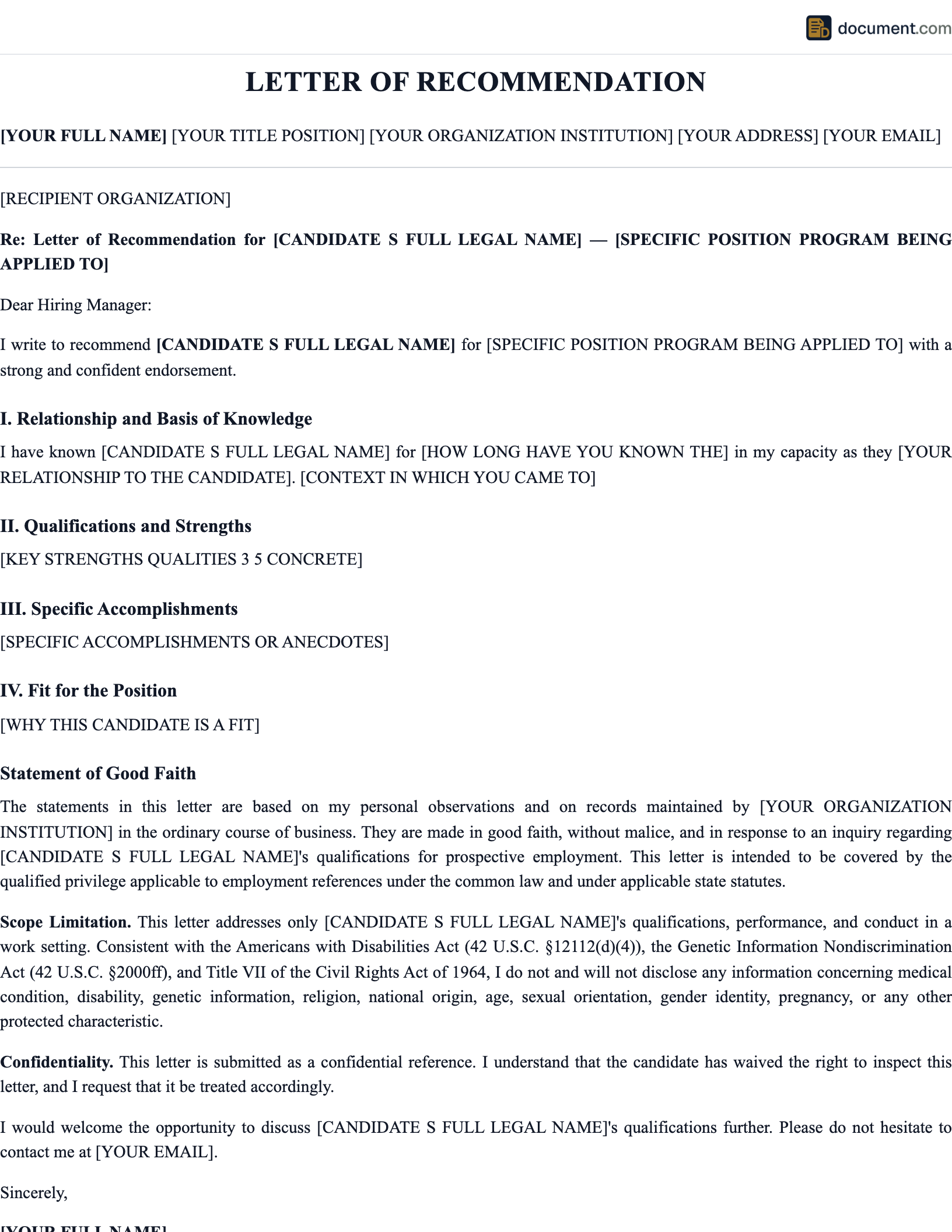
Eagle Scout Reference Letter Form Preview
Eagle Scout Reference Letter
For the Eagle Scout Board of Review
TO THE EAGLE SCOUT BOARD OF REVIEW
I am writing to recommend for the rank of Eagle Scout. I have known this Scout for years in my capacity as .
CHARACTER AND LEADERSHIP
Throughout our association, I have observed demonstrate the qualities of consistent with the Scout Oath and Law.
SERVICE AND COMMUNITY IMPACT
I have personally witnessed this Scout's dedication to service through .
RESPECTFULLY SUBMITTED
Signature / Date
Key Components
An effective Eagle Scout reference letter must include these essential elements to support the candidate's board of review:
| Component | Purpose | Key Details |
|---|---|---|
| Writer Identification | Establishes reference category | Name, role (parent, teacher, employer, religious leader), contact info |
| Relationship Duration | Shows depth of knowledge | How long, in what context, frequency of interaction |
| Scout Law Examples | Demonstrates Scout spirit | Specific examples tied to trustworthy, loyal, helpful, friendly, etc. |
| Leadership Evidence | Confirms leadership growth | Troop positions, project leadership, mentoring younger Scouts |
| Service Commitment | Shows dedication beyond requirements | Community service, volunteer work, helping others |
| Character Growth | Documents personal development | Maturity, challenges overcome, skills developed |
| Clear Endorsement | Provides unambiguous recommendation | Explicit statement supporting the Eagle Scout rank |
How to Write an Eagle Scout Reference Letter
Understand Your Role as a Reference Writer
Identify which reference category you represent — parent/guardian, religious leader, educational leader, employer, or personal reference. Each category speaks to a different dimension of the Scout's character: educators can address academic discipline and intellectual growth; religious leaders can discuss spiritual development and community service; employers can speak to work ethic, reliability, and professional conduct. Understanding your role helps you focus the letter on observations relevant to your unique perspective rather than trying to cover every aspect of the Scout's life.
Gather Specific Examples from Your Experience
Before writing, reflect on specific instances where you observed the Scout demonstrating character, leadership, or service. Write down dates, events, and details while they are fresh. Ask yourself: When did I see this Scout help someone without being asked? When did they demonstrate integrity under pressure? How have they grown in maturity and responsibility during the time I have known them? The Scout may provide a summary of their achievements, but the most valuable content in your letter comes from your own firsthand observations.
Connect Observations to Scout Values
Frame your specific examples in terms of the Scout Oath and Scout Law. The board of review is evaluating whether the candidate exemplifies 'Scout spirit,' so explicitly connecting your observations to specific Scout Law points strengthens the letter. For example, rather than saying 'Alex is honest,' describe a situation where you witnessed Alex's trustworthiness: 'When Alex found a wallet containing $200 at a school event, he immediately turned it in to the office and waited to ensure it was returned to its owner — a demonstration of the Scout Law's emphasis on being trustworthy.'
Describe Leadership and Growth
Eagle Scout requires demonstrated leadership, so include examples of the Scout leading others, taking initiative, and accepting responsibility. Describe how the Scout has grown during the time you have known them — the board wants to see a trajectory of development, not just a static snapshot. If you are a teacher, describe how the Scout's classroom participation and academic engagement evolved. If you are a religious leader, describe their growing involvement in the faith community and service to congregants.
Address the Service Project if Applicable
If you had personal involvement with or knowledge of the Eagle Scout service project, describe what you observed. The service project is one of the most significant Eagle Scout requirements — the Scout must plan, develop, and lead a project that benefits a community organization. Your observations about the Scout's project leadership, problem-solving, volunteer coordination, and commitment to quality provide the board with valuable corroborating evidence beyond the project workbook documentation.
Close with a Clear Recommendation
End with an unequivocal statement of support: 'I wholeheartedly recommend [name] for the rank of Eagle Scout.' Include your willingness to be contacted for additional information, your phone number and email address, and your signature with printed name and date. Follow any formatting requirements from the troop or council advancement committee, and submit the letter in a sealed envelope if instructed to do so. Keep a personal copy in case the advancement committee has follow-up questions.
The Eagle Scout Board of Review Process
The Eagle Scout board of review is the final step in earning the Eagle Scout rank and serves as a comprehensive evaluation of the candidate's Scouting career, character development, and readiness to represent the highest ideals of the Scouting movement. The board typically consists of at least three members of the troop committee (but not the Scoutmaster, who has already conducted a separate Scoutmaster Conference) and may include district-level volunteers. Reference letters are reviewed by board members before or during the review session and inform the questions they ask the candidate.
During the board of review, the candidate discusses their Scouting journey, leadership experiences, service project, and how Scouting has shaped their values and goals. The board evaluates whether the candidate has met all requirements and — equally important — whether they have internalized the Scout Oath and Scout Law as guiding principles. Strong reference letters provide the board with independent corroboration of the candidate's character from multiple perspectives, making them a critical component of the overall evaluation. Candidates must complete all Eagle Scout requirements, including the board of review, before their eighteenth birthday (with limited exceptions for Scouts with documented disabilities).
Deadline Awareness
Eagle Scout candidates face a firm age deadline — all requirements including the board of review must be completed before the Scout's eighteenth birthday. Delays in collecting reference letters can postpone the board of review and potentially prevent the candidate from earning Eagle Scout. If you are asked to write a reference, respond promptly and meet the stated deadline. If circumstances prevent timely completion, notify the candidate immediately so they can arrange alternatives.
Frequently Asked Questions
Official Resources
Authoritative resources on Eagle Scout requirements, the board of review process, and Scouting advancement procedures.
BSA - Eagle Scout Service Project Workbook
Official Boy Scouts of America resource for Eagle Scout service project planning, execution, and documentation requirements.
BSA - Advancement and Awards
Comprehensive BSA guide to rank advancement procedures, including Eagle Scout requirements and board of review processes.
National Eagle Scout Association
NESA resources for Eagle Scouts and candidates, including scholarship information, networking, and recognition programs.
BSA Eagle Scout Rank Application (Form 512-728)
Official Eagle Scout rank application form including reference letter requirements and submission procedures.
BSA Guide to Advancement
Official BSA policies and procedures for all advancement levels, including detailed Eagle Scout board of review guidelines.
BSA - Eagle Scout FAQ
Frequently asked questions about the Eagle Scout rank, including eligibility, requirements, and the review process.
Create Your Eagle Scout Reference Letter
Draft a compelling recommendation letter that highlights leadership, Scout values, and community service for the Eagle Scout board of review.
Create DocumentNo account required. Free to create and preview.