



Hawaii's Unique Rental Landscape
Hawaii's rental market is unlike anywhere else in the United States. The state consistently ranks among the most expensive for renters, with median rents on Oahu exceeding mainland averages by 50-100%. The limited land area on each island, strict zoning regulations, and enormous demand from both residents and the military create a chronically tight housing market.
HRS Chapter 521 governs residential landlord-tenant relationships in Hawaii. The Code includes a statutory duty to mitigate damages under HRS § 521-53, meaning landlords must make reasonable efforts to re-rent units when tenants break their leases. Given Hawaii's tight market, units typically re-rent very quickly — often within days on Oahu — which significantly limits your financial exposure.
Hawaii's security deposit is limited to one month's rent and must be returned within 14 days after the tenancy ends (HRS § 521-44). This is one of the shortest deposit return windows in the nation. Hawaii also requires landlords to pay interest on deposits held for longer than one year.
Habitability in Hawaii's Tropical Climate
Hawaii's tropical climate creates unique habitability concerns. While heating is rarely an issue, persistent moisture, salt air, and tropical storms create challenges including mold growth (a pervasive problem in Hawaii's humid environment), termite damage (Hawaii has some of the highest termite infestation rates in the US), roof leaks from heavy tropical rains, and pest issues unique to the islands (centipedes, roaches, rats).
HRS § 521-42 requires landlords to maintain premises in habitable condition, including compliance with building codes, maintaining all provided appliances and systems, and keeping common areas clean and safe. The tropical climate means ventilation is critical — units without adequate airflow can quickly develop mold and humidity-related damage.
Hurricane season (June through November) can render units uninhabitable. If your unit suffers hurricane damage and the landlord cannot restore habitability within a reasonable time, you may terminate the lease. Contact the Hawaii Department of Health at 808-586-4700 for habitability inspections.
Termination Grounds Under HRS Chapter 521
Hawaii law recognizes several protected grounds for early termination. HRS § 521-63 allows termination when the landlord fails to maintain habitability after proper notice. HRS § 521-81 provides domestic violence protections. Federal SCRA protections are especially significant in Hawaii, which has one of the highest per-capita military populations in the nation.
Hawaii also allows early termination when the landlord substantially violates the rental agreement, when the landlord retaliates against the tenant for exercising legal rights (HRS § 521-74), or when the landlord repeatedly violates the tenant's right to quiet enjoyment. Hawaii's small community dynamic means disputes are often resolved through mediation rather than litigation.
Inter-island relocation is not a protected reason for early termination, but many Hawaii landlords understand the realities of island living, including job transfers between islands, and may be willing to negotiate. Hawaii's Mediation Center of the Pacific offers free landlord-tenant mediation services.
Financial Implications of Breaking a Hawaii Lease
Given Hawaii's extremely high rents (Honolulu averages are among the highest in the country), early termination penalties can be financially devastating. However, the statutory duty to mitigate and Hawaii's tight rental market work together to limit actual exposure. A unit in Waikiki or Kailua may re-rent within days; a rural unit on the Big Island may take longer.
Hawaii's one-month security deposit limit (HRS § 521-44) means the landlord has less leverage than in states that allow larger deposits. The 14-day return deadline further pressures landlords to resolve deposit matters quickly. If the landlord fails to return the deposit within 14 days, they may owe you the full deposit amount plus costs.
Many Hawaii leases include early termination clauses, particularly in military-heavy areas. The typical fee on Oahu is one to two months' rent. Given median rents of $2,000-$3,500 on Oahu, this is a significant but often preferable alternative to open-ended liability.
Domestic Violence Protections (HRS 521-81)
HRS § 521-81 allows victims of domestic violence, sexual assault, or stalking to terminate their lease upon providing written notice and documentation, such as a temporary restraining order, police report, or statement from a DV agency. The termination is effective upon vacating or at the end of the rental period, whichever is sooner.
The landlord may not charge early termination penalties and must return the deposit within 14 days. Hawaii's small community size on each island can create safety concerns for DV victims — it may be difficult to relocate far enough from the abuser while remaining on the same island.
The Hawaii State Coalition Against Domestic Violence can be reached at 808-832-9316. Domestic Violence Action Center provides direct services on Oahu at 808-531-3771. Neighbor island resources are available through local shelters.
Military Presence in Hawaii
Hawaii has one of the largest military populations per capita in the nation. Major installations include Joint Base Pearl Harbor-Hickam, Schofield Barracks, Fort Shafter, Marine Corps Base Hawaii (Kaneohe Bay), Wheeler Army Airfield, and Camp H.M. Smith. The military presence heavily influences Oahu's rental market, with many landlords specifically targeting military tenants.
SCRA terminations are extremely common in Hawaii. Most Oahu landlords have well-established procedures for processing SCRA terminations. The legal assistance offices at Pearl Harbor, Schofield, and MCBH provide free SCRA guidance and can intervene if a landlord refuses to honor your rights.
Hawaii's isolation means PCS moves almost always involve relocation to the mainland, making SCRA termination the cleanest exit. Hawaii does not have a state-level military tenant protection statute beyond SCRA, but the military-friendly culture means disputes are rare.
Notice Periods in Hawaii
Hawaii's notice periods differ from many mainland states. For month-to-month tenancies, HRS § 521-71 requires 28 days notice (not 30). For week-to-week tenancies, 10 days is required. For habitability terminations, the tenant must give written notice and allow a reasonable cure period. DV terminations are effective upon vacating.
Notices should be delivered by certified mail, personal delivery, or other method that provides proof of receipt. Given Hawaii's island geography, inter-island mail can take longer than expected — allow extra time for delivery if your landlord is on a different island.
Sample Hawaii Early Termination Letter
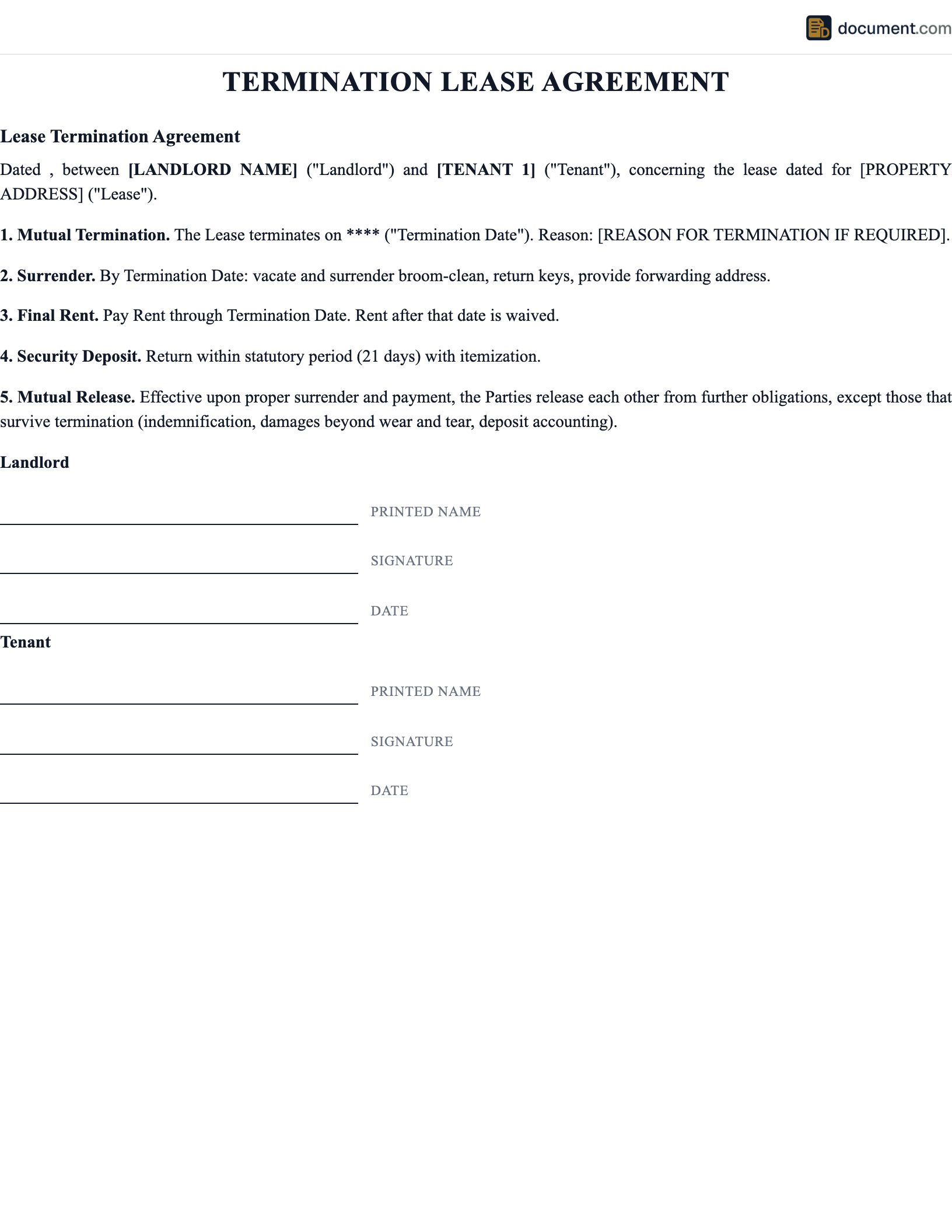
Below is a preview of our Hawaii-specific early lease termination letter with proper statutory references for HI law.
EARLY LEASE TERMINATION NOTICE
STATE OF HAWAII
TENANT:
Name: [Full Legal Name]
Address: [Hawaii Rental Address]
LANDLORD:
Name: [Landlord Name]
Address: [Mailing Address]
TERMINATION DETAILS:
Vacate Date: [Date]
Reason: [Legal Reason]
Hawaii Early Lease Termination FAQ
Answers to common questions about breaking a lease early in Hawaii.
Official Hawaii Resources
Verified resources for Hawaii-specific tenant rights and legal assistance.
Create your Hawaii Termination Early Lease Agreement in under 5 minutes.
Answer a few questions and download a Hawaii-compliant document, ready for the state agency.