



Alaska Tenant Rights Overview
Alaska's landlord-tenant law is codified in the Uniform Residential Landlord and Tenant Act at AS 34.03.010 through 34.03.360. This comprehensive statute governs most residential leases and provides meaningful protections when circumstances require early termination, including one of the nation's shortest security deposit return timelines at just 14 days.
The statutory duty to mitigate under AS 34.03.230(c) is one of the most significant protections. When a tenant abandons the premises, the landlord must make reasonable efforts to re-rent at a fair rental. Alaska's unique geography means rental markets vary dramatically between Anchorage, Fairbanks, Juneau, and remote bush communities, which affects how quickly a landlord can reasonably find a replacement tenant.
In remote Alaska communities where housing is extremely limited, re-renting may take much longer than in urban areas. Courts may consider this reality when assessing damages, but the landlord still must demonstrate they made genuine efforts. Offering to help advertise the unit or identify replacement tenants can significantly reduce your exposure in these areas.
Grounds for Early Termination in Alaska
Under AS 34.03.100(a), a landlord must maintain premises in habitable condition. Alaska's extreme climate — with interior temperatures dropping to -40°F or below — makes heating system failures potentially life-threatening, giving habitability claims special urgency that does not exist in most other states.
AS 34.03.360 provides specific protections for victims of domestic violence, sexual assault, or stalking, with termination effective 30 days after notice. Alaska also permits early termination when the landlord materially violates the lease or fails to comply with health and safety codes.
Seasonal work patterns in Alaska — fishing, tourism, oil field work — create common early departure scenarios. While seasonal relocation is not a legally protected reason, many Alaska landlords build flexibility into leases. Check for seasonal termination provisions before assuming you have no options.
Financial Consequences of Breaking an Alaska Lease
Alaska does not impose a statutory cap on early termination fees, but the duty to mitigate under AS 34.03.230(c) limits your total exposure. Your liability is generally limited to rent from the date you vacate until the landlord re-rents the unit, plus reasonable costs of re-renting (advertising, cleaning, minor repairs).
Alaska's 14-day security deposit return deadline (AS 34.03.070) is among the strictest in the country. If the landlord fails to return the deposit or provide an itemized deduction statement within 14 days, you may be entitled to recover the full deposit amount plus damages. This quick timeline can work in your favor when negotiating an early termination.
In Anchorage and Fairbanks, the average time to re-rent a vacant unit is typically 2-4 weeks during summer and 4-8 weeks in winter. In rural areas, re-renting may take significantly longer. Understanding your local market helps you estimate your total financial exposure and negotiate effectively with your landlord.
Required Notice Periods in Alaska
For habitability terminations under AS 34.03.180, you must give written notice and typically allow 10 days for non-emergency repairs. For DV terminations under AS 34.03.360, the notice period is 30 days or end of the rental period, whichever comes first. Month-to-month tenancies require 30 days under AS 34.03.290(b).
In remote Alaska communities without reliable USPS service, consider hand delivery with a witness or email confirmation as backup documentation. Certified mail remains the gold standard, but practical realities in bush Alaska may require alternative delivery methods that a court would accept.
Habitability Standards in Alaska
Habitability in Alaska carries life-or-death implications absent in temperate states. Under AS 34.03.100, landlords must maintain heating systems, prevent pipe freezing, and ensure structural integrity against extreme weather. A heating failure in Fairbanks in January at -50°F is a genuine emergency.
Common Alaska-specific habitability issues include inadequate insulation, frozen or burst pipes, ice dam damage, roof failures from snow load, black mold from moisture buildup during the long heating season, and wildlife intrusion. Document conditions with photos and contact your local building code enforcement office.
Alaska's earthquake risk adds another dimension — the 2018 Anchorage earthquake damaged thousands of residential units. If your unit sustains structural damage from seismic activity, you may terminate immediately under habitability provisions without the standard repair notice period.
Domestic Violence Protections in Alaska
Alaska has robust statutory protections under AS 34.03.360. Victims of domestic violence, sexual assault, or stalking may terminate by providing written notice plus a protective order, police report, or verification from a qualified third party. Termination takes effect 30 days after notice or at the end of the rental period, whichever comes first.
The landlord may not impose early termination penalties, charge rent beyond the termination date, or report the termination to credit agencies negatively. The 14-day deposit return timeline still applies. Alaska's geography presents unique DV challenges — in many remote communities, there may be only one rental option.
The Alaska Network on Domestic Violence and Sexual Assault (ANDVSA) connects victims with safe housing resources, including emergency shelter and transitional housing. Contact them at 907-586-3650 or visit andvsa.org.
Military Protections in Alaska
Alaska hosts significant military installations: Joint Base Elmendorf-Richardson (JBER) near Anchorage and Eielson Air Force Base near Fairbanks. The state's strategic location means assignments here often involve extreme conditions that amplify the need for flexible lease arrangements.
Federal SCRA protections apply fully. Most landlords near military bases are experienced with SCRA terminations. Base housing offices maintain lists of military-friendly landlords. The JBER Legal Assistance Office (907-384-0371) provides free SCRA counsel, as does the Eielson legal office.
Alaska does not have a separate state-level military tenant protection statute. However, the extreme conditions of Alaska assignments — harsh climate, isolation, unique deployment patterns for Arctic operations — can support negotiated early terminations even outside SCRA when dealing with reasonable landlords.
Sample Alaska Early Termination Letter
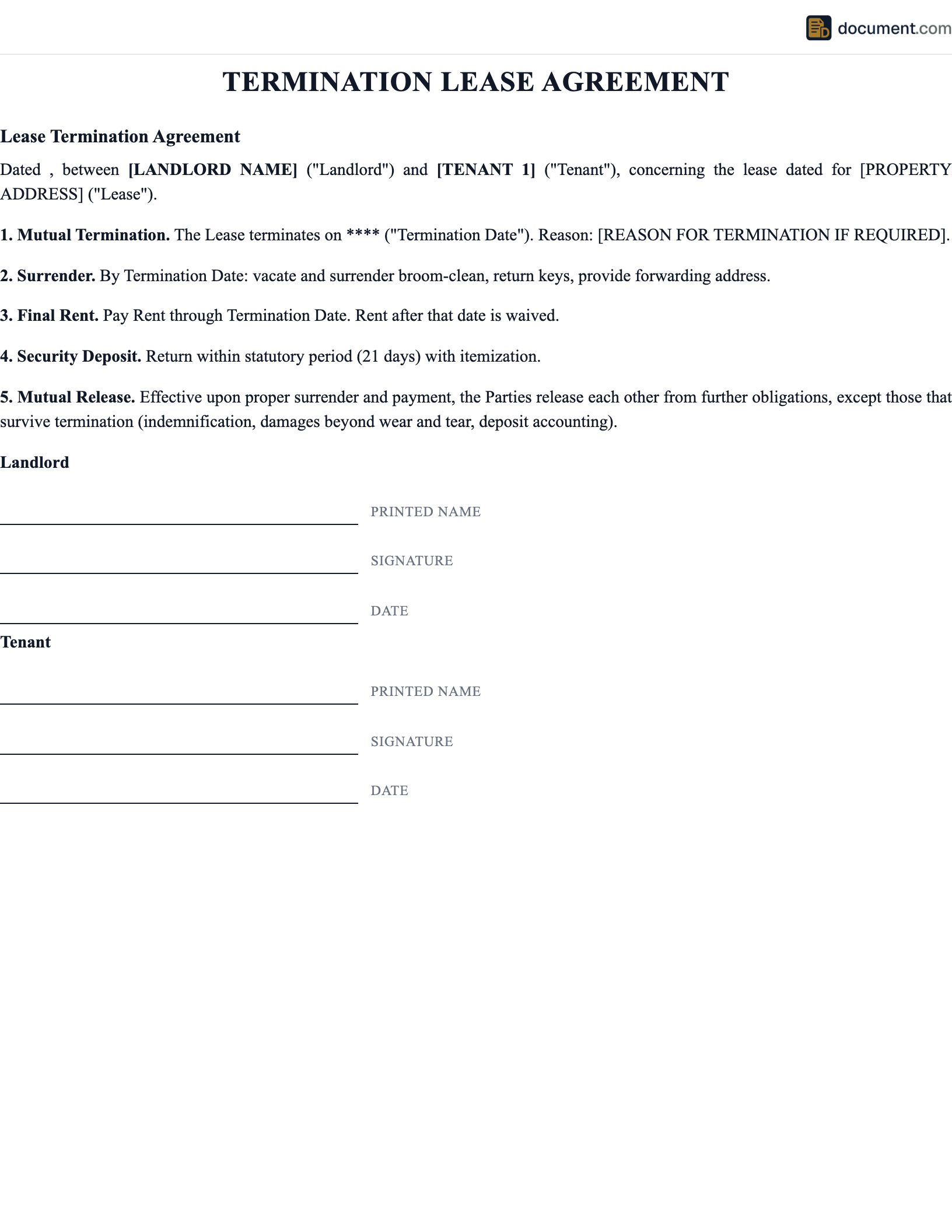
Below is a preview of our Alaska-specific early lease termination letter with proper statutory references for AK law.
EARLY LEASE TERMINATION NOTICE
STATE OF ALASKA
TENANT:
Name: [Full Legal Name]
Address: [Alaska Rental Address]
LANDLORD:
Name: [Landlord Name]
Address: [Mailing Address]
TERMINATION DETAILS:
Vacate Date: [Date]
Reason: [Legal Reason]
Alaska Early Lease Termination FAQ
Answers to common questions about breaking a lease early in Alaska.
Official Alaska Resources
Use these resources for Alaska-specific tenant rights information and legal assistance.
Create your Alaska Termination Early Lease Agreement in under 5 minutes.
Answer a few questions and download a Alaska-compliant document, ready for the state agency.