



What Is a Landlord Notice to Enter?
A landlord notice to enter is a formal written document that a landlord provides to a tenant before accessing the rental property. Most states require landlords to give advance written notice before entering a tenant's unit for non-emergency reasons such as repairs, inspections, showings to prospective tenants or buyers, and routine maintenance. The notice must typically include the date, approximate time, and reason for entry.
Proper notice to enter is both a legal requirement and a best practice for maintaining positive landlord-tenant relationships. Failing to provide adequate notice can expose landlords to claims of harassment, invasion of privacy, or constructive eviction. In some states, repeated unauthorized entry can give tenants grounds to break their lease or seek damages in court.
The required notice period varies significantly by state, ranging from 12 hours to 48 hours or more. Some states specify that entry must occur during reasonable hours (typically defined as normal business hours), while others leave the timing to the parties' agreement. Emergency situations such as fire, flooding, or gas leaks generally allow immediate entry without prior notice.
A well-drafted notice to enter should include the property address, the specific unit or area to be accessed, the date and approximate time window for entry, the specific reason for entry, the name and contact information of the person who will enter, and a reference to the lease provision or state statute authorizing the entry.
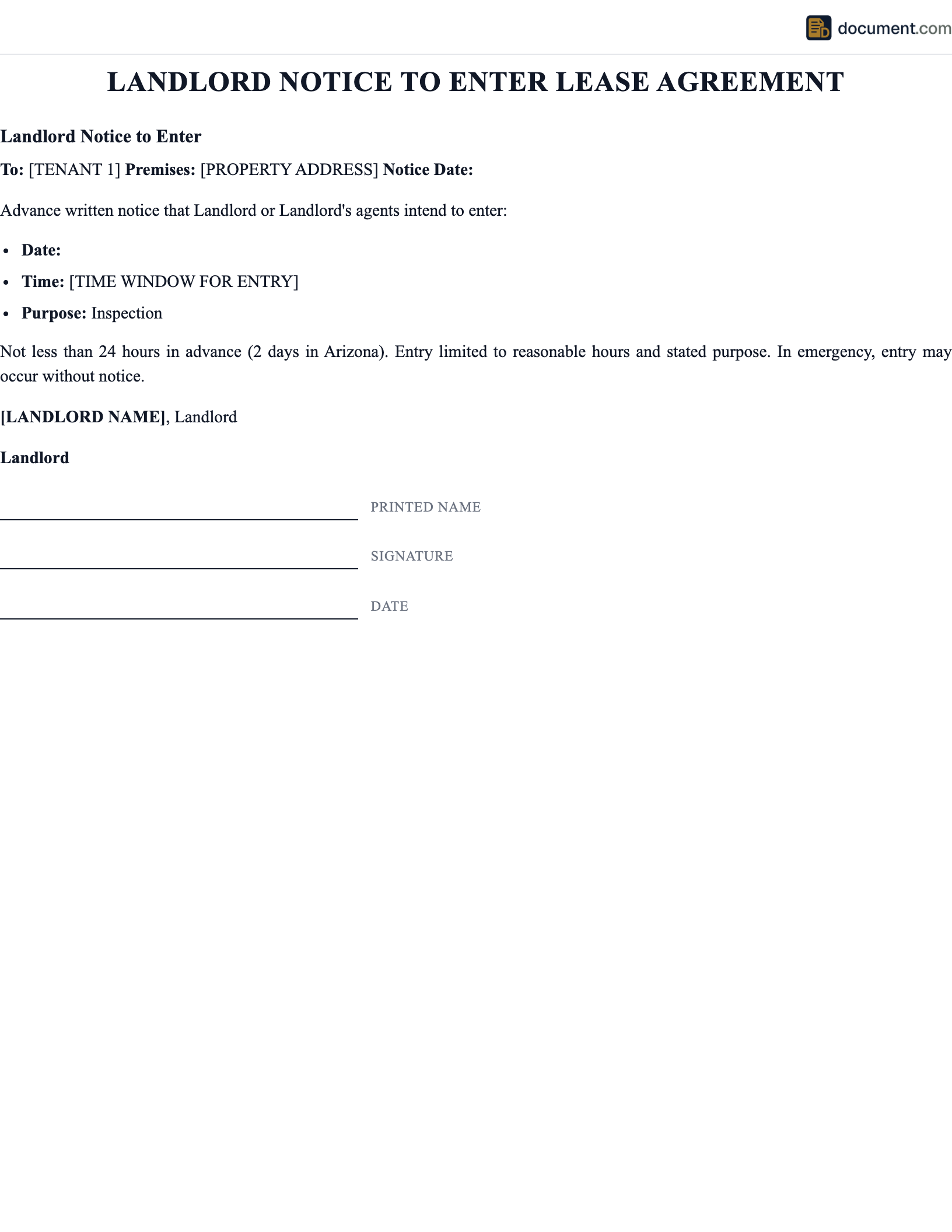
Landlord Notice to Enter Form Preview
Our landlord notice to enter form includes all the fields required for a valid document. Below is a preview of the key sections. Your customized document will be tailored to your state's specific requirements.
LANDLORD NOTICE TO ENTER
Legal Document Template
LANDLORD / PROPERTY MANAGER
Name: [Full Legal Name]
Address: [Mailing Address]
Phone: [Contact Number]
TENANT(S)
Name: [Tenant Full Name]
Unit: [Property Address & Unit]
Lease Date: [Lease Start Date]
ENTRY DETAILS
Date of Entry: [Date]
Time Window: [Start Time] to [End Time]
Reason: [Specific Purpose]
Person Entering: [Name and Title]
NOTICE INFORMATION
Date Sent: [Today's Date]
Delivery Method: [Hand/Posted/Mail/Email]
State Required Notice: [Hours]
Lease Reference: [Section Number]
Key Provisions
A landlord notice to enter requires several important provisions to be legally effective and protect all parties involved. Review each provision carefully.
Notice Period Requirements
Specify the minimum notice period required by your state law (typically 24-48 hours) and the method of delivery (hand delivery, posting on door, mail, email if permitted by lease).
Permitted Entry Reasons
List all lawful reasons for entry including repairs, inspections, pest treatment, showing the property, appraisals, smoke detector checks, and seasonal maintenance.
Entry Time Restrictions
Define the hours during which entry is permitted, typically normal business hours (8 AM to 6 PM) or as specified by state law, and any provisions for weekend or evening access.
Emergency Entry Rights
Document the landlord's right to enter without notice in genuine emergencies such as fire, flooding, gas leaks, or situations presenting immediate danger to persons or property.
Tenant Rights and Remedies
Acknowledge the tenant's right to quiet enjoyment, procedures for objecting to entry timing, and remedies available if the landlord fails to provide proper notice.
Documentation Requirements
Establish record-keeping practices including retaining copies of all notices, documenting delivery method and date, and maintaining entry logs for property management.
When to Use A Landlord Notice to Enter
Understanding when to use a landlord notice to enter helps ensure you select the right document for your situation. Below are the most common use cases.
Scheduled Maintenance
Regular property maintenance such as HVAC filter changes, plumbing inspections, pest control treatments, and seasonal maintenance like gutter cleaning or furnace servicing.
Property Inspections
Periodic property condition inspections to check for lease violations, maintenance issues, safety hazards, or unauthorized modifications or occupants.
Property Showings
Showing the property to prospective tenants when the current lease is ending, to prospective buyers if the property is for sale, or to insurance adjusters or appraisers.
Emergency Repairs
Urgent repairs needed to prevent property damage or address safety hazards, such as water leaks, electrical problems, broken locks, or heating system failures in winter.
How to Draft A Landlord Notice to Enter
Drafting a landlord notice to enter involves several steps to ensure the document is legally sound, complete, and enforceable in your state. Follow these steps for a thorough and professional document.
Gather Required Information
Collect all necessary details including party names, addresses, property or subject matter descriptions, financial terms, and any state-specific requirements for your jurisdiction.
Select Your State
Choose your state to ensure the document includes all required provisions, disclosures, and formatting requirements mandated by your jurisdiction's laws.
Complete All Sections
Fill in every section of the document carefully, including all parties, terms, conditions, and any special provisions relevant to your specific situation.
Review and Sign
Review the completed document for accuracy, have all parties sign, and arrange for notarization or witnesses if required by your state. Keep copies for all parties.
Distribute and Store
Provide signed copies to all parties involved. Store the original in a secure location and file any required copies with the appropriate government offices or recording agencies.
Legal Requirements
Legal requirements for a landlord notice to enter vary by state. Each state has its own statutes governing this type of document, including specific provisions, disclosures, notice periods, and execution requirements. Selecting your state ensures your document meets all local requirements.
Important Legal Notice
This document template is provided for informational purposes and general guidance. While designed to comply with common legal requirements, laws vary by state and locality. For significant transactions or complex situations, consult with a licensed attorney in your jurisdiction to ensure full compliance with applicable laws.
- State Compliance: Each state has specific legal requirements that must be met for this document to be enforceable
- Proper Execution: The document must be properly signed by all parties, with notarization or witnesses as required by your state
- Required Disclosures: Many states mandate specific disclosures or addenda that must accompany this type of document
- Filing Requirements: Some states require filing or recording with government offices for the document to be fully effective
Notice to Enter by State
Select your state for a landlord notice to enter customized to your jurisdiction's specific legal requirements, disclosures, and formatting standards.
Sample Landlord Notice to Enter
Below is a preview of our landlord notice to enter template. Your customized document will include all fields and provisions required for your specific state and situation.
LANDLORD NOTICE TO ENTER
Template Preview
LANDLORD / PROPERTY MANAGER
Name: [Full Legal Name]
Address: [Mailing Address]
Phone: [Contact Number]
TENANT(S)
Name: [Tenant Full Name]
Unit: [Property Address & Unit]
Lease Date: [Lease Start Date]
ENTRY DETAILS
Date of Entry: [Date]
Time Window: [Start Time] to [End Time]
Reason: [Specific Purpose]
Person Entering: [Name and Title]
NOTICE INFORMATION
Date Sent: [Today's Date]
Delivery Method: [Hand/Posted/Mail/Email]
State Required Notice: [Hours]
Lease Reference: [Section Number]
Frequently Asked Questions
Common questions about creating and using a landlord notice to enter, including legal requirements, costs, and best practices.
Create your Landlord Notice To Enter Lease Agreement in under 10 minutes.
Answer a few questions and download a compliant, attorney-drafted document ready for your state.