
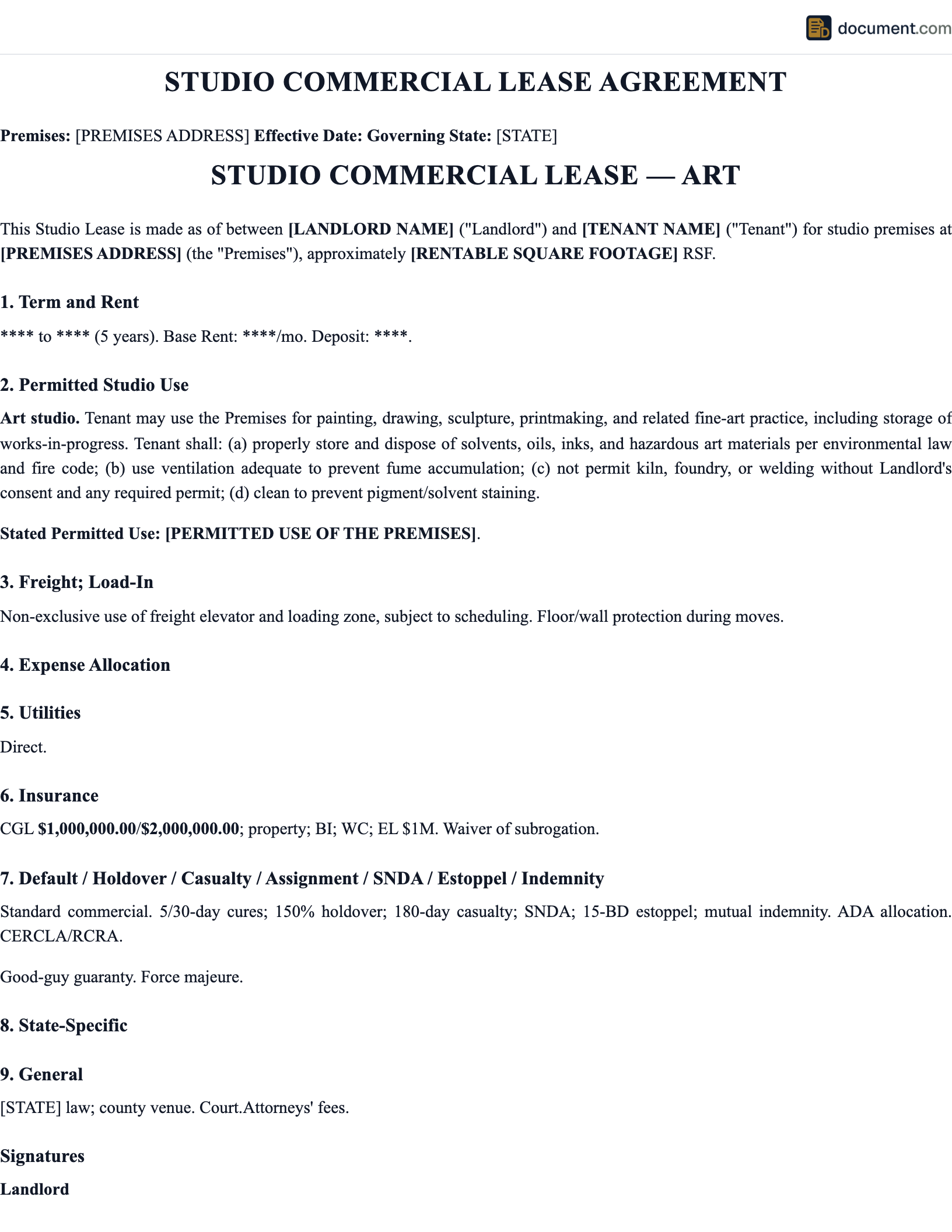



Pennsylvania Studio Lease Agreement Overview
Pennsylvania offers some of the most interesting creative studio opportunities in the Northeast, primarily due to its historic industrial building stock. Philadelphia's Kensington and North Philadelphia neighborhoods contain large tracts of former textile and manufacturing facilities that have been partially converted to artist studios and maker spaces, often at rents well below what similar square footage would cost in New York or Boston. Pittsburgh's Lawrenceville, Strip District, and South Side have undergone arts-driven revitalization that created vibrant studio communities in former steel and manufacturing buildings with the high ceilings and heavy infrastructure that creative tenants prize.
Pennsylvania commercial lease law provides no special protections for artist or creative studio tenants. Studio leases are commercial contracts subject to Pennsylvania's Landlord and Tenant Act of 1951, with the negotiated terms controlling nearly every aspect of the relationship. One important Pennsylvania-specific issue for studio tenants is the confession of judgment clause, which Pennsylvania courts allow in commercial lease agreements and which some landlords include as a default enforcement mechanism. Pennsylvania's historic district frameworks in both Philadelphia and Pittsburgh also create building modification restrictions that creative tenants must understand before planning any studio improvements.
$188.50
Filing fee
Required
Notarization
0
Witnesses required
Recorder
Filing office
Pennsylvania Requirements
Pennsylvania has specific requirements for this type of legal document. Meeting these requirements ensures your document is accepted by the recorder of deeds and is legally enforceable.
Pennsylvania Studio Lease Note
Pennsylvania permits confession of judgment clauses in commercial leases; review any studio lease for this provision and negotiate its removal. Pennsylvania has no artist studio-specific statute. Historic buildings in Philadelphia and Pittsburgh may be subject to preservation restrictions that limit modification rights even where the lease grants them. No Pennsylvania statute caps commercial security deposits or governs their return.
Key Requirements for Pennsylvania Studio Leases
- Historic District Verification: Confirm whether the building is in a Philadelphia or Pittsburgh historic district; modifications may require historic commission approval regardless of lease terms
- Confession of Judgment Review: Review the lease for cognovit note or confession of judgment clauses, which allow landlords to obtain immediate judgment for defaults without advance notice
- Zoning Verification: Confirm with Philadelphia Department of Planning or Pittsburgh Zoning Office that the building's zone permits your specific creative activities
- Improvement Rights: Negotiate explicit rights to install soundproofing, ventilation, specialized electrical service, and studio-specific infrastructure, with clear ownership and removal terms
- Security Deposit: No Pennsylvania statutory cap; negotiate amount, 30-day return deadline, and itemized written accounting requirement for deductions
How to Execute a Pennsylvania Studio Lease
Pennsylvania studio leases are executed as commercial contracts. These steps reflect best practice for creative tenants leasing studio space in Philadelphia, Pittsburgh, or elsewhere in Pennsylvania.
Research Historic and Zoning Status
Before signing any Pennsylvania studio lease, confirm whether the building is in a historic district (Philadelphia's Historic Preservation Office or Pittsburgh's Historic Review Commission govern modifications) and verify the zoning designation supports your creative activities. Kensington's industrial zones generally permit artisan production; mixed-use zones may not.
Review for Confession of Judgment Clauses
Have a Pennsylvania attorney review the lease for confession of judgment or cognovit note provisions before signing. These are unique to Pennsylvania commercial leases and create significant legal exposure. Negotiate their removal or replacement with a standard notice-and-cure provision.
Negotiate Studio-Specific Provisions
Include explicit permitted use language naming your activities, improvement rights for soundproofing and ventilation, 24-hour access provisions, holdover rate specification, and security deposit return provisions. Address noise ordinance compliance obligations clearly between landlord and tenant.
Execute the Lease in Writing
Pennsylvania's statute of frauds requires leases over three years to be in writing; best practice is to put all studio leases in writing regardless of term. Both parties execute the lease. Notarization is not required for enforceability but is needed if you record a memorandum of lease with the Pennsylvania Recorder of Deeds.
Document Move-In Condition
Conduct a detailed move-in inspection and document the condition of the space with photographs and a written inventory. Pennsylvania courts enforce lease provisions as written, so baseline documentation of any pre-existing damage is essential for protecting your security deposit at lease end, particularly in older industrial studio buildings.
Tax Implications and Costs for Pennsylvania Studio Tenants
Pennsylvania does not impose a commercial rent tax, and Pennsylvania has no state sales tax on commercial real estate leases. Below are the typical costs and tax considerations for studio tenants in Philadelphia and Pittsburgh.
| Cost Item | Notes |
|---|---|
| Base Rent (Philadelphia Kensington/North Philly) | $8 - $18 per sq ft/year; Pittsburgh Lawrenceville $7 - $15 per sq ft/year |
| Security Deposit | 1 - 3 months base rent; no Pennsylvania statutory cap |
| Philadelphia BIRT | Applies to businesses operating in Philadelphia with $50,000+ in gross receipts; not a rent tax but affects occupancy cost planning |
| Property Tax Passthrough (NNN leases) | Philadelphia property taxes are high; negotiate base year and annual passthrough cap |
| Attorney Review | $500 - $2,000; strongly recommended to review for confession of judgment clauses |
Sample Pennsylvania Studio Rental Agreement
Below is a preview of our Pennsylvania-specific template. Your customized document will include all fields and provisions required for filing in any Pennsylvania county.
STUDIO RENTAL AGREEMENT
STATE OF PENNSYLVANIA
Legal Document Template
STUDIO OWNER / OPERATOR
Company: [Studio Name]
Address: [Studio Address]
Contact: [Phone/Email]
License #: [Business License]
RENTER
Name: [Full Legal Name / Entity]
Address: [Mailing Address]
Phone: [Contact Number]
Insurance: [Policy Number]
STUDIO DETAILS
Studio: [Room Name/Number]
Size: [Square Feet]
Type: [Photo/Music/Art/Rehearsal]
Equipment: [See Inventory List]
Access Hours: [Available Hours]
RENTAL TERMS
Rate: $[Amount] per [Hour/Day/Month]
Booking: [Date/Time]
Deposit: $[Amount]
Cancellation: [Policy]
Insurance Required: [Yes - Minimum Coverage]
Pennsylvania Studio Rental Agreement FAQ
Answers to common questions about filing a studio rental agreement in Pennsylvania, including requirements, fees, and procedures.
Official Pennsylvania Resources
Use these official state resources to verify requirements, find your local filing office, and access government forms for Pennsylvania.
Related Pennsylvania Documents
Depending on your situation, you may need additional documents alongside your Pennsylvania studio rental agreement.
Create your Pennsylvania Commercial Studio Lease Agreement in under 5 minutes.
Answer a few questions and download a Pennsylvania-compliant document, ready for the state agency.