



Indiana Studio Rental Agreement Overview
Indiana's manufacturing and industrial heritage has left a significant stock of former factory and warehouse buildings that creative tenants have converted to studio, fabrication, and rehearsal space. Indianapolis neighborhoods like Fountain Square, Irvington, and the Near Eastside have active arts communities with affordable rents well below what comparable space costs in Chicago or Columbus. The state has no artist protections or live-work loft statutes, so commercial studio tenants operate entirely under general contract law. The written lease is the primary document that defines rights, obligations, and remedies for both sides.
Indiana has no commercial rent tax and no statutory deposit cap for commercial tenants, which keeps studio leasing relatively simple from a regulatory standpoint. The main risks for studio tenants are zoning issues (confirming that creative or light-manufacturing uses are permitted at the specific address), modification and restoration obligations written into the lease, and noise compliance with local ordinances. Both parties benefit from a detailed written agreement that addresses the permitted use, alteration rights, subletting studio time to other artists, and what happens to improvements when the lease ends.
No rent tax
No commercial rent tax
None
Deposit cap (commercial)
Zoning verify
Check before signing
Contract law
No commercial tenancy statute
Indiana Requirements
Studio tenants in Indiana have no special statutory protections. The commercial lease or license agreement governs the entire relationship, so the document must address all material issues that matter to your studio use.
Verify Zoning Before Signing
Indiana zoning is administered at the local level, not by the state. In Indianapolis, the Department of Metropolitan Development enforces zoning under the Unified Development Ordinance. Other cities including Fort Wayne, South Bend, and Muncie have their own zoning codes. Before signing a studio lease, confirm with the city planning department that your specific use, whether visual arts, music production, woodworking, ceramics, or another medium, is permitted in the zone where the space is located. Some light-industrial zones prohibit retail sales of artwork or public access, which can limit how you use the space commercially.
Lease Provisions to Negotiate
- Written agreement: Indiana commercial leases longer than one year must be in writing under the Statute of Frauds; even shorter terms should be documented to avoid disputes about what was agreed
- Permitted use clause: Define your specific artistic medium and any associated activities such as client visits, open studio events, or retail sales; a vague permitted use clause can lead to landlord objections later
- Modification and alteration rights: Negotiate the right to install sinks, ventilation, soundproofing, or specialized lighting; specify who pays and whether restoration is required at lease end
- Subletting studio time: If you plan to rent your space to other artists or photographers, negotiate explicit subletting rights in the lease; Indiana courts will not imply this right if the lease is silent
- Noise compliance: Confirm the building's existing sound isolation and who is responsible for noise ordinance compliance; Indianapolis and other Indiana cities enforce noise restrictions at property lines
- Hazardous materials: Specify what solvents, chemicals, or materials you are permitted to use in the space; insurance requirements and landlord restrictions vary significantly for studios using paints, resins, or kilns
How to Execute a Studio Lease in Indiana
Indiana studio leases are executed directly between landlord and tenant with no state filing requirement. Taking a methodical approach to evaluation and negotiation protects your creative practice from costly surprises.
Verify Zoning With the Local Planning Department
Contact the Indianapolis Department of Metropolitan Development or the relevant city planning office before committing to a space. Confirm that your specific use is permitted in the zone, including any activities you plan to conduct on-site such as client visits, public events, or retail sales of your work. Zoning violations can result in lease termination or fines without recourse.
Assess Build-Out and Infrastructure Needs
Walk the space with a contractor before signing, particularly if you need specialized infrastructure such as three-phase electrical, floor drains, reinforced floors for heavy equipment, or sound isolation. Indiana industrial building stock varies widely in condition, and understanding your actual build-out cost before signing determines whether the rent is truly affordable for your use.
Negotiate Modification and Subletting Rights
Push for explicit modification rights in the lease, including who pulls permits, who pays for improvements, and whether you must restore the space at lease end. If you plan to sublet your studio time, negotiate that permission as a specific lease provision. Indiana landlords in arts districts often accommodate these requests, but verbal assurances are not enforceable; get it in writing.
Execute the Lease With Authorized Signatures
Have authorized representatives for both parties sign the lease. If either party is a business entity such as an LLC or corporation, confirm that the signer has authority to bind the entity. Indiana law enforces commercial leases as written contracts, so proper execution is essential for enforceability.
Obtain Required Permits and Licenses
Pull any required building permits from the city or county before beginning modifications. Register your business with the Indiana Secretary of State if needed, and obtain any city or county business licenses. If you operate a business open to the public from your studio, confirm ADA accessibility compliance with the landlord before signing.
Indiana Studio Lease Costs
Indiana offers some of the most affordable studio rents in the Midwest. The figures below reflect typical ranges across Indianapolis arts districts, Fort Wayne, and other Indiana markets. Build-out costs vary significantly depending on the condition of the industrial stock and your specific needs.
| Cost Item | Typical Range |
|---|---|
| Studio rent, Indianapolis arts districts | $7 to $14/sqft/year |
| Studio rent, Fort Wayne or South Bend | $5 to $9/sqft/year |
| Commercial rent tax | None |
| Security deposit | 1 to 2 months base rent (no statutory cap) |
| Build-out costs (basic studio conversion) | $15 to $50/sqft depending on scope |
| City business license | $25 to $100/year depending on city |
| Attorney review | $400 to $1,500 |
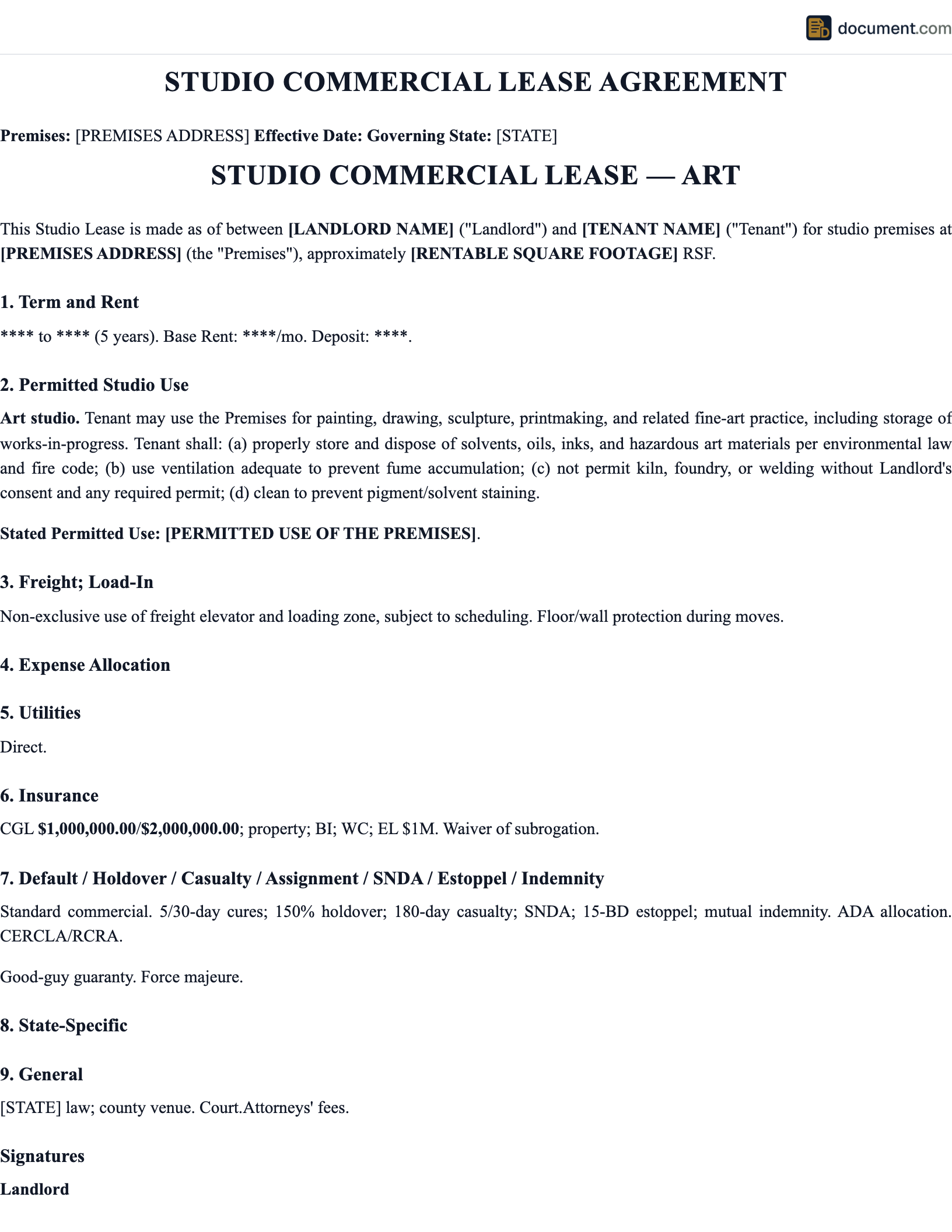
Sample Indiana Studio Rental Agreement
Below is a preview of our Indiana-specific template. Your customized document will include all fields and provisions required for filing in any Indiana county.
STUDIO RENTAL AGREEMENT
STATE OF INDIANA
Legal Document Template
STUDIO OWNER / OPERATOR
Company: [Studio Name]
Address: [Studio Address]
Contact: [Phone/Email]
License #: [Business License]
RENTER
Name: [Full Legal Name / Entity]
Address: [Mailing Address]
Phone: [Contact Number]
Insurance: [Policy Number]
STUDIO DETAILS
Studio: [Room Name/Number]
Size: [Square Feet]
Type: [Photo/Music/Art/Rehearsal]
Equipment: [See Inventory List]
Access Hours: [Available Hours]
RENTAL TERMS
Rate: $[Amount] per [Hour/Day/Month]
Booking: [Date/Time]
Deposit: $[Amount]
Cancellation: [Policy]
Insurance Required: [Yes - Minimum Coverage]
Indiana Studio Rental Agreement FAQ
Answers to common questions about filing an studio rental agreement in Indiana, including requirements, fees, and procedures.
Official Indiana Resources
Use these official state resources to verify requirements, find your local filing office, and access government forms for Indiana.
Related Indiana Documents
Depending on your situation, you may need additional documents alongside your Indiana studio rental agreement.
Create your Indiana Commercial Studio Lease Agreement in under 5 minutes.
Answer a few questions and download a Indiana-compliant document, ready for the state agency.