



Connecticut Studio Rental Agreement Overview
Connecticut has a genuine arts community concentrated in New Haven, Hartford, and Bridgeport, with a growing number of artists and photographers occupying studio spaces in converted industrial buildings. New Haven's Westville and Erector Square areas have become hubs for visual artists, and Hartford's Parkville neighborhood has attracted creative businesses to its old factory buildings. The Stamford and Greenwich market skews more toward media production and design studios serving New York-adjacent clients. Across all these markets, studio leases are commercial contracts governed by Connecticut General Statutes and contract law, not by any residential tenant protection framework.
Connecticut studio tenants should be particularly aware of the state's environmental regulatory environment. Connecticut's Transfer Act and Brownfields programs reflect a history of industrial activity in many buildings now used as creative spaces, and while a lease is not a property transfer under the Act, the building's environmental history can affect what you can do in the space. Physical space characteristics critical to studio use, including ceiling height, natural light, electrical capacity, and HVAC suitability, should all be expressly addressed in the lease, as Connecticut courts will not imply these terms.
Contract
Law governs
No Cap
Security deposit
New Haven
Top studio market
Zoning
Always verify
Connecticut Studio Lease Requirements
Connecticut commercial studio leases are governed by contract law. The requirements below represent what a well-drafted Connecticut studio lease should address to protect the creative tenant.
Connecticut Studio Lease Note
Connecticut's commercial tenants have some access to CGS good faith principles in disputes, but the written lease controls. Connecticut also has environmental regulations that may affect older industrial studio spaces. Request any available environmental reports for the building and negotiate representations about the space's condition before signing.
Key Lease Provisions for Connecticut Studio Tenants
- Zoning and Permitted Use: Verify zoning with the specific Connecticut municipality and confirm your studio activity is permitted before signing; some creative uses require conditional permits
- Physical Space Representations: State ceiling height, electrical service capacity, window dimensions, and HVAC specifications in the lease; Connecticut courts will not imply these terms if absent
- Environmental Condition Disclosure: Request any Phase I environmental assessments for older New Haven, Hartford, or Bridgeport industrial buildings before committing
- Modification and Restoration Rights: Define what tenant improvements are permitted, who obtains Connecticut building permits, and which improvements must be removed at lease end
- Insurance Requirements: Connecticut studio landlords may require CGL insurance; confirm required limits and have your broker confirm coverage before signing
- CGS Accessibility Compliance: The lease should specify landlord responsibility for common area accessibility and tenant responsibility for leased premises accessibility after build-out modifications
How to Execute a Commercial Studio Lease in Connecticut
Connecticut studio lease execution requires careful pre-signing diligence, especially in older industrial buildings with potential environmental or physical space issues.
Inspect the Space and Verify Zoning
Measure ceiling height, test electrical capacity, assess natural light and noise, and check for signs of water intrusion or HVAC issues. Confirm zoning for your specific studio use with the New Haven, Hartford, Bridgeport, or other applicable Connecticut municipality.
Request Environmental Background Information
For older industrial buildings in Connecticut, ask whether any Phase I or Phase II environmental assessments have been done. Connecticut's environmental regulatory environment means building histories can include contamination that affects what you can do in the space.
Negotiate Physical Representations and Modification Rights
Get ceiling height, electrical specs, HVAC capacity, and any soundproofing conditions stated in the lease. Define what modifications you can make and whether an exhibit lists specific improvements that may remain at lease end without restoration.
Execute with Authorized Signatories
Connecticut commercial studio leases do not require notarization to be valid between parties. Both parties sign through authorized representatives. Collect any required personal guaranty from individual artists or principals if the landlord requires one.
Document Move-In Condition
Photograph the space thoroughly at move-in. Connecticut commercial leases have no statutory move-in checklist requirement. Your own photographic and written documentation is your primary evidence if a deposit dispute arises at lease end.
Connecticut Studio Lease Tax and Cost Considerations
Studio leases in Connecticut carry commercial cost structures. Here is what Connecticut studio tenants should understand before committing.
| Cost / Tax Item | Connecticut Context |
|---|---|
| Connecticut Sales Tax on Rent | No general sales tax on commercial rent in Connecticut. Bundled services charged as separate line items may be subject to Connecticut's services sales tax. Confirm with the landlord how the lease fee is classified. |
| Property Tax Passthrough | Connecticut has among the highest effective property tax rates in New England. In NNN or modified gross studio leases, property tax increases above the base year pass to the tenant. Request the current mill rate for the municipality before agreeing to passthrough terms. |
| Security Deposit | No statutory cap. New Haven and Hartford studio landlords typically ask for 1-3 months. Negotiate a specific written return timeline and deduction criteria. |
| Improvement Deductibility | Tenant-funded improvements to a Connecticut commercial studio may be depreciable for federal and Connecticut income tax purposes. Consult a Connecticut CPA to structure larger build-outs optimally before signing. |
Sample Connecticut Studio Rental Agreement
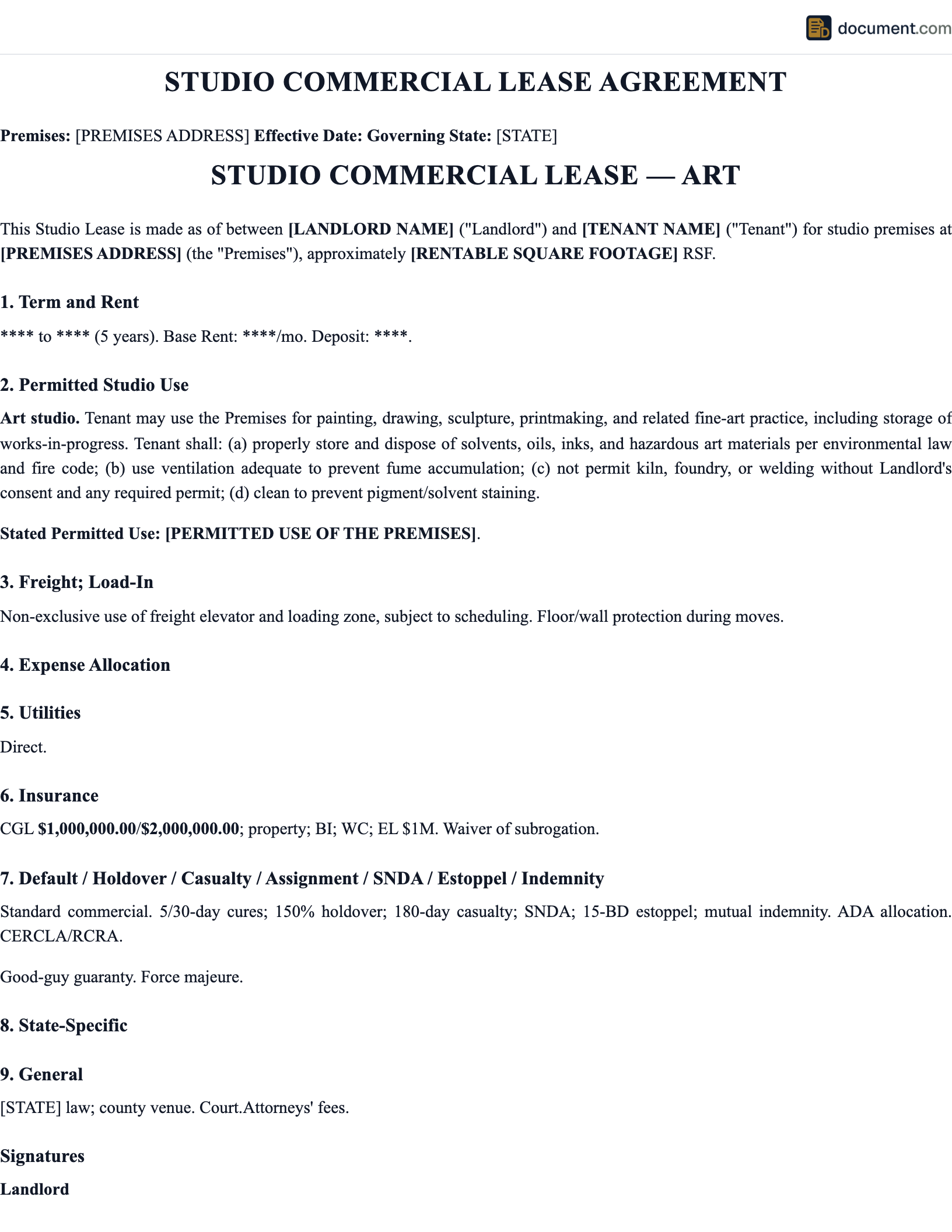
Below is a preview of our Connecticut-specific template. Your customized document will include all fields and provisions required for filing in any Connecticut county.
STUDIO RENTAL AGREEMENT
STATE OF CONNECTICUT
Legal Document Template
STUDIO OWNER / OPERATOR
Company: [Studio Name]
Address: [Studio Address]
Contact: [Phone/Email]
License #: [Business License]
RENTER
Name: [Full Legal Name / Entity]
Address: [Mailing Address]
Phone: [Contact Number]
Insurance: [Policy Number]
STUDIO DETAILS
Studio: [Room Name/Number]
Size: [Square Feet]
Type: [Photo/Music/Art/Rehearsal]
Equipment: [See Inventory List]
Access Hours: [Available Hours]
RENTAL TERMS
Rate: $[Amount] per [Hour/Day/Month]
Booking: [Date/Time]
Deposit: $[Amount]
Cancellation: [Policy]
Insurance Required: [Yes - Minimum Coverage]
Connecticut Studio Rental Agreement FAQ
Answers to common questions about filing a studio rental agreement in Connecticut, including requirements, fees, and procedures.
Official Connecticut Resources
Use these official state resources to verify requirements, find your local filing office, and access government forms for Connecticut.
Related Connecticut Documents
Depending on your situation, you may need additional documents alongside your Connecticut studio rental agreement.
Create your Connecticut Commercial Studio Lease Agreement in under 5 minutes.
Answer a few questions and download a Connecticut-compliant document, ready for the state agency.