



Indiana Cash-for-Keys Agreement Overview
In Indiana, landlords must comply with IN-specific landlord-tenant laws when serving eviction notices. The cash-for-keys agreement is used in Indiana to formally notify tenants of lease violations or non-payment and provide the legally required timeframe to cure the issue or vacate the property. Indiana's eviction laws establish specific procedures that must be followed precisely, including requirements for notice content, service methods, and the eviction court process.
Indiana courts strictly enforce notice requirements, and any deficiency in the notice can result in dismissal of the eviction case. Landlords in IN should ensure their notices comply with all state and local requirements before service. Some Indiana municipalities may have additional tenant protections or notice requirements that exceed state minimums, so local ordinances should also be reviewed. Using a Indiana-specific template ensures compliance with IN's unique requirements.
Varies
Notice period
$30-$300
Filing fees
Required
Written notice
3-8 wks
Court process
Indiana Legal Requirements
Indiana has specific requirements for eviction notices that landlords must follow. Meeting these requirements ensures your notice is legally valid and will be upheld in IN courts if the eviction proceeds to litigation.
Indiana Specific Note
Indiana eviction laws may differ from neighboring states. Some IN municipalities have additional tenant protection ordinances that provide longer notice periods or additional requirements. Always verify both state and local requirements before serving an eviction notice in Indiana. Consult with a IN landlord-tenant attorney if you are unsure about requirements.
Notice Requirements
- Written Notice: Indiana requires all eviction notices to be in writing. Verbal notices are not legally sufficient under IN law
- Proper Identification: The notice must include the full names of all tenants and the complete property address
- Violation Description: Clearly describe the specific lease violation or the exact amount of rent owed
- Cure Period: State the number of days the tenant has to cure the violation or vacate under IN law
- Service Method: Serve the notice using a method approved under Indiana's landlord-tenant statutes
- Landlord Information: Include the landlord's name and contact information as required by IN law
How to Serve a Cash-for-Keys Agreement in Indiana
Serving an eviction notice in Indiana requires following IN's specific service procedures. Improper service is one of the most common reasons eviction cases are dismissed in Indiana courts.
Prepare the Notice
Complete all required fields using a Indiana-specific template that includes all IN-mandated language and disclosures
Choose a Service Method
Select a delivery method approved under Indiana law: personal delivery, substituted service, post and mail, or certified mail
Serve the Notice
Deliver the notice using your chosen method. Have a witness present for personal delivery or use a IN process server
Document Everything
Record the date, time, method of service, and any witnesses. Keep copies of the notice and all proof of service
Wait for the Notice Period to Expire
Allow the full notice period to pass. If the tenant does not cure or vacate, file an eviction complaint in Indiana court
Indiana Eviction Timeline
The eviction process in Indiana follows a specific timeline from notice to enforcement. Understanding this timeline helps landlords plan appropriately and set realistic expectations for regaining possession.
After serving the eviction notice and waiting for the notice period to expire, the landlord files an eviction complaint with the appropriate IN court. The court schedules a hearing, typically within 5-21 days of filing. If the landlord prevails, a judgment of possession is entered, and the tenant is given a brief period to vacate. If the tenant does not leave voluntarily, the Indiana sheriff enforces the writ of possession.
Contested evictions in Indiana can take significantly longer, particularly if the tenant raises valid defenses, requests continuances, or files an appeal. In some IN jurisdictions, the process can extend to 2-3 months or more for contested cases. Landlords should factor this timeline into their planning and consider alternatives such as cash-for-keys agreements for faster resolution.
Indiana Fees & Costs
Below is a breakdown of typical costs associated with the eviction process in Indiana. Actual fees may vary by county and specific circumstances.
| Fee / Cost | Typical Amount |
|---|---|
| Court Filing Fee | $30 - $300 |
| Service of Process | $25 - $100 |
| Attorney Fees (if hired) | $500 - $3,000 |
| Writ of Possession | $50 - $150 |
| Lock Change / Sheriff | $75 - $300 |
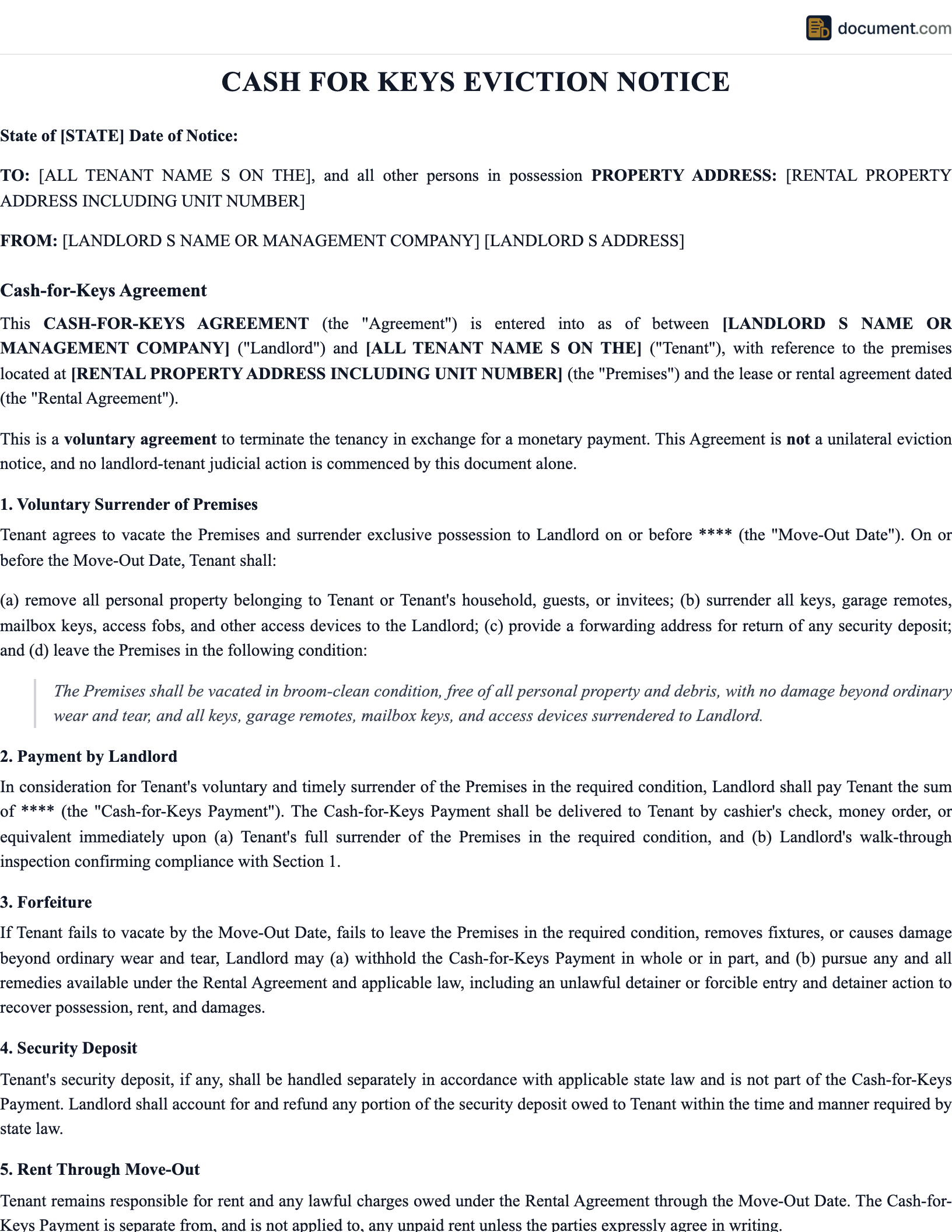
Sample Indiana Cash-for-Keys Agreement
Below is a preview of our Indiana-specific cash-for-keys agreement. Your customized document will include all fields and provisions required under IN law.
CASH-FOR-KEYS AGREEMENT
STATE OF INDIANA
IN-Compliant Template
LANDLORD:
Name: [Full Legal Name]
Address: [Indiana Address]
TENANT:
Name: [Full Legal Name]
Address: [Indiana Address]
PROPERTY / PREMISES:
Address: [Property Address]
County: [Indiana County]
INDIANA COMPLIANCE
This document complies with Indiana (IN) state law requirements and includes all provisions mandated for this type of document in Indiana.