



What Is a Cash-for-Keys Agreement?
A cash-for-keys agreement is a voluntary arrangement between a landlord and tenant where the landlord offers a cash payment to the tenant in exchange for the tenant agreeing to vacate the property by a specific date and return all keys. This approach is an increasingly popular alternative to formal eviction proceedings, which can be time-consuming, expensive, and unpredictable.
The concept is straightforward: rather than spending months and thousands of dollars on court proceedings with no guaranteed outcome, the landlord pays the tenant a negotiated amount to leave peacefully. Both parties benefit from this arrangement. The landlord regains possession of the property quickly, avoids legal fees, and minimizes the risk of property damage. The tenant receives financial assistance for relocation, avoids having an eviction judgment on their record, and maintains a cleaner rental history.
Cash-for-keys agreements have become especially common in states with strong tenant protections and lengthy eviction timelines. In jurisdictions where the eviction process can take 3 to 6 months or longer, the cost of lost rent alone often exceeds a reasonable cash-for-keys offer. When you factor in attorney fees, court costs, potential property damage, and the uncertainty of litigation, a cash-for-keys arrangement is frequently the most economical choice for landlords.
For the agreement to be enforceable, it must be entered into voluntarily by both parties. Landlords cannot coerce, threaten, or harass tenants into accepting a deal. The agreement should be in writing, signed by both parties, and clearly outline all terms including the payment amount, payment timing, move-out date, property condition requirements, and what happens if either party fails to perform their obligations.
It is advisable for both parties to consult with an attorney before entering into a cash-for-keys agreement, particularly for high-value properties or complex situations. An attorney can ensure the agreement is properly drafted, all claims are appropriately released, and the arrangement complies with applicable state and local laws. However, for straightforward situations, a well-drafted template can provide a solid foundation for the agreement.
Save Money
Typically costs less than formal eviction when factoring in legal fees and lost rent
Save Time
Resolve in days rather than the weeks or months that court evictions require
Reduce Risk
Avoid uncertain court outcomes and minimize property damage from hostile evictions
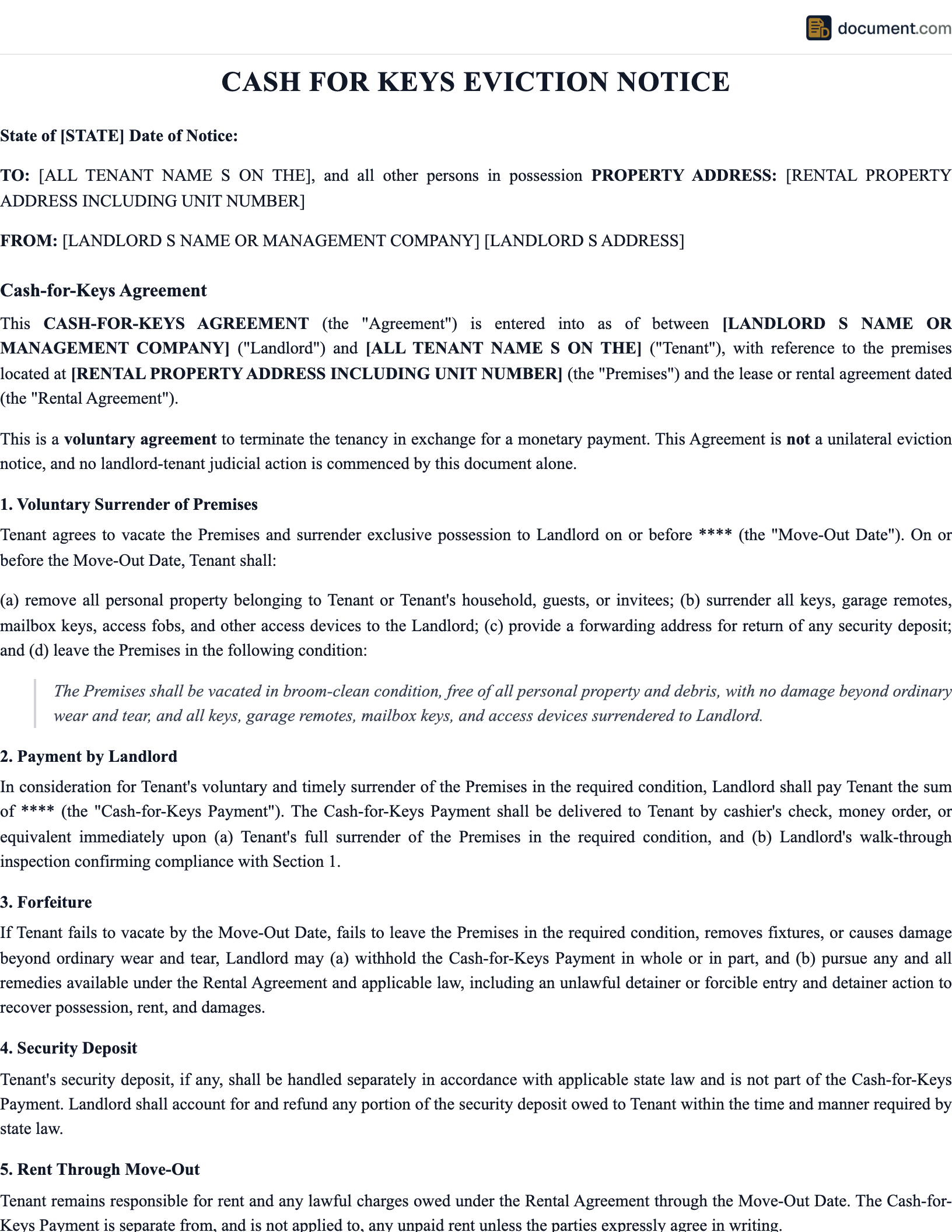
Cash-for-Keys Agreement Form Preview
Our cash-for-keys agreement template includes all essential provisions for a legally binding arrangement. Below is a preview of the key sections.
CASH-FOR-KEYS AGREEMENT
Voluntary Vacancy Agreement
PARTIES
Landlord: [Full Legal Name]
Tenant: [Full Legal Name]
Property: [Property Address]
PAYMENT TERMS
Total Payment: $[Amount]
Initial Payment: $[Amount upon signing]
Final Payment: $[Amount upon key return]
VACATING TERMS
Move-Out Date: [Date]
Condition: Broom clean, all personal property removed, no damage beyond normal wear
Key Return: All keys, access cards, and remotes returned to landlord
When to Use This Document
Create a free cash-for-keys agreement where a landlord pays a tenant to voluntarily vacate the property. This alternative to formal eviction saves time, legal fees, and avoids the uncertainty of court proceedings. Understanding the right circumstances for this document helps ensure it is used effectively and appropriately.
First-Time Violations
When the issue is being addressed for the first time and a formal approach is needed to document the violation and set expectations
Building a Paper Trail
Creating documented evidence of the issue and the landlord's reasonable efforts to resolve it before escalating to formal legal proceedings
Avoiding Costly Litigation
Attempting to resolve the situation amicably before incurring the time and expense of formal eviction proceedings
Multi-Unit Properties
When the behavior affects other tenants and the landlord needs to demonstrate responsiveness to complaints
Legal Considerations
While this document is not a formal eviction notice, there are important legal considerations to keep in mind when drafting and delivering it. Following proper procedures strengthens your position should formal legal action become necessary.
Important Note
Laws regarding landlord notices, tenant rights, and eviction procedures vary significantly by state and local jurisdiction. Some areas have additional requirements or restrictions that may affect how this document should be used. Always verify your local requirements.
- Written Documentation: Always put warnings and agreements in writing to create an enforceable record
- Lease Reference: Cite the specific lease provisions or house rules being violated
- Delivery Method: Use a delivery method that provides proof of receipt (certified mail, hand delivery with witness)
- Keep Copies: Retain copies of all notices, warnings, and communications for your records
- Fair Housing Compliance: Ensure all actions comply with federal, state, and local fair housing laws
Cash-for-Keys Agreement by State
Select your state below to access state-specific forms, requirements, and filing information. Each state has unique rules and procedures that must be followed for a valid document.
Sample Cash-for-Keys Agreement
Below is a condensed sample of our cash-for-keys agreement template. Your customized document will include all required sections, state-specific language, and proper formatting for your jurisdiction.
CASH-FOR-KEYS AGREEMENT
Sample Template - For Illustration Only
This document is provided as a sample only and should not be used without customization for your specific situation and state requirements. The actual template includes comprehensive provisions, state-specific language, and all legally required disclosures.
Key sections included in the full template:
- Complete party identification and property description
- Detailed terms and conditions specific to your transaction
- State-specific legal language and required disclosures
- Signature blocks with proper acknowledgment format
- Service/delivery certification where applicable