



Georgia 3-Day Eviction Notice Overview
Georgia Does Not Use 3-Day Notices
Georgia requires a No statutory period notice under O.C.G.A. 44-7-50. A 3-day notice is not valid in Georgia.
Georgia is unusual in that it does not require a specific waiting period before filing for eviction when rent is unpaid. The landlord simply makes a demand for payment and possession. If the tenant does not pay, the landlord files a dispossessory affidavit in the Magistrate Court of the county where the property is located. The marshal serves the tenant, who then has 7 days to answer.
No statutory period
Notice period
$55-$75
Filing fee
O.C.G.A.
Governing law
2-4 Wks
Court process
Georgia's Actual Notice Period
Georgia requires a No statutory period notice under O.C.G.A. 44-7-50. Understanding the correct notice period is critical because using the wrong period is grounds for dismissal in Magistrate Court.
No statutory period Notice Under O.C.G.A. 44-7-50
The landlord must deliver a written notice giving the tenant no statutory period to pay rent or vacate. The notice must state the exact amount of past-due rent. If the tenant pays in full within the notice period, the notice is void and the tenancy continues.
Georgia Legal Requirements
- Written Notice: Must be in writing under Georgia law
- Rent Amount: State the exact amount of past-due rent owed
- Notice Period: Allow no statutory period for the tenant to pay or vacate
- Property Address: Include the full property address
- Tenant Names: Include all tenants on the lease
- Proper Service: Use an approved service method under Georgia law
How to Serve an Eviction Notice in Georgia
Personal Delivery
Hand the notice directly to the tenant. Use a witness or process server to document delivery
Posting and Mailing
Post on the door and mail a copy if personal delivery is not possible
Wait the Full Period
Allow the full no statutory period to pass before filing in Magistrate Court
File in Court
File the eviction complaint in Magistrate Court with proof of notice service
Georgia Eviction Timeline
After the notice period expires, the landlord files in Magistrate Court. The court issues a summons, and a hearing is typically scheduled within 7 to 21 days of filing. If the landlord prevails, a judgment for possession is entered, and the sheriff or constable executes the writ of possession.
Total timeline from notice to physical removal is typically 2-4 wks for uncontested cases. Contested cases or those with appeals can extend the process by several additional weeks.
Georgia Court Fees & Costs
| Fee / Cost | Typical Amount |
|---|---|
| Magistrate Court Filing Fee | $55-$75 |
| Service of Process | $25 - $75 |
| Writ of Possession | $30 - $75 |
| Attorney Fees (if hired) | $500 - $2,500 |
Sample Georgia Eviction Notice
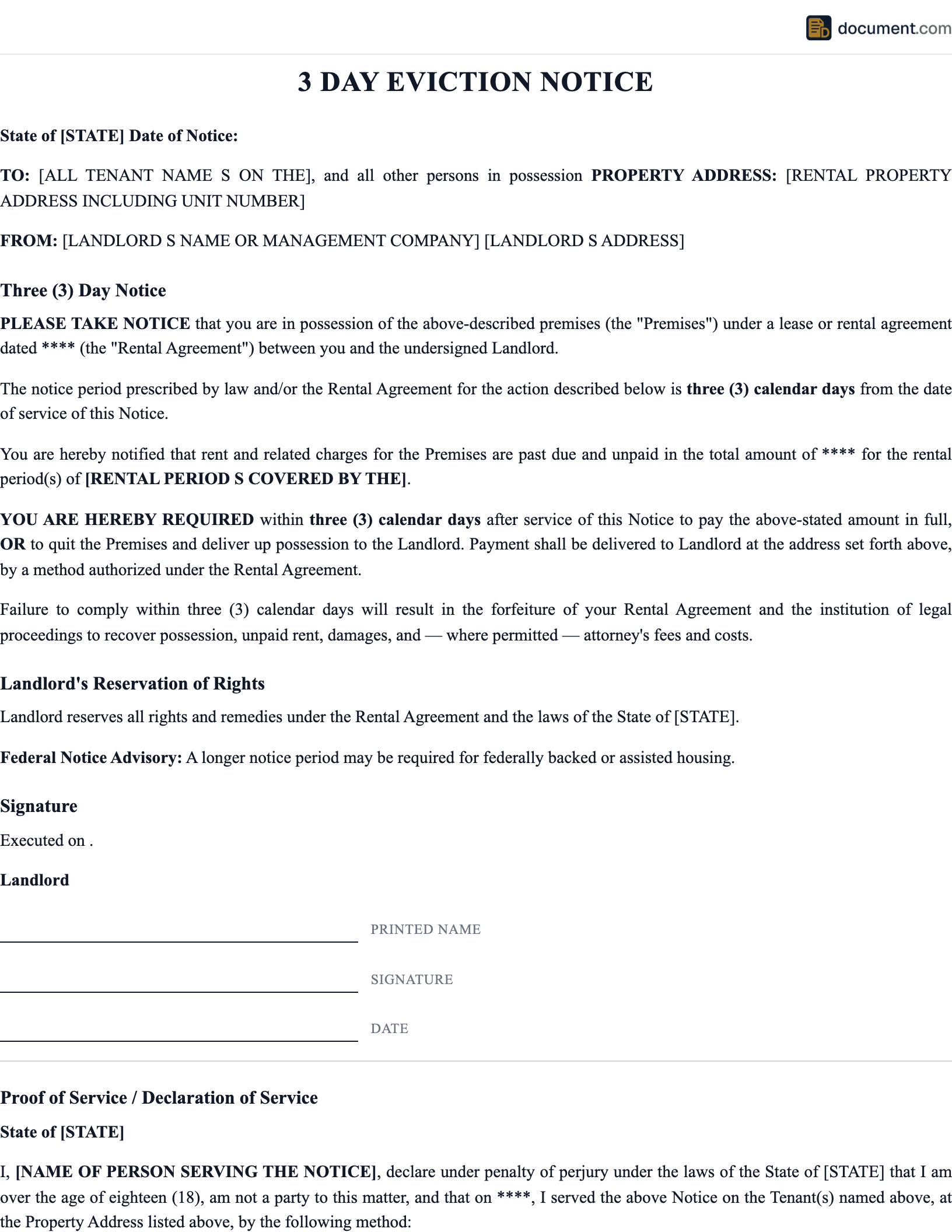
Below is a preview of a Georgia-compliant eviction notice under O.C.G.A. 44-7-50.
NO STATUTORY PERIOD NOTICE TO PAY RENT OR VACATE
STATE OF GEORGIA
Pursuant to O.C.G.A. 44-7-50
TO TENANT(S):
Name: [Tenant Full Name]
PREMISES:
Address: [Address, City, GA ZIP]
RENT DUE:
Amount: $[Amount]
GEORGIA COMPLIANCE
This notice complies with O.C.G.A. 44-7-50 requiring a No statutory period notice period. Georgia does not use 3-day notices.