



Arizona tenant-screening authorization
This document records permission for the identified housing provider to request specified consumer-report information about a rental applicant. It should identify the applicant, requester, rental property, purpose and report categories. It does not transfer property, create a lien or require deed-recording taxes.
Keep the screening authorization separate from the rental decision. A screening report can be incomplete or inaccurate; verify identity and records, use lawful criteria and follow the applicable applicant-notice process. Do not treat the signature as a release of statutory rights.
Checks for the Arizona rental
For a property in Arizona, check current state statutes and the city or county housing rules before collecting a screening fee or using criminal, eviction or credit information. Confirm any required application disclosures, restrictions on records, reusable-report rules and refund duties. A selected state or a signed authorization does not by itself establish that the screening is lawful.
Tenant screening differs from employment screening. Federal employment disclosure and pre-adverse-action duties do not automatically apply to every rental report. Personal-interview investigations can trigger additional investigative-report notices. Review the actual report and use rather than relying only on its product name.
Prepare and deliver the authorization
Identify the actual landlord or property manager and reporting agency. Describe the property and housing purpose, select only appropriate report categories and give any required screening criteria or fee disclosures before charging or ordering.
Let the applicant review and sign the correct authorization. Obtain identifiers through the provider’s secure process and collect only what is needed to match records. Do not publish birth dates, government identifiers or reports in land records or other public repositories.
Confirm the report belongs to the correct person and evaluate it under the applicable housing and consumer-reporting rules. Provide additional notices and response opportunities when required. Retain the authorization and decision records securely for the applicable retention period.
Report use, adverse action and privacy
When a consumer report contributes to rejecting an applicant or imposing less favorable rental terms, provide the required adverse-action notice. It identifies the reporting agency, explains that the agency did not make the decision, and describes the right to dispute information and request a free report within 60 days. Credit-score use adds disclosure requirements.
Do not reuse a report for an unrelated purpose. Restrict access to people with a legitimate need, use a documented retention schedule and securely dispose of report information when retention is no longer required. Local law may impose additional written notices or procedures.
Sample and tenant builder
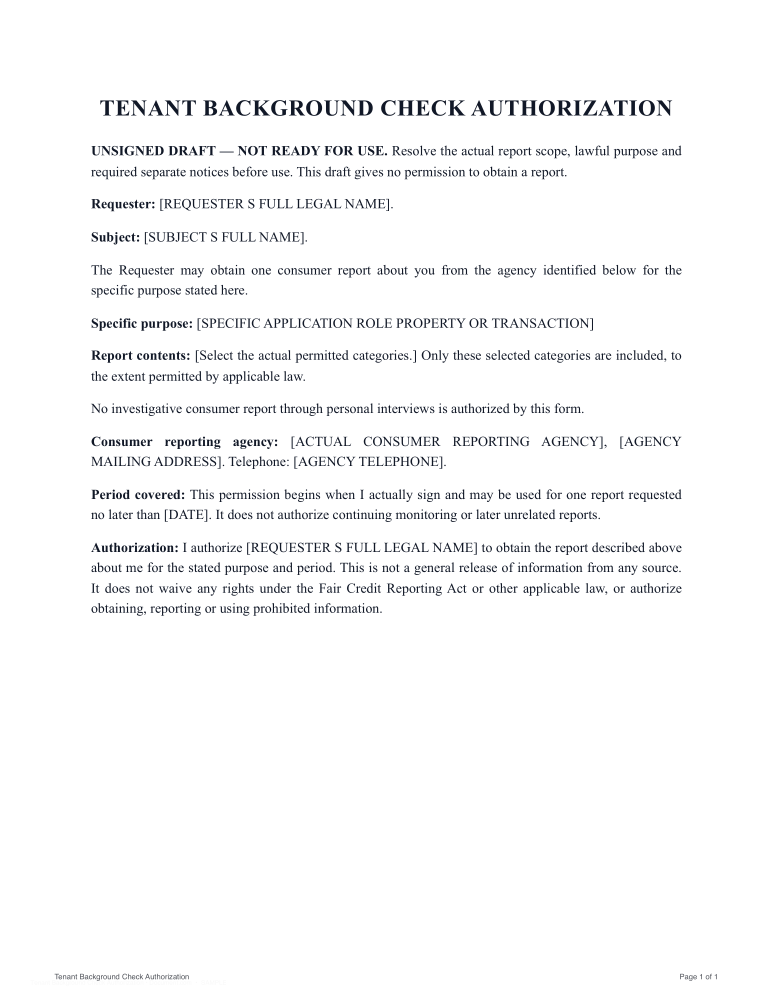
The sample is an uncompleted tenant authorization. It is not a completed screening report, proof of consent or a determination that an applicant is eligible. Separate state disclosures and provider materials may still be required.
Prepare Arizona tenant authorization
Frequently asked questions
Primary sources
Prepare your Arizona tenant authorization with the right screening purpose.
Review the separate disclosures and screening requirements before using your document.