
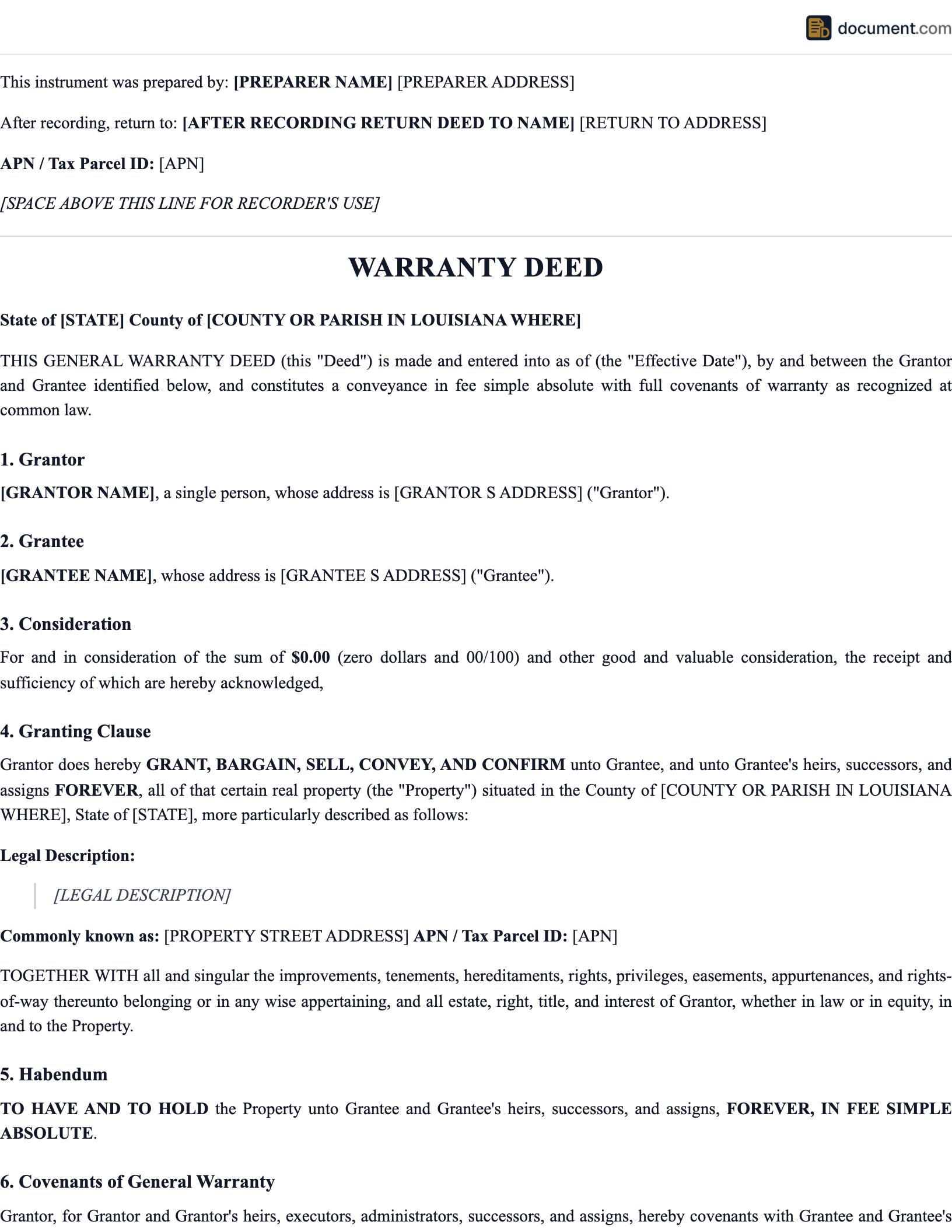



Pennsylvania Warranty Deed Overview
Pennsylvania warranty deeds are recorded with the Recorder of Deeds in the county where the property is located. Pennsylvania's transfer tax structure is among the more complex in the country: the state imposes a 1% realty transfer tax, and local municipalities and school districts stack their own tax on top. In most Pennsylvania counties the combined rate is 2%, but Philadelphia reaches 3.278% total. Most counties also require two copies of the deed to be submitted at recording.
Rural Pennsylvania has another layer of complexity that urban buyers may not anticipate. Farmland in Lancaster, Chester, York, and neighboring counties is often protected by recorded agricultural conservation easements. These easements run with the land and restrict development rights permanently, regardless of who holds title. A thorough review of the Recorder of Deeds records is essential before closing on any Pennsylvania farmland or property adjacent to open agricultural land.
$25
Recording fee
2% (1%+1%)
Transfer tax
Required
Notarization
0
Witnesses required
Pennsylvania Requirements
The Recorder of Deeds in each of Pennsylvania's 67 counties is the recording authority for warranty deeds. Requirements are consistent statewide, but individual county offices may have local procedures around cover sheets, fee payment methods, and the number of copies required. Most counties ask for two copies at submission.
Pennsylvania Specific Note
Pennsylvania's realty transfer tax has two layers: the state imposes 1%, and the local municipality or school district adds its own rate (typically 1% in most counties, but 3.278% total in Philadelphia). You must calculate both components correctly at closing. Pennsylvania also requires two copies of the deed to be submitted at recording in most counties. Certain family transfers are exempt from the transfer tax, but the exemption must be properly claimed on the deed with the correct language.
Document Requirements
- Notarization: Must be notarized by a Pennsylvania notary public or authorized notary
- Witnesses: Pennsylvania requires 0 additional witness(es)
- Legal Description: Complete legal description as it appears on the current deed of record
- Parcel Number: Assessor's parcel number or tax ID
- Return Address: Mailing address for returning the recorded document
- Formatting: Standard formatting with adequate margins, black ink, minimum 10-point font
How to File in Pennsylvania
Pennsylvania's recording process goes through the county Recorder of Deeds. Before preparing the deed, pull the current vesting deed from the Recorder's index and confirm the legal description, the names in which title is held, and whether any easements or encumbrances are noted in the chain.
Prepare the Document
Complete grantor and grantee names using their full legal names. Copy the legal description precisely from the current deed of record at the Recorder of Deeds. Include the consideration amount and the municipality where the property is located. If any family transfer tax exemption applies, include the required exemption language on the face of the deed. Prepare two copies for submission.
Get the Document Notarized
The grantor must sign in the physical presence of a Pennsylvania notary public. The notary completes the acknowledgment block, affixes their seal, and notes their commission expiration. Pennsylvania does not require additional witnesses beyond the notary for standard deed recordings.
Submit to the Recorder of Deeds
Bring both copies of the notarized deed to the Recorder of Deeds office in the county where the property is located. Many Pennsylvania counties also accept e-recording. The Recorder stamps and indexes the deed; one copy is retained as the official record and the other is returned to you.
Pay Recording Fees and Transfer Tax
Pay the Recorder's filing fee (typically around $25 for the first page, plus per-page fees) plus the combined realty transfer tax. The state rate is 1% and the local rate varies by municipality but is typically 1% more, for 2% combined outside Philadelphia. In Philadelphia the total reaches 3.278%. The Recorder of Deeds typically collects all applicable taxes at the time of filing.
Update County Assessment Records
After recording, notify the county board of assessment appeals of the ownership change so property tax bills are directed to the new owner. In some counties this happens automatically when the deed is recorded, but in others you may need to file a separate notice of transfer with the assessment office.
Pennsylvania Fees & Costs
Typical costs for filing in Pennsylvania. Actual fees may vary by county.
| Fee / Tax | Amount |
|---|---|
| Recording Fee | $25 |
| Transfer Tax | 2% (1%+1%) |
| Notarization | $5 - $25 per signature |
| Certified Copy | $1 - $10 per page |
| Attorney Review (optional) | $150 - $500 |
Pennsylvania Tax Implications
Pennsylvania's realty transfer tax is split between the state (1%) and the local jurisdiction. Most Pennsylvania municipalities add 1% for a standard total of 2%, but Philadelphia's combined rate of 3.278% makes it one of the costliest transfer tax environments in the country. For a $400,000 Philadelphia property, that's over $13,000 in transfer taxes alone. It is customary in Pennsylvania for the buyer and seller to each pay half of the combined transfer tax, but the parties can negotiate differently in the purchase agreement.
Pennsylvania provides transfer tax exemptions for certain family transfers, including transfers between spouses and between parents and children. These exemptions are not automatic. The deed must include the proper exemption language and the relationship between the parties is typically required to be stated on the face of the document. An improperly claimed exemption can result in a tax assessment, penalty, and interest by the Pennsylvania Department of Revenue after the fact.
At the federal level, gift deeds may trigger gift tax reporting under IRS rules if the transferred value exceeds the annual exclusion. Sellers in a standard sale need to consider capital gains tax on any appreciation above their adjusted cost basis. Pennsylvania itself also has a state income tax that may apply to gains from property sales, which the seller's tax advisor should address as part of closing planning.
Sample Pennsylvania Warranty Deed
Preview of our Pennsylvania-specific template. Your document will include all fields required for recording in any Pennsylvania county.
WARRANTY DEED (GENERAL WARRANTY DEED)
STATE OF PENNSYLVANIA
Legal Document
PARTY INFORMATION
Name: [Full Legal Name]
Address: [Pennsylvania Address]
County: [County]
PROPERTY DESCRIPTION
County: [County] State: Pennsylvania
Legal Description: [Per Recorded Plat]
Parcel No.: [APN]
Pennsylvania Warranty Deed FAQ
Common questions about filing in Pennsylvania, including requirements, fees, and tax implications.
Official Pennsylvania Resources
Official state resources for verifying requirements and finding your local recording office.
Related Documents
Depending on your situation, you may need additional documents alongside this one. Below are commonly related documents that are frequently used together in real estate transactions.
Important Considerations
The layered transfer tax structure in Pennsylvania catches many buyers and sellers by surprise. The state's 1% rate is straightforward, but the local layer varies by municipality and school district, and it is not always obvious which jurisdiction controls for a given property address. Properties near municipal boundaries can sometimes fall into one taxing jurisdiction for school tax purposes and another for municipal purposes. Your title company or closing attorney should provide a definitive transfer tax calculation well before closing day.
Agricultural conservation easements in Pennsylvania's farming counties are a recurring source of title complications. When farmland has been enrolled in a conservation easement program, the restriction is typically recorded with the county Recorder of Deeds and runs with the land permanently. A buyer who is not aware of a recorded easement before closing may find that development rights they assumed they were purchasing simply do not exist. Always order a full title search that includes a search for recorded easements in addition to reviewing the deed chain.
Pennsylvania has one of the more active real estate bar associations in the country, and licensed real estate attorneys routinely handle deed transfers in this state. For transactions in Philadelphia or Pittsburgh or involving commercial property, estate transfers, or any situation where a family transfer tax exemption is being claimed, having a Pennsylvania real estate attorney prepare or review the deed is worth the cost. Errors in transfer tax exemption claims can result in assessments long after the deed is recorded.
Pennsylvania-Specific Attorney Tip
Pennsylvania attorneys frequently catch transfer tax miscalculations and improperly claimed exemptions that would otherwise result in tax assessments from the Department of Revenue months or years after closing. If your transaction involves a family transfer, an estate, or a Philadelphia property, consult a Pennsylvania real estate attorney before recording. Many offer flat-fee deed preparation and review at reasonable rates.
Related Documents
Depending on your situation, you may need additional documents alongside this one. Below are commonly related documents that are frequently used together in real estate transactions.
Create your Pennsylvania Warranty Deed in under 5 minutes.
Answer a few questions and download a Pennsylvania-compliant document, ready for the state agency.