



What Is a Sorority Letter of Recommendation?
A sorority letter of recommendation — commonly called a rec letter or rush rec — is a formal endorsement written by an initiated alumna member of a National Panhellenic Conference (NPC) sorority on behalf of a potential new member (PNM) participating in formal recruitment. The letter introduces the PNM to a specific chapter, providing the membership selection committee with an alumna's personal assessment of the candidate's character, leadership potential, academic standing, extracurricular involvement, and overall fit with the organization's values. In the structured environment of Panhellenic recruitment, where chapters must evaluate hundreds of candidates in a compressed timeframe, rec letters serve as a critical information source that supplements the brief conversations that occur during recruitment events.
The tradition of sorority recommendations reflects the unique membership selection process of NPC organizations, which rely on a combination of recruitment events, alumnae input, and chapter consensus to extend membership invitations. Unlike academic or professional recommendations that focus on intellectual or workplace capabilities, a sorority rec letter evaluates the whole person — their social skills, philanthropic commitment, personal values, family background, and compatibility with the chapter's culture. The alumna recommender brings organizational credibility to this assessment because she has experienced the sisterhood firsthand and understands what qualities contribute to a positive chapter experience for both the individual and the organization.
The competitive dynamics of sorority recruitment vary dramatically by campus. At large public universities in the South and Midwest, where Greek life represents a significant portion of campus culture, recruitment can involve thousands of PNMs competing for limited spots, and rec letters are considered virtually mandatory. At smaller or less Greek- intensive campuses, the process is less formal and rec letters, while helpful, may not be strictly necessary. Regardless of campus culture, a thoughtful rec letter from an alumna who genuinely knows the PNM provides an advantage that generic letters or no letters at all cannot replicate.
Alumna Endorsement
Carries organizational credibility from an initiated member who understands sisterhood values.
Holistic Assessment
Evaluates academics, leadership, philanthropy, and personal character together.
Recruitment Advantage
Provides a competitive edge during the formal Panhellenic selection process.
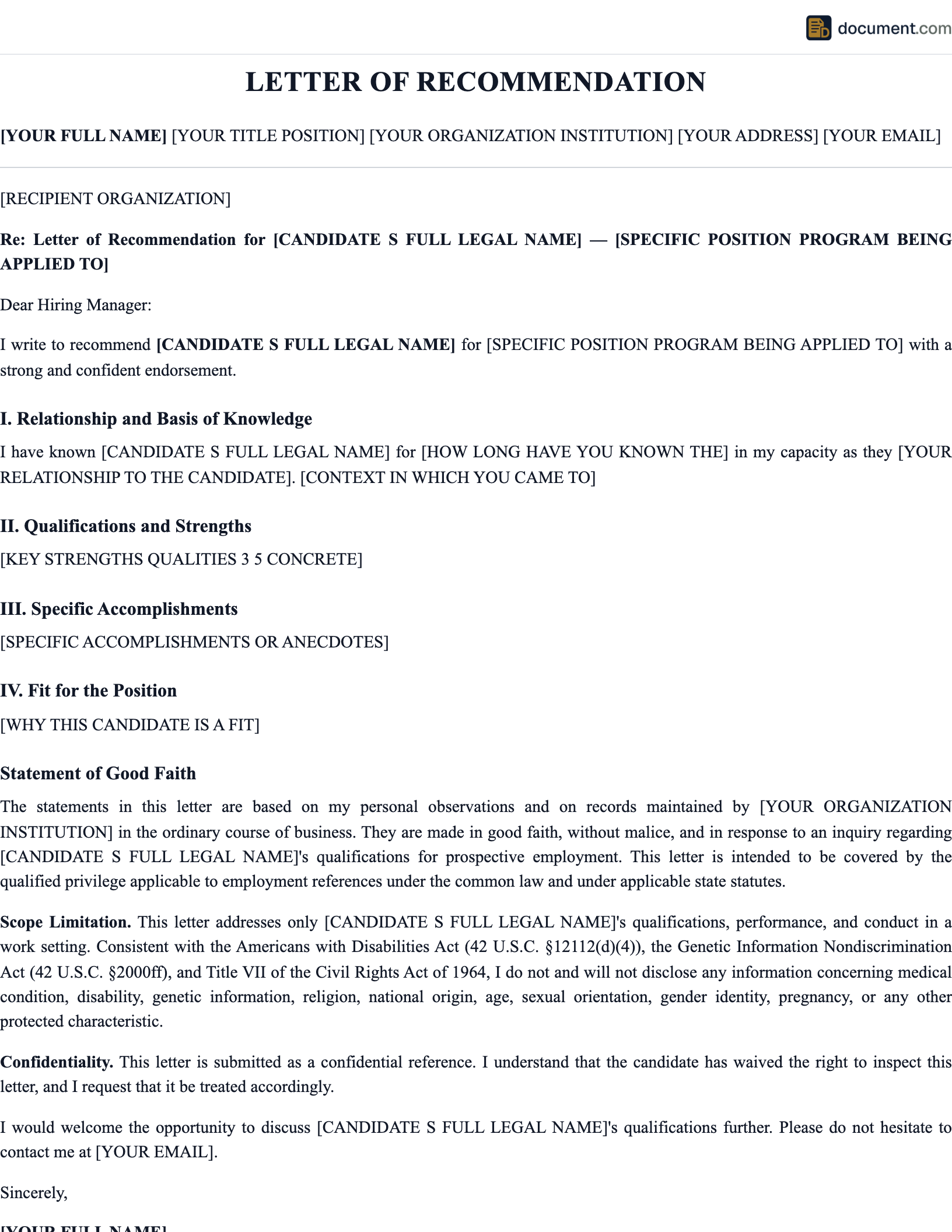
Sorority Recommendation Letter Form Preview
Letter of Recommendation
Sorority Formal Recruitment
ALUMNA INFORMATION
Name: Chapter: Initiation Year:
POTENTIAL NEW MEMBER
I am pleased to recommend for membership in our organization. I have known her for years.
CAMPUS AND ACADEMIC INFORMATION
University: GPA: Intended Major:
ALUMNA SIGNATURE
DATE
Key Components
An effective sorority recommendation letter addresses these core areas to give chapters the information they need during the membership selection process:
| Component | Purpose | Key Details |
|---|---|---|
| Alumna Credentials | Establishes organizational standing | Chapter name, initiation year, alumnae status, organizational involvement |
| Relationship Description | Shows depth of personal knowledge | How the alumna knows the PNM, duration, contexts of interaction |
| Academic Profile | Demonstrates scholarly commitment | GPA, honors, intended major, academic awards, study habits |
| Leadership and Activities | Shows campus involvement potential | Club leadership, student government, sports, arts, community roles |
| Community Service | Aligns with philanthropic mission | Volunteer hours, service organizations, philanthropic commitments |
| Character and Values | Assesses organizational fit | Integrity, kindness, social skills, personal values, family background |
How to Write a Sorority Letter of Recommendation
Identify Yourself as an Alumna
Open the letter by identifying your full name, the chapter where you were initiated (including the Greek letters and university), your initiation year, and any current alumnae involvement with the organization. This establishes your standing and credibility with the chapter reviewing the letter. If you held leadership positions during your active membership or have continued involvement through alumnae advisory boards, mention these roles because they demonstrate your ongoing commitment to the organization and your understanding of what makes a successful member.
Introduce the Potential New Member
Provide the PNM's full name, the university she will be attending, her intended graduation year, and her planned major or area of study. State clearly how you know the PNM and for how long — whether through family connections, community involvement, church, school, work, or other contexts. The more specific you are about your relationship, the more weight your assessment carries. Chapters are skeptical of letters from alumnae who clearly do not know the PNM well, so establishing a genuine, substantive relationship is essential.
Highlight Academic Achievement and Goals
Discuss the PNM's academic record, including her GPA, class rank if available, honors program participation, AP or IB coursework, and any academic awards. Most NPC organizations maintain GPA requirements for membership and active status, so demonstrating that the PNM values academics and is capable of maintaining strong grades while managing the time commitments of Greek membership is important. If you know her intended major or career goals, mention these to show she has direction and ambition beyond just joining a sorority.
Describe Leadership and Extracurricular Involvement
Detail the PNM's leadership experience in high school clubs, sports teams, student government, performing arts, community organizations, or part-time employment. Sorority chapters look for women who will actively contribute to the organization through committee involvement, event planning, philanthropy participation, and eventually chapter leadership. Specific examples of leadership — organizing a fundraiser, captaining a team, mentoring younger students, or leading a community project — demonstrate the initiative and responsibility that chapters value in new members.
Address Character and Organizational Fit
Share your personal observations about the PNM's character, social skills, and alignment with the sorority's core values. Describe her kindness, inclusivity, sense of humor, resilience, or any qualities that would make her a positive addition to a group living and working closely together. If you can connect her qualities to the specific values or mission of the organization — scholarship, leadership, service, sisterhood — the letter becomes more persuasive because it shows you have thought specifically about why this candidate belongs in this particular sorority.
Close with a Clear Recommendation
End with an unambiguous statement endorsing the PNM for membership. Express your confidence that she will be an active, contributing member who upholds the organization's standards and enhances the chapter's reputation. Include your contact information and offer to provide additional details if the chapter's membership committee has questions. Sign the letter with your legal name and, if your organization uses a specific rec letter form, ensure you have completed all required fields and attached any supplementary materials such as the PNM's photo and resume.
The Recruitment Process
Understanding how formal Panhellenic recruitment works helps rec letter writers craft more effective letters by understanding exactly how and when their letters will be reviewed. Formal recruitment is a structured, multi-round process governed by the National Panhellenic Conference and administered by each university's College Panhellenic Council. The process typically unfolds over four to seven days during the first weeks of fall semester, though some campuses hold spring recruitment or continuous open bidding throughout the year.
During recruitment, PNMs visit each participating chapter during structured rounds — open house, philanthropy, sisterhood, and preference — with the field narrowing as both PNMs and chapters make mutual selections between rounds. Rec letters are typically reviewed by the chapter's membership selection committee between rounds, providing additional context that supplements the brief conversations members have with PNMs during events. A detailed, specific rec letter can remind the committee about a PNM they met briefly and highlight qualities that may not have been apparent in a five-minute conversation.
The final round — preference night — is where chapters extend their strongest invitations and PNMs rank their top choices. The computerized matching algorithm then pairs PNMs with chapters based on mutual preference rankings. A strong rec letter can influence a chapter's decision to invite a PNM back to preference round, which is often where the most competitive selection decisions are made. This is why submitting rec letters well before recruitment begins is essential — letters that arrive after the first round has already occurred may miss the window when they could have the greatest impact.
Frequently Asked Questions
Official Resources
Authoritative resources on sorority recruitment, Greek organization standards, and Panhellenic membership processes.
National Panhellenic Conference
Governing body for 26 NPC sororities with recruitment guidelines, membership policies, and organizational standards.
NPC Recruitment Resources
Official recruitment guides for potential new members, families, and alumnae including rec letter guidance.
Greek Life Edu
Educational resources on fraternity and sorority life including membership expectations and community standards.
Association of Fraternity/Sorority Advisors
Professional organization for campus Greek life advisors with research and best practices for recruitment.
North American Interfraternity Conference
Resources on Greek governance, standards, and the broader fraternity and sorority community landscape.
NPC Member Organizations Directory
Directory of all 26 NPC sororities with links to each organization's national website and membership information.
Create Your Sorority Recommendation Letter
Draft a thoughtful rec letter that highlights leadership, academic achievement, and character for formal Panhellenic recruitment.
Create DocumentNo account required. Free to create and preview.