
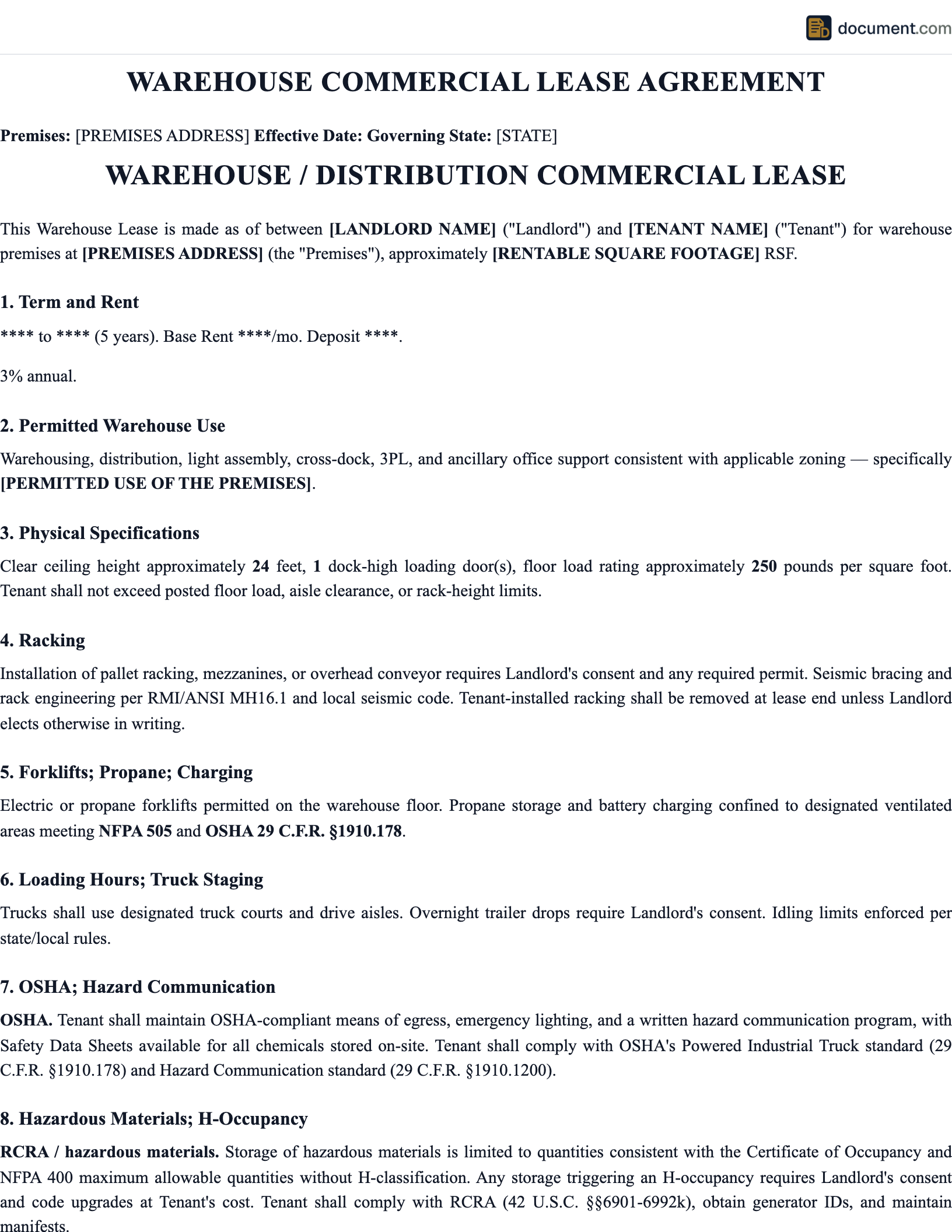



New Jersey Warehouse Lease Overview
New Jersey is home to one of the nation's largest industrial real estate markets, anchored by the Port of Newark and Port Elizabeth complex. The Newark-Elizabeth port corridor, Exit 8A in Middlesex County, and the I-78/I-287 intersection areas in central New Jersey are among the most competitive industrial submarkets in the northeastern United States. Rents in these prime locations are high by national standards, and vacancy has remained tight given the concentration of port-dependent logistics users.
New Jersey's high property taxes are a defining characteristic of the warehouse leasing market. NNN occupancy costs can be substantially higher than the base rent would suggest because of significant property tax passthroughs. Tenants who sign NNN leases without carefully reviewing property tax history and negotiating base year protections can face large and unexpected increases in occupancy cost. Environmental considerations also matter: industrial areas near Newark, the Meadowlands, and Elizabeth have complex contamination histories that must be addressed in lease documentation.
$35
Recording fee
Varies by value
Transfer tax
Required
Notarization
0
Witnesses required
New Jersey Requirements
New Jersey warehouse leases carry regulatory and financial complexity that goes beyond most other states. Property taxes, environmental obligations, and local operating restrictions all create provisions that must be addressed before signing. NNN leases in New Jersey require more detailed due diligence than in most other markets.
New Jersey Specific Note
New Jersey property taxes are among the highest in the nation. Before signing any NNN warehouse lease, obtain at least three years of property tax bills for the specific parcel and negotiate a base year with an annual cap. Without these protections, a NNN tenant can see property tax passthroughs increase occupancy cost significantly over a five-year term.
Document Requirements
- Property tax base year: New Jersey property taxes are very high; establish the base year and cap tenant liability for increases before signing any NNN lease
- Environmental indemnification: New Jersey industrial areas have documented contamination history; include a clause protecting the tenant from liability for pre-existing environmental conditions
- Port access terms: For port-adjacent facilities, address truck access hours, hazmat restrictions, and any port authority requirements affecting tenant operations
- CAM detail and audit rights: Request detailed CAM breakdown, annual reconciliation, and audit rights; New Jersey CAM can include significant insurance and management fees
- Permitted use: Define industrial use precisely given New Jersey's environmental and zoning framework; improper use classification can trigger regulatory review
How to Execute a New Jersey Warehouse Lease
Executing a warehouse lease in New Jersey requires careful attention to property taxes, environmental history, and the demands of one of the most complex industrial real estate markets in the country. These steps apply to port-area facilities, Exit 8A locations, and secondary New Jersey industrial markets.
Research Property Tax and Environmental History
Obtain three years of property tax bills from the county tax assessor. Request Phase I environmental assessment results from the landlord. New Jersey property taxes and environmental requirements are among the most important due diligence items in any New Jersey industrial lease.
Confirm Zoning with the Specific Municipality
New Jersey has 564 municipalities with independent zoning codes. Contact the specific city or township planning department. Do not assume that zoning in an adjacent municipality applies or that a neighboring tenant's permitted use means your use is automatically permitted.
Negotiate NNN Terms with Tax and CAM Protections
Establish a property tax base year and negotiate an annual cap on tax increases. Request two years of detailed CAM history. Negotiate a controllable CAM cap and annual reconciliation requirement. These protections are more important in New Jersey than in most states given the high baseline costs.
Review and Execute the Lease
Have a New Jersey commercial real estate attorney review the lease, particularly the environmental, tax, and CAM provisions. NNN leases in New Jersey can create substantial financial obligations beyond the base rent. Both parties sign when negotiation is complete.
Establish Utilities and Confirm Compliance
Set up utilities in the tenant name where required. Confirm any port authority operational requirements or environmental reporting obligations that apply to your operations. Keep executed copies in a secure location.
New Jersey Fees & Costs
Typical costs for filing in New Jersey. Actual fees may vary by county.
| Fee / Tax | Amount |
|---|---|
| Recording Fee | $35 |
| Transfer Tax | Varies by value |
| Notarization | $5 - $25 per signature |
| Certified Copy | $1 - $10 per page |
| Attorney Review (optional) | $150 - $500 |
New Jersey Tax Implications
New Jersey does not impose a documentary transfer tax on commercial lease transactions. However, New Jersey property taxes are among the highest in the United States, and these taxes pass through to NNN tenants as a significant occupancy cost. Understanding the current tax bill and establishing a base year protection is critical for any NNN warehouse lease in New Jersey.
CAM charges in New Jersey warehouse leases are substantial. High property insurance premiums, professional management fees, snow removal, and common area maintenance all contribute. Some landlords pass through roof replacement reserves and parking lot resurfacing costs. Negotiate a cap on controllable CAM, an annual reconciliation requirement, and an audit right. The combination of high property taxes and high CAM can make effective New Jersey NNN occupancy cost significantly above the stated base rent.
New Jersey also imposes a Business Privilege Tax, a Corporation Business Tax, and various local business taxes. The specific obligations depend on business type, gross receipts, and corporate structure. Consult a New Jersey tax professional for advice specific to your business before executing a multi-year lease in this market.
Sample New Jersey Warehouse Lease
Preview of our New Jersey-specific template. Your document will include all fields required for recording in any New Jersey county.
WAREHOUSE LEASE AGREEMENT
STATE OF NEW JERSEY
Legal Document
PARTY INFORMATION
Name: [Full Legal Name]
Address: [New Jersey Address]
County: [County]
PROPERTY DESCRIPTION
County: [County] State: New Jersey
Legal Description: [Per Recorded Plat]
Parcel No.: [APN]
New Jersey Warehouse Lease FAQ
Common questions about filing in New Jersey, including requirements, fees, and tax implications.
Official New Jersey Resources
Official state resources for verifying requirements and finding your local recording office.
Important Considerations
New Jersey warehouse tenants near the Port of Newark and Port Elizabeth should understand that port operations generate significant truck traffic on local roads, and some municipalities have enacted truck route restrictions and overnight parking prohibitions that can affect distribution operations. Confirm with the landlord whether any local ordinances restrict truck access, idling, or overnight parking at the specific property.
New Jersey's Industrial Site Recovery Act (ISRA) requires environmental review and potentially remediation when certain industrial operations cease at a facility. Tenants handling regulated materials should understand whether their operations trigger ISRA obligations when the lease ends. ISRA is administered by the New Jersey Department of Environmental Protection and its requirements are not always intuitive. A New Jersey environmental attorney should review the implications before signing a multi-year lease for operations involving regulated substances.
Exit 8A and the surrounding Middlesex County industrial market continue to see strong demand with very low vacancy rates. Tenants who need to expand within this submarket often find limited options. If continued access to Exit 8A-area space is important to your business, negotiate renewal options and rights of first refusal on adjacent space in the initial lease rather than waiting until the term approaches expiration.
New Jersey Market Note
New Jersey's port complex and northeastern market position justify high rents for many port-dependent and northeastern logistics businesses. The effective cost including property taxes and CAM is substantially above base rent, so model the full NNN occupancy cost before comparing New Jersey space to alternatives in Pennsylvania or Connecticut. For port-dependent operations, the access advantage may outweigh the cost premium.
Related Documents
Depending on your situation, you may need additional documents alongside this one. Below are commonly related documents that are frequently used together in real estate transactions.
Important Considerations
Before proceeding with your document, there are several important factors to consider. Each real estate transaction is unique, and understanding the specific requirements and implications of your situation will help ensure a smooth and legally compliant process.
Real estate laws and regulations are subject to change, and local requirements may differ from state-level rules. It is always advisable to verify current requirements with your local recording office before submitting any documents for recording.
If your transaction involves complex circumstances such as multiple parties, commercial properties, trusts, estates, or interstate elements, consulting with a licensed real estate attorney is strongly recommended. An attorney can provide guidance specific to your situation and help you avoid potential legal issues.
Keep copies of all documents related to your real estate transaction in a safe place. Recorded documents become part of the public record, but having your own copies ensures you can reference the terms and conditions at any time. Digital copies stored securely are also recommended as a backup.
Professional Recommendation
While our templates are designed to be comprehensive and legally compliant, we recommend having your completed document reviewed by a licensed attorney before recording, especially for high-value transactions or complex situations. Many attorneys offer flat-fee document review services that provide peace of mind at a reasonable cost.
Related Documents
Depending on your situation, you may need additional documents alongside this one. Below are commonly related documents that are frequently used together in real estate transactions.
Create your New Jersey Commercial Warehouse Lease Agreement in under 5 minutes.
Answer a few questions and download a New Jersey-compliant document, ready for the state agency.