
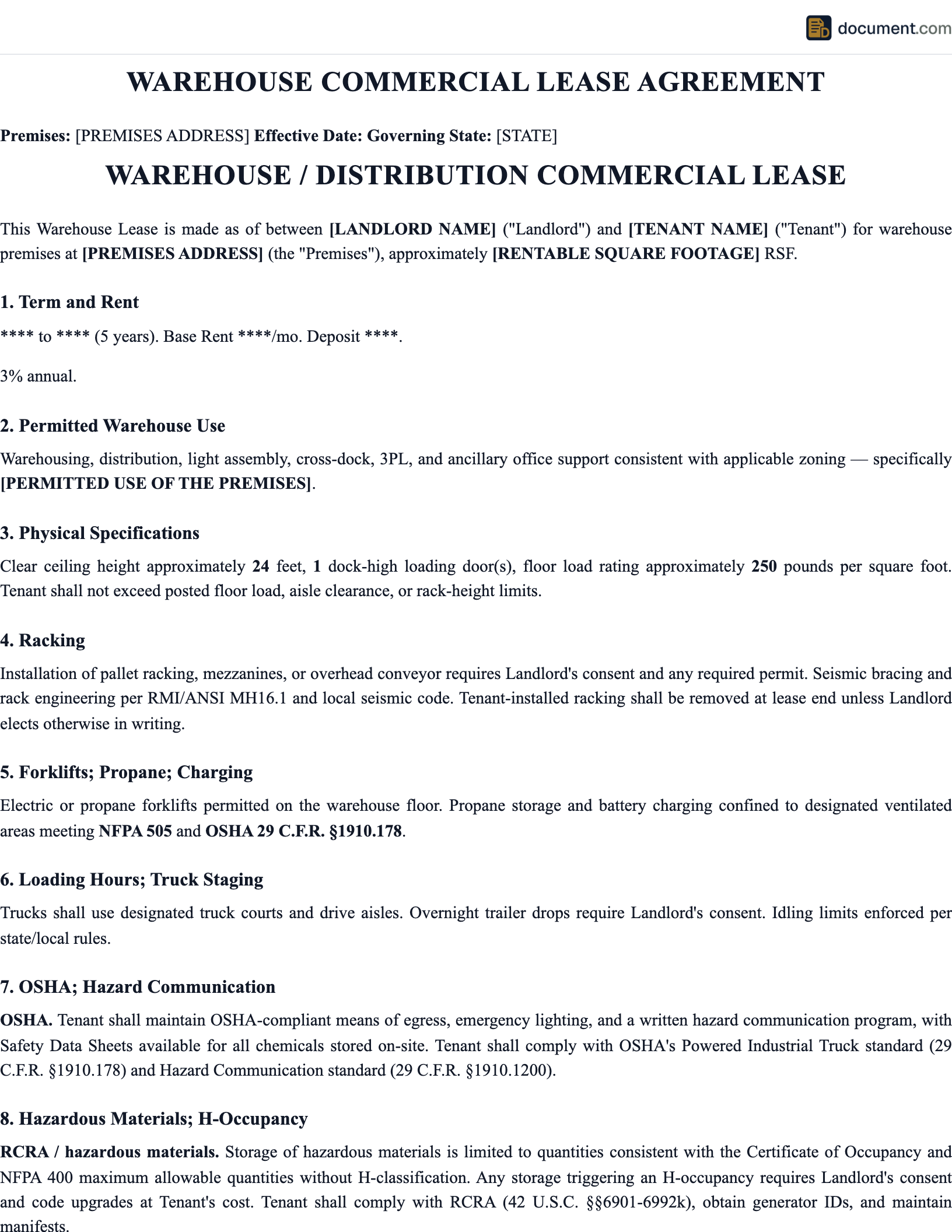



Arkansas Warehouse Lease Overview
Arkansas occupies a strategically valuable position in the South-Central US logistics network. The state sits at the intersection of freight corridors connecting Memphis to the northeast, Dallas-Fort Worth to the southwest, and Kansas City to the north. The Arkansas River Navigation System provides barge access to Gulf ports, which serves the state's agricultural and industrial base. Northwest Arkansas, anchored by Walmart's global headquarters, has attracted significant warehouse and distribution development serving the global retail supply chain.
Warehouse rents in Arkansas remain among the most affordable in the country, reflecting lower land costs and a less speculative development environment than major Sun Belt markets. The Bentonville area commands a premium driven by vendor and supplier demand, while Little Rock and Fort Smith offer lower-cost alternatives for tenants without specific geographic requirements. Arkansas industrial leasing operates under general commercial contract principles with minimal specialized regulation.
$15
Recording fee
$3.30 per $1,000
Transfer tax
Required
Notarization
0
Witnesses required
Arkansas Requirements
Arkansas warehouse leases are governed by general commercial contract law with the written requirement under Arkansas Code 4-59-101 applying to all leases over one year. Tornado risk and the Northwest Arkansas market's Walmart-driven dynamics create practical requirements specific to this state.
Arkansas Specific Note
Arkansas has no specialized statute governing commercial warehouse leases, which means lease terms are largely what the parties negotiate. Do not assume that tenant-protective provisions standard in other states apply automatically in Arkansas. Engage a commercial real estate attorney to review any landlord form lease before signing, and confirm that all material operational provisions including casualty damage, force majeure, and CAM caps are addressed explicitly.
Lease Requirements
- Written Agreement: Leases for more than one year must be in writing under Arkansas Code 4-59-101 to be enforceable.
- Signatures: Both landlord and tenant must sign. Arkansas does not require witnesses or notarization for a commercial lease to be binding between parties.
- Property Description: Clearly describe the leased premises including square footage, dock door count, clear height, floor load rating, and any exclusive use areas including trailer parking.
- CAM Definitions: Define what is included in operating expense pass-throughs. Arkansas industrial leases vary widely in what landlords include in CAM charges.
- Tornado and Casualty Provisions: Address casualty damage repair obligations, timelines, and the tenant's right to terminate if the landlord fails to repair within a defined period. Tornado risk is real in Arkansas.
- Zoning and Permitted Use: Confirm I-1 or I-2 zoning permits the tenant's specific use including outdoor storage, truck traffic volume, and any agricultural processing activity.
How to Execute a Arkansas Warehouse Lease
Executing an Arkansas warehouse lease requires attention to the specific submarket dynamics, particularly in Northwest Arkansas where Walmart's supply chain influence shapes landlord expectations and tenant requirements.
Inspect Dock and Loading Infrastructure
Arkansas industrial inventory includes both modern spec product and older single-story buildings. Inspect dock levelers, dock seals, and overhead door condition. Older buildings may require significant dock upgrades before use.
Assess Barge and Rail Access If Applicable
If operations use barge or rail freight, confirm proximity to the Arkansas River system or BNSF and Union Pacific corridors. Rail-served industrial sites command a premium but offer freight cost advantages for the right users.
Review CAM Structure and History
Request two prior years of CAM reconciliations to understand actual property tax and insurance pass-through costs. Arkansas CAM structures vary significantly by landlord.
Execute the Lease
Both parties sign the finalized lease. Confirm that all landlord improvement obligations, tenant improvement allowances, and commencement date conditions are clearly documented before signing.
Establish Utilities
Transfer electricity service to the applicable utility. Arkansas uses Entergy Arkansas, Southwestern Electric Power, and numerous rural electric cooperatives depending on location. Confirm the applicable provider for the specific facility address.
Arkansas Fees & Costs
Typical costs for filing in Arkansas. Actual fees may vary by county.
| Fee / Tax | Amount |
|---|---|
| Recording Fee | $15 |
| Transfer Tax | $3.30 per $1,000 |
| Notarization | $5 - $25 per signature |
| Certified Copy | $1 - $10 per page |
| Attorney Review (optional) | $150 - $500 |
Arkansas Tax Implications for Warehouse Leases
Arkansas levies a state corporate income tax at a top rate of 5.3% on income from Arkansas operations. Pass-through entities and sole proprietors pay Arkansas personal income tax at progressive rates. Lease payments are deductible business expenses under both federal and Arkansas tax rules.
Property taxes in Arkansas are a significant component of operating expense pass-throughs in triple-net warehouse leases. Arkansas industrial property is assessed by county assessors and millage rates vary across the state's 75 counties. Request the prior year's tax bill for the specific property to understand the expected CAM contribution before committing.
Arkansas has a base sales and use tax rate of 6.5%, with county and municipal surcharges applying in many locations. Purchases of goods for use in warehouse operations, including materials incorporated into tenant improvements, may be subject to sales tax unless a specific manufacturing or agricultural exemption applies.
Sample Arkansas Warehouse Lease
Preview of our Arkansas-specific template. Your document will include all fields required for recording in any Arkansas county.
WAREHOUSE LEASE AGREEMENT
STATE OF ARKANSAS
Legal Document
PARTY INFORMATION
Name: [Full Legal Name]
Address: [Arkansas Address]
County: [County]
PROPERTY DESCRIPTION
County: [County] State: Arkansas
Legal Description: [Per Recorded Plat]
Parcel No.: [APN]
Arkansas Warehouse Lease FAQ
Common questions about filing in Arkansas, including requirements, fees, and tax implications.
Official Arkansas Resources
Official state resources for verifying requirements and finding your local recording office.
Important Considerations for Arkansas Warehouse Tenants
Northwest Arkansas has transformed into a significant logistics hub driven by Walmart and its extensive supplier ecosystem. Warehouse tenants operating as Walmart vendors should understand that retailer logistics requirements, including specific dock standards and security camera specifications, may need to be incorporated into lease improvement provisions before operations begin.
Tornado risk is a genuine operational consideration in Arkansas. Tenants in exposed industrial buildings should confirm the lease's force majeure and casualty provisions and understand how inventory damage is handled during a tornado or severe storm event. Business interruption insurance should be evaluated as part of the overall risk management plan.
Agricultural chemical storage and grain handling create specialized requirements in rural Arkansas. Tenants handling regulated agricultural inputs should confirm zoning compliance, obtain required state permits, and address environmental liability provisions in the lease for any potential soil or groundwater impacts.
Arkansas Warehouse Lease Tip
Arkansas is a landlord-friendly state by default in commercial leasing because limited tenant-protective legislation exists for commercial tenants. This means lease terms are largely what the parties negotiate. Engage a commercial real estate attorney to review any landlord form lease before signing, and do not assume that standard tenant protections found in other states apply automatically in Arkansas.
Related Documents
Depending on your situation, you may need additional documents alongside this one. Below are commonly related documents that are frequently used together in real estate transactions.
Arkansas Warehouse Lease Checklist
Before signing any Arkansas warehouse lease, verify these key points. A landlord who resists discussing these provisions openly warrants additional scrutiny before you commit.
Review CAM reconciliation methodology carefully. Some landlords use gross-up provisions that inflate the expense pool even during periods of partial vacancy. Ask for the prior two years of actual CAM reconciliation statements.
Negotiate a rent abatement period for any tenant improvement work rather than simply a delayed commencement date that still accrues rent. Free rent during construction or fit-out is a standard ask in most industrial markets.
Confirm in writing who owns improvements you install, including racking anchor points, dock seals, and electrical upgrades. Absent a written provision, installed improvements generally become landlord property at lease termination.
Professional Recommendation
Industrial leases are not standardized. Each landlord uses their own form, and tenant-favorable provisions that are standard in other markets may need to be specifically negotiated. A commercial real estate attorney familiar with Arkansas industrial leasing can identify provisions that create undue risk before you are committed to the space.
Related Documents
Depending on your situation, you may need additional documents alongside this one. Below are commonly related documents that are frequently used together in real estate transactions.
Create your Arkansas Commercial Warehouse Lease Agreement in under 5 minutes.
Answer a few questions and download a Arkansas-compliant document, ready for the state agency.