



Vermont NNN Lease Overview
Triple-net (NNN) leases in Vermont are most prevalent for single-tenant retail properties, industrial and warehouse facilities along the Interstate 89 and Route 2 corridors, and freestanding commercial buildings in the Burlington metro area. Under this structure, the tenant pays base rent plus property taxes, building insurance premiums, and common area maintenance costs directly, leaving the landlord with a net return on the investment. Vermont's high property taxes, including the statewide education property tax, make the NNN structure financially significant for tenants.
Vermont does not impose a commercial rent tax, and the Vermont corporate income tax applies to business profits rather than to lease payments as such. However, Vermont's Act 250 environmental review law can affect NNN tenants who plan significant buildout or site improvements as part of the lease. Tenants should confirm whether planned work triggers Act 250 review before finalizing lease terms, as the permitting process can add months to a construction or renovation timeline.
None
State rent tax
High
Property tax burden
Act 250
Environmental review
Burlington
Primary commercial market
Vermont Requirements
Vermont NNN leases are governed by contract law. The state has no dedicated commercial landlord-tenant statute covering triple-net structures, so every expense pass-through obligation must be defined clearly in the lease itself. The following provisions are essential for a Vermont NNN lease to be financially and legally clear.
Vermont Property Tax and Act 250 Considerations
Vermont's dual property tax structure combines municipal property taxes with a statewide education property tax, making total annual property tax burdens meaningful for NNN tenants. Additionally, Vermont's Act 250 environmental review law can apply to commercial construction and significant buildout projects. Tenants planning improvements should confirm Act 250 applicability before executing the lease and address permitting timelines and costs in the buildout provisions.
Key Lease Provisions
- Property Tax Pass-Through: Define how Vermont municipal and education property taxes are allocated to the tenant; specify whether the tenant pays directly or reimburses the landlord after annual billing
- CAM Definitions and Caps: Identify all CAM components including snow removal (significant in Vermont winters), parking lot maintenance, landscaping, and exterior lighting; negotiate annual CAM increase caps
- Building Insurance: Specify the insurance types, coverage amounts, and how premiums are passed through; Vermont flood insurance may be relevant for properties in river valley locations following recent flooding events
- Maintenance Obligations: In an absolute NNN, the tenant maintains all systems; in a modified NNN, certain capital items remain the landlord's responsibility; Vermont's older building stock makes this distinction important
- Annual Reconciliation and Audit Rights: Require the landlord to deliver an annual reconciliation of estimated versus actual operating expenses with a 90-day deadline; include a tenant audit right with a lookback window and provision for landlord to pay audit costs on material overcharges
- Act 250 Buildout Provisions: Address who obtains Act 250 permits for any planned improvements, who bears the permitting cost, and what happens to the rent commencement date if Act 250 review delays construction
How to Structure a Vermont NNN Lease
Structuring a Vermont NNN lease requires careful attention to expense allocation, Act 250 implications, and Vermont's dual property tax system. The following steps reflect the practical considerations most relevant to Vermont commercial transactions.
Request Historical Expense Data and Tax Bills
Before negotiating, request the prior three years of actual property tax bills (municipal and education components), insurance premium history, and CAM reconciliation statements. Vermont property taxes can be significant, and a tenant entering without this data may face higher-than-expected pass-through costs, particularly after a municipal grand list reappraisal.
Negotiate CAM Scope and Annual Caps
Vermont's winter weather makes snow removal a meaningful CAM line item, particularly for Burlington area and northern Vermont properties. Define the CAM scope precisely and negotiate a cap on annual CAM increases. Confirm whether management fees are included and at what percentage. Verify the reconciliation schedule and the tenant's audit rights in writing.
Address Maintenance, HVAC, and Act 250 Provisions
Confirm the absolute versus modified NNN structure and document which capital items remain the landlord's responsibility. If you plan a buildout or significant improvement, determine before signing whether Vermont's Act 250 environmental review applies. Include lease provisions addressing who bears Act 250 permitting costs and what happens to rent commencement if permitting delays the project.
Execute the Lease
Vermont commercial leases do not require notarization to be enforceable between the parties, but notarization is required if the lease is to be recorded with the Vermont town clerk's office to provide constructive notice to third parties. Both parties sign through authorized representatives and receive fully executed copies.
Track Annual Expense Obligations and Reconciliation Deadlines
Set up systems to track Vermont municipal and education property tax bills, insurance renewal dates, and CAM reconciliation schedules. Vermont municipal property tax bills are typically mailed in July for the fiscal year. The reconciliation audit deadline in your lease must be calendared to preserve dispute rights.
Vermont NNN Lease Costs
Vermont NNN lease costs include base rent plus property tax, insurance, and CAM pass-throughs. Vermont's dual property tax structure and active winter maintenance requirements make the expense pass-through components particularly significant in the VT market.
| Fee / Cost | Amount |
|---|---|
| Vermont Property Tax (Municipal) | Varies by town; typically billed annually in July; Chittenden County rates among the highest in Vermont |
| Vermont Education Property Tax | Statewide; combined with municipal tax as a NNN pass-through; rates set by the Vermont legislature annually |
| Building Insurance | Variable; Vermont flood insurance may be relevant for river valley locations following recent flooding events |
| CAM (including snow removal) | Variable; snow removal is a meaningful CAM line item in Vermont; negotiate annual caps |
| State Income Tax on Business Profits | Applies to Vermont business income at progressive rates; no separate state tax on rent payments |
| Attorney Review (recommended) | $500 - $1,500; Burlington commercial real estate attorneys familiar with Vermont NNN structures and Act 250 implications |
Vermont NNN Tax Considerations
Vermont NNN tenants face a distinctive dual property tax structure. Vermont levies both a municipal property tax and a separate statewide education property tax on commercial properties. These two components together form the total property tax obligation passed through to NNN tenants. The education property tax rate is set annually by the Vermont legislature, making annual property tax costs somewhat unpredictable for budget planning purposes.
Vermont municipalities conduct grand list appraisals periodically, and a reassessment can trigger a significant increase in municipal property taxes. NNN tenants should negotiate the right to participate in property tax protest proceedings and to receive copies of all tax assessment notices promptly after the landlord receives them.
Vermont does not impose a commercial rent tax. Vermont's income tax is progressive and applies to business profits, but the lease payment itself is not separately taxed. Consult a Vermont tax professional about the deductibility of NNN lease payments and the treatment of expense pass-throughs on the tenant's Vermont corporate income tax return.
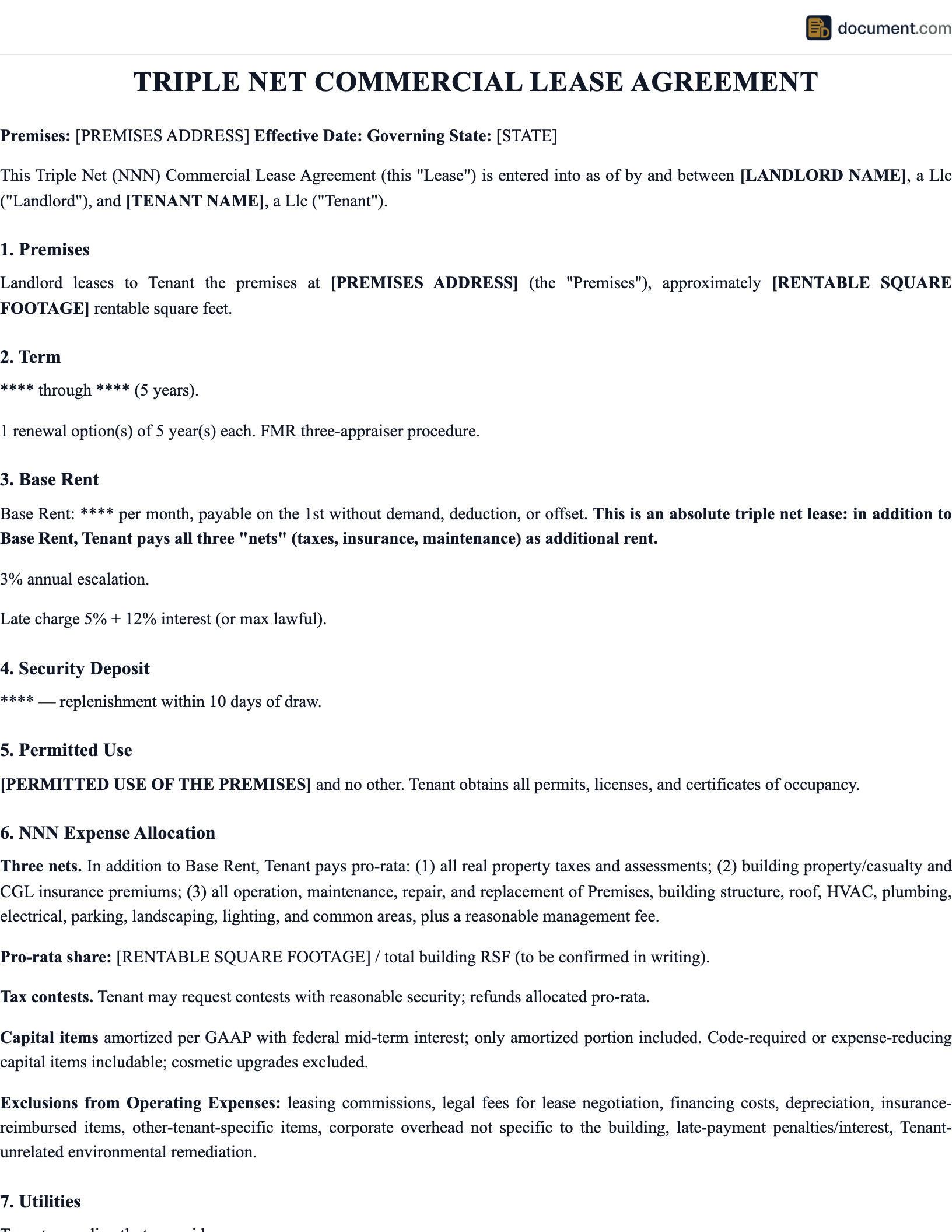
Sample Vermont NNN Lease
Preview of our Vermont-specific template. Your document will include all fields required for recording in any Vermont county.
TRIPLE NET (NNN) COMMERCIAL LEASE
STATE OF VERMONT
Legal Document
PARTY INFORMATION
Name: [Full Legal Name]
Address: [Vermont Address]
County: [County]
PROPERTY DESCRIPTION
County: [County] State: Vermont
Legal Description: [Per Recorded Plat]
Parcel No.: [APN]
Vermont NNN Lease FAQ
Common questions about filing in Vermont, including requirements, fees, and tax implications.
Official Vermont Resources
Official state resources for verifying requirements and finding your local recording office.
Related Vermont Commercial Lease Documents
Depending on the transaction, you may need additional documents alongside the NNN lease. Vermont commercial real estate transactions frequently involve property management agreements, lease amendments, and personal guaranty agreements.
Create your Vermont Commercial Triple Net Lease Agreement in under 5 minutes.
Answer a few questions and download a Vermont-compliant document, ready for the state agency.