
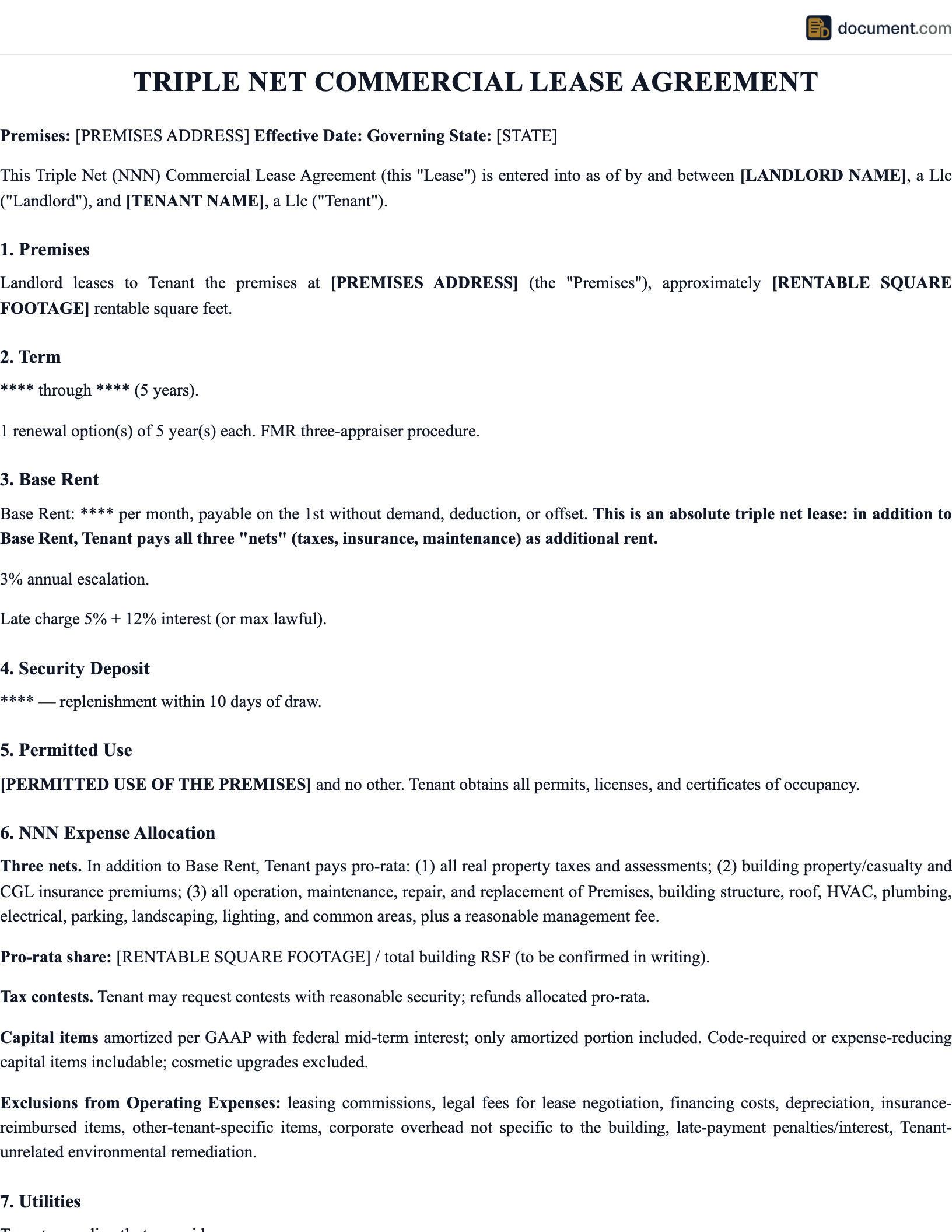



Pennsylvania NNN Lease Overview
Triple net leases in Pennsylvania are governed by general contract law principles rather than a dedicated commercial landlord-tenant statute. The Real Estate Licensing and Registration Act covers licensing requirements for brokers involved in the transaction, but the substantive rights and obligations between landlord and tenant depend almost entirely on the negotiated lease agreement. That makes careful drafting especially important for Pennsylvania NNN arrangements.
The state's two largest commercial markets operate with distinct dynamics. Philadelphia and its suburban counties anchor the southeastern Pennsylvania market, with strong demand for industrial distribution space, suburban office campuses in Montgomery and Chester Counties, and urban mixed-use retail. Pittsburgh drives the western market, with significant healthcare, technology, and energy sector tenants concentrated in Allegheny County and the surrounding boroughs. Property taxes differ considerably between these markets, and because NNN tenants bear tax pass-throughs directly, understanding the assessment framework in the relevant county is a core part of lease due diligence.
$25
Recording fee
2% (1%+1%)
Transfer tax
Required
Notarization
0
Witnesses required
Pennsylvania Requirements
A Pennsylvania NNN lease should clearly define the scope of each expense pass-through. Vague language about what qualifies as a CAM charge or how property tax escalations are computed creates significant disputes, particularly in multi-tenant office buildings where the landlord allocates shared expenses across tenants using rentable square footage ratios.
Pennsylvania-Specific Note
Philadelphia properties face BIRT exposure for landlords and some of the highest property tax rates in the state. Tenants in Philadelphia NNN leases should review the current assessment and ask whether a tax appeal is pending, since a successful appeal may lower pass-throughs while a reassessment event could sharply increase them. Philadelphia also has its own zoning and building code requirements that may affect tenant improvement obligations under the lease.
Key NNN Lease Provisions
- Expense Definitions: Enumerate which costs are included in taxes, insurance, and CAM; specify exclusions such as capital improvements, leasing commissions, and landlord overhead
- County Assessment Monitoring: Specify which party has the right and obligation to contest property tax assessments with the county board of assessment appeals
- CAM Audit Rights: Include a tenant right to audit CAM reconciliation statements within a defined period, typically 60 to 90 days after delivery of the annual statement
- Controllable Expense Cap: Negotiate a year-over-year cap on controllable CAM items to limit unexpected increases in operating expenses
- Roof and Structural Allocation: Define explicitly whether roof, foundation, and structural systems are landlord or tenant obligations, particularly for absolute NNN structures
- Casualty and Abatement: Include rent and expense abatement provisions for periods when the tenant cannot use the premises due to casualty or condemnation
How to Draft a Pennsylvania NNN Lease
Negotiating a triple net lease in Pennsylvania requires attention to the state's county-based assessment system and any local taxes applicable in Philadelphia or Pittsburgh. These steps outline the core process.
Define NNN Expense Scope
Enumerate exactly which costs fall within the three nets. Distinguish between controllable and uncontrollable expenses, and list explicit exclusions such as landlord overhead, leasing commissions, and costs related to other tenants
Review County Property Tax History
Request the current assessed value and millage rate from the county assessor. In Philadelphia and Allegheny Counties, also check whether a reassessment is pending and review any open tax appeals that could affect future pass-through amounts
Negotiate Maintenance Allocation and Caps
Clarify responsibility for roof, structure, HVAC, and parking areas. Set a controllable CAM cap and include audit rights with a defined notice period and cure period for disputed reconciliation charges
Execute the Lease
Both parties sign the final lease agreement. For terms of one year or longer, Pennsylvania's Statute of Frauds requires the agreement to be in writing. Consider having a Pennsylvania real estate attorney review the final document before execution
Record the Lease if Appropriate
For long-term NNN leases, consider recording a memorandum of lease at the county recorder of deeds to provide constructive notice to future buyers or lenders. Recording fees vary by county
Pennsylvania NNN Lease Costs
Typical costs associated with a Pennsylvania NNN lease transaction. Property tax pass-throughs vary significantly by county and property assessed value.
| Fee / Cost | Amount |
|---|---|
| County Recording Fee (memorandum of lease) | Varies by county; typically $50 to $100 for first pages |
| Annual Property Tax Pass-Through | Varies by county; Philadelphia rates among highest in state |
| Building Insurance Premium Pass-Through | Depends on building type, age, and location |
| CAM Charges (annual reconciliation) | Estimated monthly, reconciled annually per lease terms |
| Attorney Review | $300 to $800 for commercial lease review |
Pennsylvania Tax Implications
Pennsylvania's transfer tax rate is 2% (1%+1%). Understanding the full tax picture is important for any real property transaction in Pennsylvania.
Gift transfers may require IRS Form 709 if the value exceeds the annual gift tax exclusion. Recipients may receive the transferor's cost basis, potentially resulting in capital gains tax upon future sale.
Property tax reassessment rules vary in Pennsylvania. Some transfers trigger reassessment while others are exempt. Contact the Pennsylvania tax assessor's office for guidance on your specific transaction.
Sample Pennsylvania NNN Lease
Preview of our Pennsylvania-specific template. Your document will include all fields required for recording in any Pennsylvania county.
TRIPLE NET (NNN) COMMERCIAL LEASE
STATE OF PENNSYLVANIA
Legal Document
PARTY INFORMATION
Name: [Full Legal Name]
Address: [Pennsylvania Address]
County: [County]
PROPERTY DESCRIPTION
County: [County] State: Pennsylvania
Legal Description: [Per Recorded Plat]
Parcel No.: [APN]
Pennsylvania NNN Lease FAQ
Common questions about filing in Pennsylvania, including requirements, fees, and tax implications.
Official Pennsylvania Resources
Official state resources for verifying requirements and finding your local recording office.
Important Considerations
Before proceeding with your document, there are several important factors to consider. Each real estate transaction is unique, and understanding the specific requirements and implications of your situation will help ensure a smooth process.
Real estate laws and regulations are subject to change, and local requirements may differ from state-level rules. It is always advisable to verify current requirements with your local recording office before submitting any documents for recording.
If your transaction involves complex circumstances such as multiple parties, commercial properties, trusts, estates, or interstate elements, consulting with a licensed real estate attorney in your state is strongly recommended. An attorney can provide guidance specific to your situation and help you avoid potential legal issues.
Keep copies of all documents related to your real estate transaction in a safe place. Recorded documents become part of the public record, but having your own copies ensures you can reference the terms and conditions at any time. Digital copies stored securely are also recommended as a backup.
Professional Recommendation
While our templates are designed to be comprehensive and legally compliant, we recommend having your completed document reviewed by a licensed attorney before recording, especially for high-value transactions or complex situations. Many attorneys offer flat-fee document review services that provide peace of mind at a reasonable cost.
Related Documents
Depending on your situation, you may need additional documents alongside this one. Below are commonly related documents that are frequently used together in real estate transactions.
Important Considerations
Before proceeding with your document, there are several important factors to consider. Each real estate transaction is unique, and understanding the specific requirements and implications of your situation will help ensure a smooth and legally compliant process.
Real estate laws and regulations are subject to change, and local requirements may differ from state-level rules. It is always advisable to verify current requirements with your local recording office before submitting any documents for recording.
If your transaction involves complex circumstances such as multiple parties, commercial properties, trusts, estates, or interstate elements, consulting with a licensed real estate attorney is strongly recommended. An attorney can provide guidance specific to your situation and help you avoid potential legal issues.
Keep copies of all documents related to your real estate transaction in a safe place. Recorded documents become part of the public record, but having your own copies ensures you can reference the terms and conditions at any time. Digital copies stored securely are also recommended as a backup.
Professional Recommendation
While our templates are designed to be comprehensive and legally compliant, we recommend having your completed document reviewed by a licensed attorney before recording, especially for high-value transactions or complex situations. Many attorneys offer flat-fee document review services that provide peace of mind at a reasonable cost.
Related Documents
Depending on your situation, you may need additional documents alongside this one. Below are commonly related documents that are frequently used together in real estate transactions.
Create your Pennsylvania Commercial Triple Net Lease Agreement in under 5 minutes.
Answer a few questions and download a Pennsylvania-compliant document, ready for the state agency.