



Alaska NNN Lease Overview
Alaska triple-net leases operate under the same basic principle as NNN leases elsewhere: the tenant pays base rent plus a share of property taxes, building insurance, and maintenance costs. What makes Alaska unique is the scale and nature of those operating expenses. Heating costs, logistics premiums for parts and contractors, and permafrost-related maintenance can add significantly to a tenant's annual NNN burden compared to similar square footage in other states.
Alaska's commercial real estate market is concentrated in Anchorage, with secondary activity in Fairbanks and Juneau. Because there is no statewide sales tax and no state income tax, tenants need to understand local municipal tax structures that vary by borough and city rather than a uniform state-level commercial cost. Property taxes are assessed borough by borough, and rates differ meaningfully across the state.
$25
Recording fee
None
Transfer tax
Required
Notarization
0
Witnesses required
Alaska Requirements
Alaska commercial leases are governed by contract law, and there are no special statutory protections that automatically apply to commercial tenants. This means everything depends on what the lease says. For NNN leases in Alaska's climate, the expense definitions are especially important to get right before signing.
Alaska Specific Note
Alaska has no statewide commercial rent tax, but municipal taxes in Anchorage, Fairbanks, and other cities can affect overall occupancy costs. More importantly, heating and logistics expenses in Alaska can push NNN obligations significantly higher than national averages. Request a full operating expense history before committing to a lease term.
Key NNN Lease Provisions for Alaska
- Heating and Fuel Costs: Specify whether heating fuel is included in CAM or billed separately, and who is responsible for heating system repairs and replacements
- Municipal Tax Scope: Confirm which municipal taxes the landlord intends to pass through as part of the property tax NNN layer
- Logistics and Contractor Costs: Address whether above-average contractor travel costs are treated as direct maintenance expenses passed through to the tenant
- Audit Rights: Right to request supporting documentation and hire an independent reviewer for any CAM reconciliation
- Casualty and Weather Events: Provisions addressing NNN obligation abatement if the premises are damaged by weather, ice, or permafrost-related structural events
- Expense Caps: Annual cap on increases to controllable CAM items, separate from uncapped energy and insurance categories
How to File in Alaska
Alaska NNN leases require the same foundational steps as commercial leases anywhere, with extra attention paid to the expense provisions that make Alaska transactions distinctly different from national templates.
Obtain Operating Cost History
Request the landlord's actual operating expense statements for the prior two to three years. In Alaska, heating costs, contractor fees, and logistics expenses can vary dramatically year to year and should be reviewed before any lease commitment.
Negotiate Expense Definitions
Work through each NNN category with the landlord to define exactly what gets passed through, particularly heating fuel, logistics costs, and any municipal taxes specific to the property's borough or city.
Establish Maintenance Responsibilities
Clarify in the lease who handles heating system maintenance and replacement, roof repairs, exterior weatherproofing, and any permafrost-related structural monitoring or remediation. These costs are uniquely material in Alaska.
Execute the Lease
Both parties sign the final agreement. Consider having an Alaska commercial real estate attorney review the document, especially if the NNN expense structure is complex or the base rent commitment is substantial.
Track NNN Payments and Reconciliation Deadlines
Set up a system to track monthly NNN estimated payments and monitor the annual reconciliation deadline. In Alaska, actual expenses can exceed projections in years with extreme weather or high fuel prices, making timely review of reconciliation statements important.
Alaska Fees & Costs
The costs associated with an Alaska NNN lease go well beyond drafting fees. Tenants should budget for both the upfront preparation costs and the ongoing NNN expense categories, which tend to run higher in Alaska than in most states.
| Fee / Cost | Typical Amount |
|---|---|
| Base Rent (NNN) | Negotiated per square foot; Anchorage commercial rates vary by property class and location |
| Property Tax Pass-Through | Varies by borough; assessed by municipality rather than state |
| CAM Charges (including heating) | Often higher than Lower 48 averages due to fuel, maintenance, and logistics premiums |
| Building Insurance Pass-Through | May include higher premiums for Alaska-specific weather and casualty risks |
| Attorney Review (recommended) | $500 - $2,500 for commercial NNN lease review by Alaska-licensed counsel |
Alaska Tax Implications
Alaska's transfer tax rate is None. Understanding the full tax picture is important for any real property transaction in Alaska.
Gift transfers may require IRS Form 709 if the value exceeds the annual gift tax exclusion. Recipients may receive the transferor's cost basis, potentially resulting in capital gains tax upon future sale.
Property tax reassessment rules vary in Alaska. Some transfers trigger reassessment while others are exempt. Contact the Alaska tax assessor's office for guidance on your specific transaction.
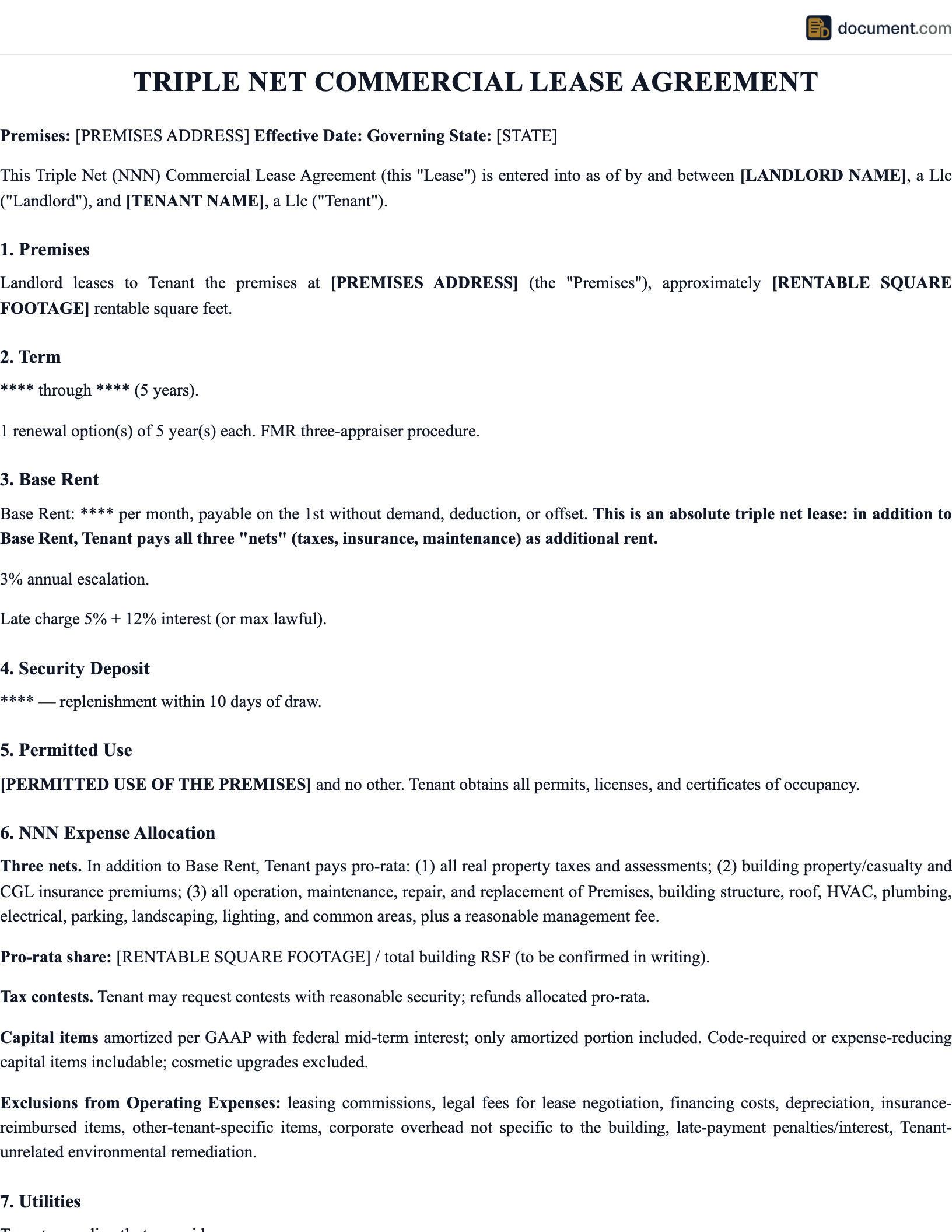
Sample Alaska NNN Lease
Preview of our Alaska-specific template. Your document will include all fields required for recording in any Alaska county.
TRIPLE NET (NNN) COMMERCIAL LEASE
STATE OF ALASKA
Legal Document
PARTY INFORMATION
Name: [Full Legal Name]
Address: [Alaska Address]
County: [County]
PROPERTY DESCRIPTION
County: [County] State: Alaska
Legal Description: [Per Recorded Plat]
Parcel No.: [APN]
Alaska NNN Lease FAQ
Common questions about filing in Alaska, including requirements, fees, and tax implications.
Official Alaska Resources
Official state resources for verifying requirements and finding your local recording office.
Important Considerations
Before proceeding with your document, there are several important factors to consider. Each real estate transaction is unique, and understanding the specific requirements and implications of your situation will help ensure a smooth process.
Real estate laws and regulations are subject to change, and local requirements may differ from state-level rules. It is always advisable to verify current requirements with your local recording office before submitting any documents for recording.
If your transaction involves complex circumstances such as multiple parties, commercial properties, trusts, estates, or interstate elements, consulting with a licensed real estate attorney in your state is strongly recommended. An attorney can provide guidance specific to your situation and help you avoid potential legal issues.
Keep copies of all documents related to your real estate transaction in a safe place. Recorded documents become part of the public record, but having your own copies ensures you can reference the terms and conditions at any time. Digital copies stored securely are also recommended as a backup.
Professional Recommendation
While our templates are designed to be comprehensive and legally compliant, we recommend having your completed document reviewed by a licensed attorney before recording, especially for high-value transactions or complex situations. Many attorneys offer flat-fee document review services that provide peace of mind at a reasonable cost.
Related Documents
Depending on your situation, you may need additional documents alongside this one. Below are commonly related documents that are frequently used together in real estate transactions.
Important Considerations
Before proceeding with your document, there are several important factors to consider. Each real estate transaction is unique, and understanding the specific requirements and implications of your situation will help ensure a smooth and legally compliant process.
Real estate laws and regulations are subject to change, and local requirements may differ from state-level rules. It is always advisable to verify current requirements with your local recording office before submitting any documents for recording.
If your transaction involves complex circumstances such as multiple parties, commercial properties, trusts, estates, or interstate elements, consulting with a licensed real estate attorney is strongly recommended. An attorney can provide guidance specific to your situation and help you avoid potential legal issues.
Keep copies of all documents related to your real estate transaction in a safe place. Recorded documents become part of the public record, but having your own copies ensures you can reference the terms and conditions at any time. Digital copies stored securely are also recommended as a backup.
Professional Recommendation
While our templates are designed to be comprehensive and legally compliant, we recommend having your completed document reviewed by a licensed attorney before recording, especially for high-value transactions or complex situations. Many attorneys offer flat-fee document review services that provide peace of mind at a reasonable cost.
Related Documents
Depending on your situation, you may need additional documents alongside this one. Below are commonly related documents that are frequently used together in real estate transactions.
Create your Alaska Commercial Triple Net Lease Agreement in under 5 minutes.
Answer a few questions and download a Alaska-compliant document, ready for the state agency.