



What Is a Commercial Rent-to-Own Agreement?
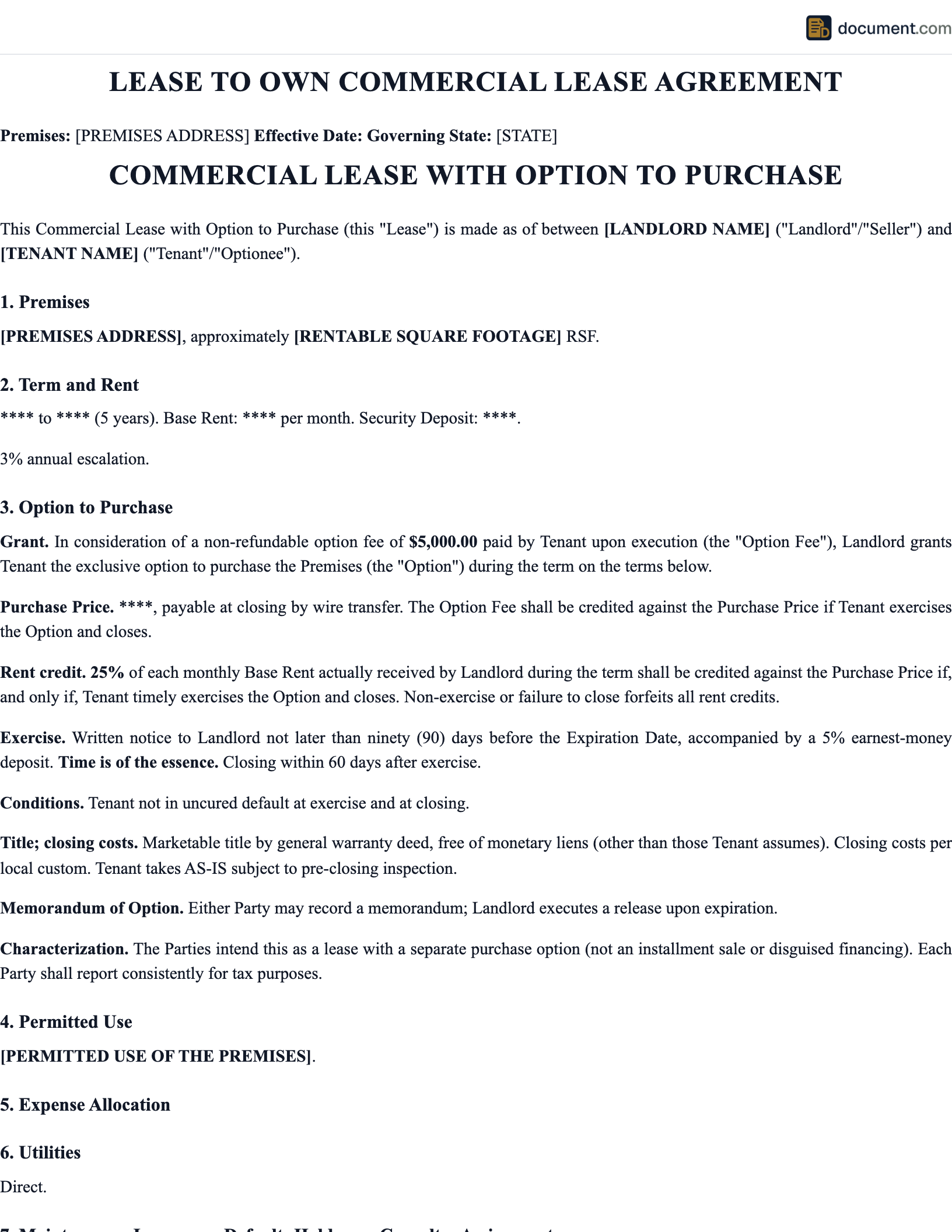
A commercial rent-to-own agreement, also known as a lease-purchase or lease-option agreement, is a hybrid contract that combines a standard commercial lease with an option or obligation to purchase the property at a predetermined price within a specified timeframe. This arrangement allows businesses to occupy commercial property while building toward ownership, often applying a portion of rent payments toward the eventual purchase price.
Commercial rent-to-own agreements are particularly valuable for businesses that want to secure a location but are not yet ready for outright purchase due to financing constraints, insufficient credit history, or the desire to test a location before committing to a purchase. The agreement locks in the purchase price at today's market value, protecting the tenant from future price increases.
There are two primary types of commercial rent-to-own arrangements: lease-option agreements (where the tenant has the right but not the obligation to purchase) and lease-purchase agreements (where the tenant is obligated to purchase at the end of the term). The distinction is critical because it affects the tenant's liability if they choose not to buy, the treatment of option fees, and the tax implications for both parties.
Key financial components include the option fee (typically 1-5% of the purchase price, sometimes credited toward the purchase), monthly rent credits (the portion of rent applied to the purchase price), the agreed purchase price, and the timeline for exercising the option. Both parties should consult with real estate attorneys and tax professionals before entering into these arrangements.
Commercial Rent-to-Own Agreement Form Preview
Our commercial rent-to-own agreement form includes all the fields required for a valid document. Below is a preview of the key sections. Your customized document will be tailored to your state's specific requirements.
COMMERCIAL RENT-TO-OWN AGREEMENT
Legal Document Template
LANDLORD/SELLER
Name: [Full Legal Name]
Address: [Mailing Address]
Entity Type: [Individual/LLC/Corp]
TENANT/BUYER
Name: [Full Legal Name / Entity]
Address: [Current Address]
Tax ID: [EIN/SSN]
PROPERTY
Address: [Commercial Property Address]
Type: [Office/Retail/Industrial]
SF: [Square Feet]
Parcel #: [Tax Parcel Number]
FINANCIAL TERMS
Purchase Price: $[Amount]
Option Fee: $[Amount]
Monthly Rent: $[Amount]
Rent Credit: [%] per month
Option Period: [Months/Years]
Key Provisions
A commercial rent-to-own agreement requires several important provisions to be legally effective and protect all parties involved. Review each provision carefully.
Option Fee and Credits
Define the option fee amount, whether it is refundable, how it applies to the purchase price, and the monthly rent credit amount that accumulates toward the purchase.
Purchase Price and Terms
Establish the purchase price, how it was determined, any price adjustment mechanisms, and the specific terms for exercising the purchase option.
Lease Terms During Option Period
Set forth all standard lease terms including rent amount, term length, maintenance responsibilities, insurance requirements, and default provisions.
Maintenance and Improvements
Clarify who is responsible for property maintenance, repairs, and improvements during the lease period, and how tenant improvements affect the purchase price.
Exercise Procedures
Detail the exact procedures for exercising the purchase option, including notice requirements, timelines, financing contingencies, and closing procedures.
Default and Forfeiture
Address consequences of default by either party, including forfeiture of option fees and rent credits, remedies for breach, and any cure periods.
When to Use A Commercial Rent-to-Own Agreement
Understanding when to use a commercial rent-to-own agreement helps ensure you select the right document for your situation. Below are the most common use cases.
Small Business Expansion
Growing businesses that want to secure a larger commercial space for expansion but need time to arrange financing or build credit for a traditional commercial mortgage.
New Business Ventures
Entrepreneurs launching new businesses who want to test a location and build revenue before committing to property ownership with a significant capital investment.
Restaurant and Retail
Food service and retail operators who want to invest in custom build-outs with the assurance that improvements will benefit their owned property rather than a landlord's asset.
Professional Practices
Doctors, dentists, lawyers, and other professionals establishing practices who want to transition from leasing to owning their office space as their practice matures.
How to Draft A Commercial Rent-to-Own Agreement
Drafting a commercial rent-to-own agreement involves several steps to ensure the document is legally sound, complete, and enforceable in your state. Follow these steps for a thorough and professional document.
Gather Required Information
Collect all necessary details including party names, addresses, property or subject matter descriptions, financial terms, and any state-specific requirements for your jurisdiction.
Select Your State
Choose your state to ensure the document includes all required provisions, disclosures, and formatting requirements mandated by your jurisdiction's laws.
Complete All Sections
Fill in every section of the document carefully, including all parties, terms, conditions, and any special provisions relevant to your specific situation.
Review and Sign
Review the completed document for accuracy, have all parties sign, and arrange for notarization or witnesses if required by your state. Keep copies for all parties.
Distribute and Store
Provide signed copies to all parties involved. Store the original in a secure location and file any required copies with the appropriate government offices or recording agencies.
Legal Requirements
Legal requirements for a commercial rent-to-own agreement vary by state. Each state has its own statutes governing this type of document, including specific provisions, disclosures, notice periods, and execution requirements. Selecting your state ensures your document meets all local requirements.
Important Legal Notice
This document template is provided for informational purposes and general guidance. While designed to comply with common legal requirements, laws vary by state and locality. For significant transactions or complex situations, consult with a licensed attorney in your jurisdiction to ensure full compliance with applicable laws.
- State Compliance: Each state has specific legal requirements that must be met for this document to be enforceable
- Proper Execution: The document must be properly signed by all parties, with notarization or witnesses as required by your state
- Required Disclosures: Many states mandate specific disclosures or addenda that must accompany this type of document
- Filing Requirements: Some states require filing or recording with government offices for the document to be fully effective
Rent-to-Own by State
Select your state for a commercial rent-to-own agreement customized to your jurisdiction's specific legal requirements, disclosures, and formatting standards.
Sample Commercial Rent-to-Own Agreement
Below is a preview of our commercial rent-to-own agreement template. Your customized document will include all fields and provisions required for your specific state and situation.
COMMERCIAL RENT-TO-OWN AGREEMENT
Template Preview
LANDLORD/SELLER
Name: [Full Legal Name]
Address: [Mailing Address]
Entity Type: [Individual/LLC/Corp]
TENANT/BUYER
Name: [Full Legal Name / Entity]
Address: [Current Address]
Tax ID: [EIN/SSN]
PROPERTY
Address: [Commercial Property Address]
Type: [Office/Retail/Industrial]
SF: [Square Feet]
Parcel #: [Tax Parcel Number]
FINANCIAL TERMS
Purchase Price: $[Amount]
Option Fee: $[Amount]
Monthly Rent: $[Amount]
Rent Credit: [%] per month
Option Period: [Months/Years]
Frequently Asked Questions
Common questions about creating and using a commercial rent-to-own agreement, including legal requirements, costs, and best practices.
Create your Commercial Lease To Own Lease Agreement in under 10 minutes.
Answer a few questions and download a compliant, attorney-drafted document ready for your state.