



Tennessee Gross Commercial Lease Agreement Overview
A gross commercial lease in Tennessee means the landlord covers property operating expenses out of the base rent the tenant pays. Tenants pay one monthly figure and do not receive separate bills for property taxes, insurance, or common area maintenance. This structure is the norm for office space in Nashville, Brentwood, and Knoxville, where professional service tenants value the budget predictability that a flat monthly rent provides.
Nashville's explosive commercial growth has made expense stop provisions and base year selection more important than ever. Operating costs, particularly property taxes in Davidson and Williamson counties, have risen substantially as assessed values have climbed. Tennessee has no income tax on wages and no commercial rent tax, which keeps the overall cost structure simpler than in states with additional tax layers. However, landlords in the Nashville market need to set gross rents carefully to account for the ongoing increase in their underlying operating costs.
$10
Filing fee
Required
Notarization
0
Witnesses required
Register
Filing office
Tennessee Gross Lease Requirements
Tennessee commercial leases are governed by contract law and the parties have broad freedom to structure expense coverage as they see fit. The lease document itself determines what the landlord covers, what the tenant pays separately, how expense overages are calculated, and what rights the tenant has to verify the numbers.
Tennessee Specific Note
Tennessee has no commercial rent tax and no income tax on wages. Property taxes assessed by county assessors are the main variable in a Tennessee gross lease's operating expense pool. In the Nashville metro area, including Davidson, Williamson, and Rutherford counties, assessed values and property taxes have risen significantly with commercial growth. The base year and expense stop provisions are the most negotiation-critical items in a Nashville-area gross lease.
Key Tennessee Gross Lease Provisions
- Expense Inclusions: List every operating expense category the landlord covers in the base rent
- Expense Stop and Base Year: Set the threshold above which operating cost increases pass through to the tenant, and define the base year clearly
- Gross-Up Provision: Define how operating expenses are calculated during periods of partial building vacancy
- Tenant Audit Rights: Right to review operating expense records within 60 to 90 days of the annual reconciliation statement
- Capital vs. Operating Distinction: Define which costs are capital expenditures the landlord absorbs versus operating expenses that feed the gross expense pool
How to Negotiate a Tennessee Gross Lease
Negotiating a Tennessee gross commercial lease comes down to understanding the expense structure before committing to a rent figure. Here is the sequence.
Review the Landlord's Actual Expense History
Request two years of operating expense statements. For Nashville and Brentwood properties, confirm whether property tax assessments have risen recently, because that directly affects whether the landlord's gross rent is set realistically to cover future costs.
Negotiate the Expense Stop and Base Year
A high expense stop means the landlord absorbs more cost increases. The base year sets the reference point for those calculations. In a market where operating costs are rising, a tenant benefits from a higher stop and a base year when costs were near their peak.
Address the Gross-Up and Audit Rights
Understand how operating expenses are calculated when the building is partially vacant. Confirm audit rights in writing so you can verify any expense pass-throughs above the stop.
Execute the Lease
Both parties sign the final document. Tennessee does not require notarization for commercial leases to be enforceable between the parties, though some lenders require notarization if a memorandum of lease will be recorded.
Distribute and Calendar the Reconciliation Period
Keep executed originals. Set a calendar reminder for the annual expense reconciliation period so you can review any pass-throughs above the stop and exercise audit rights within the window the lease specifies.
Tennessee Gross Lease Costs
Typical cost items for a Tennessee gross commercial lease. Actual amounts vary by market, property type, and lease structure.
| Fee / Cost | Amount |
|---|---|
| Base Rent (all-in) | Negotiated; covers landlord's operating expenses |
| Expense Pass-Throughs Above Stop | Pro-rata share of costs exceeding the expense stop |
| State Commercial Rent Tax | None (Tennessee does not tax commercial rent) |
| Notarization (if recording required) | $5 - $25 per signature |
| Attorney Review (recommended) | $250 - $750 for commercial lease review |
Sample Tennessee Gross Commercial Lease Agreement
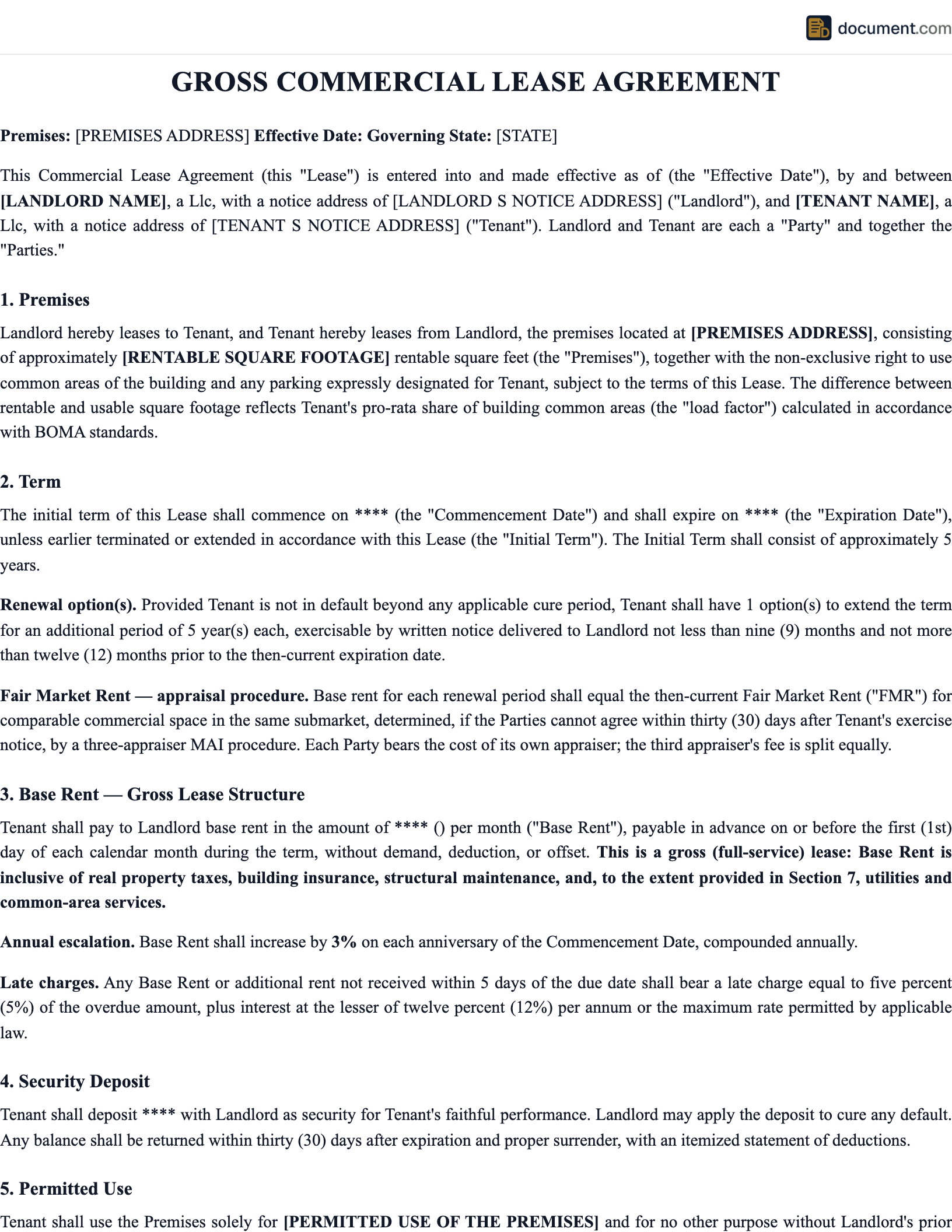
Below is a preview of our Tennessee-specific template. Your customized document will include all fields and provisions required for filing in any Tennessee county.
GROSS COMMERCIAL LEASE AGREEMENT
STATE OF TENNESSEE
Legal Document Template
LANDLORD
Name: [Full Legal Name]
Address: [Business Address]
Contact: [Phone/Email]
TENANT
Name: [Full Legal Name / Entity]
Address: [Current Address]
Tax ID: [EIN/SSN]
PREMISES
Address: [Property Address]
Suite: [Number]
Rentable SF: [Square Feet]
Usable SF: [Square Feet]
FINANCIAL TERMS
Base Rent: $[Amount]/month
Expense Stop: $[Amount]/SF
Security Deposit: $[Amount]
Escalation: [%]/year
Tennessee Gross Commercial Lease Agreement FAQ
Answers to common questions about filing a gross commercial lease agreement in Tennessee, including requirements, fees, and procedures.
Official Tennessee Resources
Use these official state resources to verify requirements, find your local filing office, and access government forms for Tennessee.
Related Tennessee Documents
Depending on your situation, you may need additional documents alongside your Tennessee gross commercial lease agreement.
Create your Tennessee Commercial Gross Lease Agreement in under 5 minutes.
Answer a few questions and download a Tennessee-compliant document, ready for the state agency.