



Kentucky Gross Commercial Lease Agreement Overview
A gross commercial lease in Kentucky provides tenants with a single, all-in rent payment that the landlord uses to cover operating expenses. Kentucky enforces commercial leases as written under contract law, so the specific costs absorbed by the landlord are defined entirely by the lease terms. The Louisville and Lexington suburban office markets use gross and modified-gross structures more frequently than industrial properties, where NNN is the dominant structure.
The main variables in a Kentucky gross lease are what is included in the rent, whether an expense stop applies, how the base year is set, and whether the landlord includes utilities and janitorial or bills them separately. Kentucky's property taxes are assessed by county Property Valuation Administrators (PVAs), and these costs form a significant part of the landlord's operating expense picture. Understanding what is embedded in the gross rent helps tenants compare gross lease offers against NNN alternatives on a true apples-to-apples basis.
$32
Filing fee
Required
Notarization
0
Witnesses required
County
Filing office
Kentucky Gross Lease Requirements
Kentucky commercial leases are governed by contract law, and courts enforce the written terms. For a gross lease, the most critical drafting requirement is a clear and comprehensive list of what operating costs are covered by the gross rent versus what the tenant pays directly.
Kentucky Specific Note
Kentucky property taxes are assessed by county PVAs, not by a central state authority. In Louisville and Jefferson County, where commercial property values tend to be higher, property taxes represent a more significant component of the gross rent than in rural Kentucky counties. If the gross lease includes an expense stop, ensure the base year reflects actual normal operating costs rather than an unusually low-cost year.
Key Gross Lease Terms to Define
- Operating Cost Inclusions: Spell out all costs embedded in the gross rent, including taxes, insurance, and maintenance categories
- Expense Stop: If applicable, define the per-square-foot threshold and how overages are calculated and billed
- Tenant-Direct Costs: List any expenses the tenant pays separately, such as utilities, janitorial, or parking
- Gross-Up Provision: For multi-tenant buildings, include language for calculating costs at full occupancy
- Annual Escalation: Include a rent escalation clause to protect the landlord against rising PVA-assessed taxes and insurance
How to Execute a Kentucky Gross Lease
Negotiating the expense structure before drafting is the most important step in a Kentucky gross commercial lease. Here is a practical sequence.
Request Actual Operating Expense Data
Ask for two to three years of actual property tax bills from the county PVA, insurance premium statements, and maintenance cost history. This lets you evaluate whether the gross rent is priced fairly relative to embedded costs.
Negotiate the Expense Structure
Agree on what is included in the gross rent, whether an expense stop applies and at what level, which costs the tenant pays directly, and how any escalation provisions work over the lease term.
Draft the Lease with Clear Inclusion Language
Use precise language for all expense inclusions and exclusions. Kentucky courts interpret ambiguous lease terms under contract law principles, so clarity protects both parties.
Execute and Retain Copies
Both parties sign the lease and retain original executed copies. For long-term Kentucky commercial leases, consider recording a memorandum of lease with the county clerk to provide notice to third parties.
Track Escalations and Expense Stop Thresholds
If the lease includes an expense stop or annual escalation, calendar each adjustment date and confirm the calculation method. PVA reassessments in Louisville or Jefferson County can change the property tax component of the gross rent picture.
Kentucky Gross Lease Costs
Typical occupancy costs for a Kentucky gross commercial lease. The gross rent figure includes most operating costs, but what is embedded varies by specific lease terms.
| Cost Item | Typical Range |
|---|---|
| Gross Rent (office, Louisville/Lexington) | $14 - $24 per sq ft per year |
| Tenant-Direct Utilities (if excluded from gross) | $1.50 - $3.50 per sq ft per year |
| Expense Stop Overage (if applicable) | Varies by base year and actual PVA taxes |
| Commercial Real Estate Attorney Review | $500 - $2,000 |
Sample Kentucky Gross Commercial Lease Agreement
Below is a preview of our Kentucky-specific template. Your customized document will include all fields and provisions required for filing in any Kentucky county.
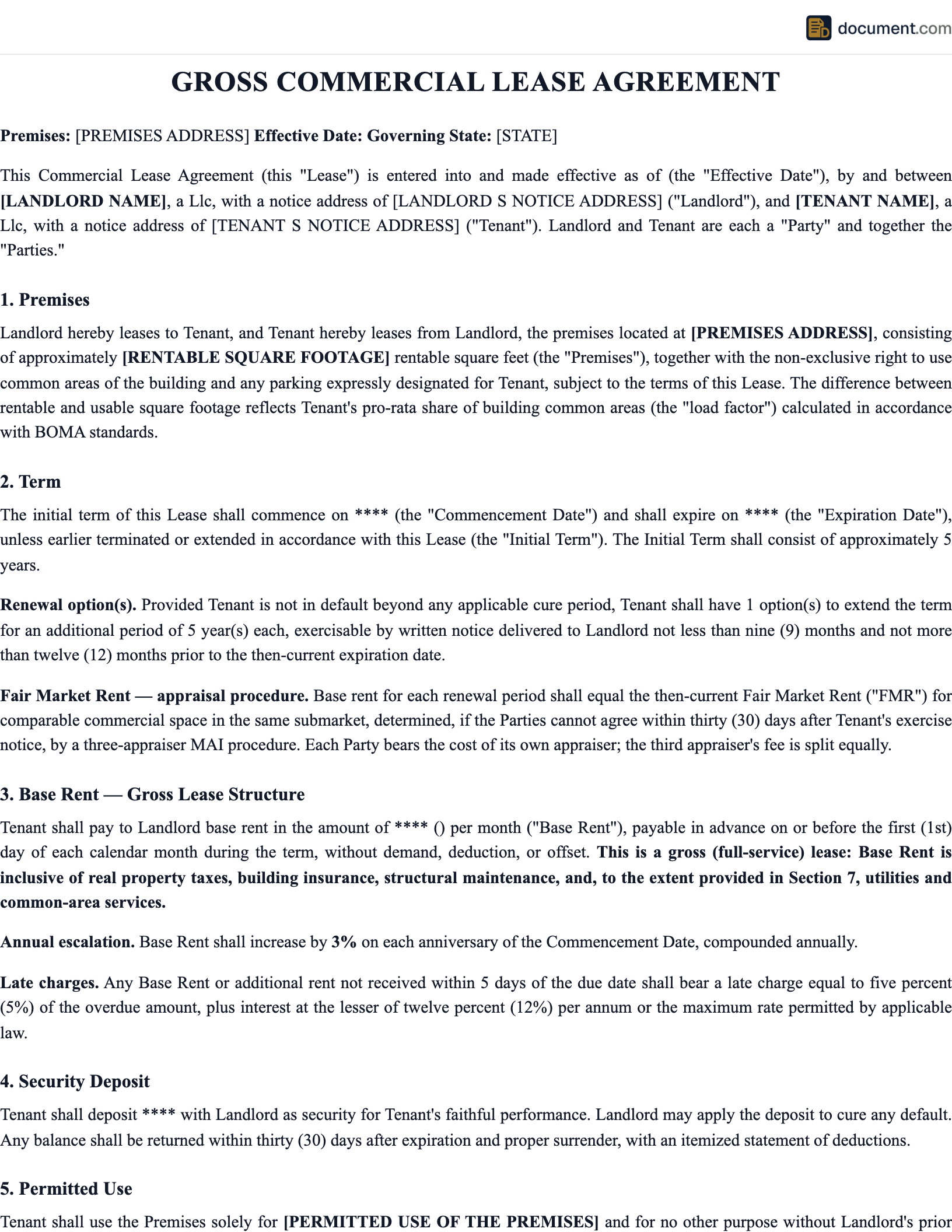
GROSS COMMERCIAL LEASE AGREEMENT
STATE OF KENTUCKY
Legal Document Template
LANDLORD
Name: [Full Legal Name]
Address: [Business Address]
Contact: [Phone/Email]
TENANT
Name: [Full Legal Name / Entity]
Address: [Current Address]
Tax ID: [EIN/SSN]
PREMISES
Address: [Property Address]
Suite: [Number]
Rentable SF: [Square Feet]
Usable SF: [Square Feet]
FINANCIAL TERMS
Base Rent: $[Amount]/month
Expense Stop: $[Amount]/SF
Security Deposit: $[Amount]
Escalation: [%]/year
Kentucky Gross Commercial Lease Agreement FAQ
Answers to common questions about filing a gross commercial lease agreement in Kentucky, including requirements, fees, and procedures.
Official Kentucky Resources
Use these official state resources to verify requirements, find your local filing office, and access government forms for Kentucky.
Related Kentucky Documents
Depending on your situation, you may need additional documents alongside your Kentucky gross commercial lease agreement.
Create your Kentucky Commercial Gross Lease Agreement in under 5 minutes.
Answer a few questions and download a Kentucky-compliant document, ready for the state agency.