
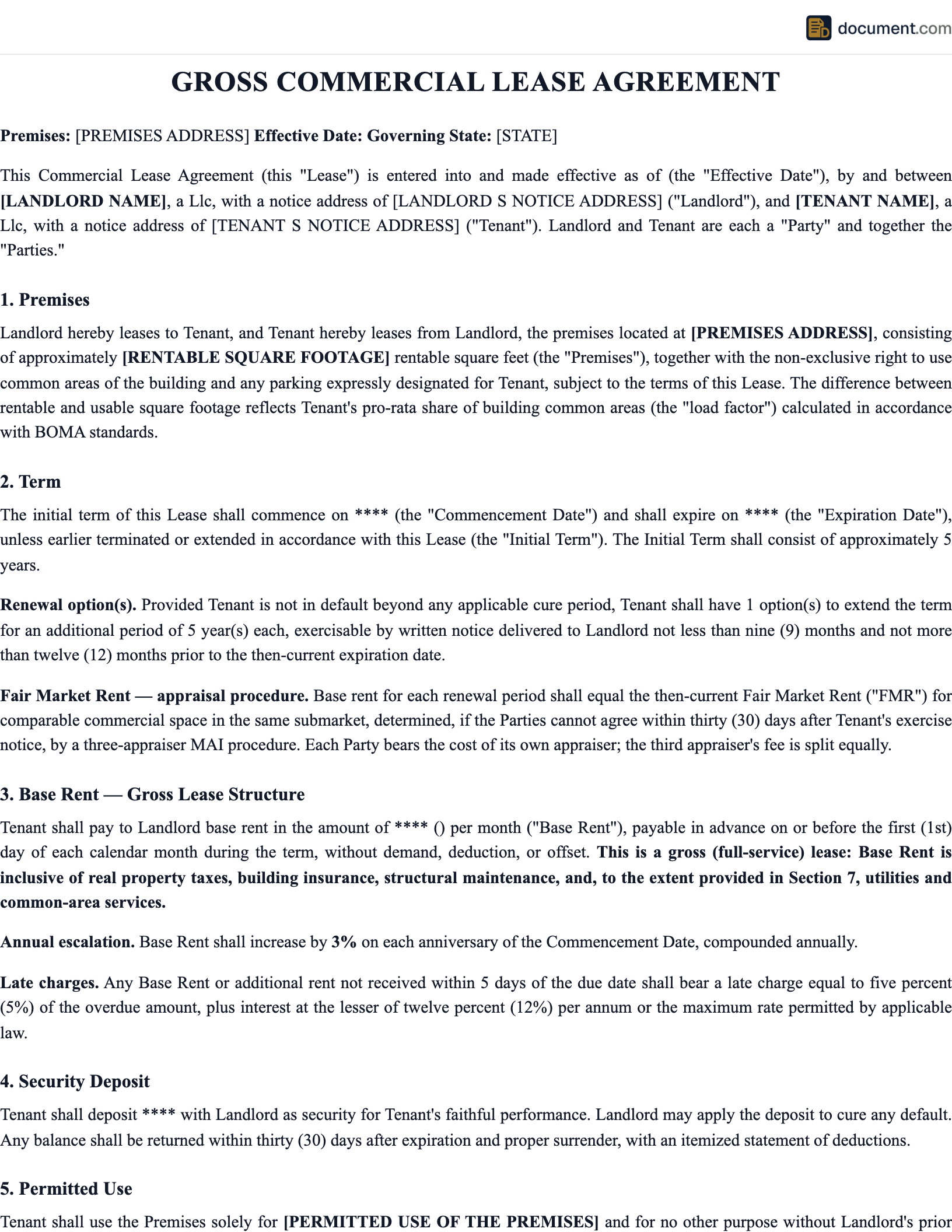



Connecticut Gross Commercial Lease Overview
A gross commercial lease in Connecticut bundles operating expenses into a single base rent that the tenant pays monthly. The landlord covers property taxes, building insurance, maintenance, and common area costs from that payment. This structure is especially common in Connecticut's multi-tenant office market, where Fairfield County's high and unpredictable property tax environment makes predictable all-in rent an appealing alternative to NNN structures for tenants who lack leverage to push back on variable pass-throughs.
Connecticut commercial leases are governed by contract law, and the key negotiating points in a gross lease center on expense stops, base year selection, gross-up provisions, and the specific inclusions and exclusions from the operating expense pool. Connecticut has no statewide commercial rent tax, simplifying the overall cost structure. However, the state's high municipal property tax rates make careful base year and expense stop negotiation more important in Connecticut than in lower-tax states.
$60
Filing fee
Required
Notarization
2
Witnesses required
Town
Filing office
Connecticut Gross Lease Requirements
Connecticut commercial leases over one year must be in writing. For gross leases, the critical written provisions are the expense stop threshold, base year selection, gross-up mechanics, and the definitive list of included and excluded operating expenses. Courts enforce these terms as written, so precision at drafting saves disputes later.
Connecticut Property Tax Risk in Gross Leases
Connecticut municipalities, particularly in Fairfield County, can trigger substantial expense stop overages when property reassessments drive up assessed values. If the base year used in a Connecticut gross lease predates a significant reassessment, tenants can face expense pass-throughs that far exceed their initial estimates. Always review the municipality's recent reassessment history before agreeing to a base year.
Key Connecticut Gross Lease Provisions
- Expense Stop and Base Year: Document the specific base year and per-square-foot expense stop amount; include a gross-up provision adjusted to 95 percent occupancy for the base year calculation
- Operating Expense Inclusions: List every category included in the expense pool, from property taxes and building insurance to management fees and common area utilities
- Negotiated Exclusions: Negotiate exclusions for capital improvements, above-market management fee markups, and costs arising from other tenants' defaults
- Tenant's Pro-Rata Share: Define the calculation method, typically rentable square footage of tenant's suite divided by total building rentable area
- Utility Clarity: Specify whether tenant electricity, natural gas, and water are included in gross rent or separately metered and billed to the tenant directly
How to Negotiate a Connecticut Gross Commercial Lease
Getting the right gross lease structure in Connecticut requires focused attention on the expense stop mechanics and base year due diligence. Here is a step-by-step approach.
Review the Municipal Tax History
Contact the Connecticut town assessor's office or review public records to understand the property's assessed value, recent assessment history, and any pending reassessments. In Fairfield County, this step is non-negotiable before accepting a proposed expense stop.
Request Two to Three Years of Building Operating Expenses
Ask for actual building operating expense statements for the prior two to three years. Identify any one-time spikes and understand the trend. Use this data to evaluate whether the proposed base year represents a normal or artificially low operating cost environment.
Negotiate Gross-Up, Exclusions, and Audit Rights
Push for a gross-up provision at 95 percent occupancy, negotiate the exclusion list for capital improvements and excess management fees, and secure annual audit rights within a defined window after the expense stop reconciliation is delivered.
Clarify Utility and Janitorial Arrangements
Confirm in writing whether electricity and water are included in base rent or directly billed to your suite. Connecticut's older commercial buildings often have shared metering that creates complex utility allocation arrangements worth understanding before you sign.
Execute and Distribute Copies
Both parties execute with authorized signatures. Distribute fully executed copies to landlord, tenant, property manager, and lenders. Consider recording with the Connecticut town clerk if the lease has a term exceeding 10 years.
Connecticut Gross Lease Costs
Typical costs for a Connecticut gross commercial lease. Fairfield County transactions often involve higher attorney fees reflecting the market's complexity and deal size.
| Cost Item | Typical Range |
|---|---|
| Attorney Review (Tenant) | $1,000 - $5,000 (higher in Fairfield County) |
| Expense Stop Analysis | $300 - $800 if separate from attorney engagement |
| Annual Overage Dispute (if needed) | $500 - $2,500 depending on complexity |
| Optional Town Clerk Recording | $60 per document plus per-page fees |
Sample Connecticut Gross Commercial Lease Agreement
Below is a preview of our Connecticut-specific template. Your customized document will include all fields and provisions required for filing in any Connecticut county.
GROSS COMMERCIAL LEASE AGREEMENT
STATE OF CONNECTICUT
Legal Document Template
LANDLORD
Name: [Full Legal Name]
Address: [Business Address]
Contact: [Phone/Email]
TENANT
Name: [Full Legal Name / Entity]
Address: [Current Address]
Tax ID: [EIN/SSN]
PREMISES
Address: [Property Address]
Suite: [Number]
Rentable SF: [Square Feet]
Usable SF: [Square Feet]
FINANCIAL TERMS
Base Rent: $[Amount]/month
Expense Stop: $[Amount]/SF
Security Deposit: $[Amount]
Escalation: [%]/year
Connecticut Gross Commercial Lease Agreement FAQ
Answers to common questions about filing a gross commercial lease agreement in Connecticut, including requirements, fees, and procedures.
Official Connecticut Resources
Use these official state resources to verify requirements, find your local filing office, and access government forms for Connecticut.
Related Connecticut Documents
Depending on your situation, you may need additional documents alongside your Connecticut gross commercial lease agreement.
Create your Connecticut Commercial Gross Lease Agreement in under 5 minutes.
Answer a few questions and download a Connecticut-compliant document, ready for the state agency.