



Arkansas Gross Commercial Lease Agreement Overview
Arkansas gross commercial leases give tenants a predictable single-payment structure. The landlord covers building operating expenses out of the base rent, which in Arkansas tends to be more affordable than in larger regional markets. For businesses looking for simple, budget-friendly commercial space in Little Rock or other Arkansas markets, a gross lease eliminates the variable NNN expense layer that can complicate budgeting.
Arkansas has no statute specifically governing commercial gross leases, so every provision is negotiated. The expense coverage scope, base year for any expense stop, utility inclusion, and capital expenditure responsibility are all matters of lease language rather than statutory default. Tenants should take time to confirm exactly what they are getting in the base rent before signing.
$15
Filing fee
Required
Notarization
0
Witnesses required
Circuit
Filing office
Arkansas Requirements
Arkansas commercial lease law is entirely contract-based. For gross leases, that means the difference between a full service lease and a modified gross arrangement with significant tenant obligations comes down entirely to what the written lease says. Reading the expense coverage section carefully is the most important part of any Arkansas gross lease review.
Arkansas Specific Note
Arkansas commercial rents are generally modest compared to national averages, which can make the gross lease structure particularly attractive for budget-conscious tenants. However, low base rents sometimes come with limited expense coverage or aggressive expense stops that reduce the value of the gross structure over time. Confirm exactly which expenses are included and request the building's actual operating expense history before agreeing to terms.
Key Provisions in an Arkansas Gross Lease
- Expense Coverage Scope: A specific list of which operating expenses the landlord covers, including property taxes, insurance, maintenance, and which utilities if any
- Expense Stop Terms: If included, the base year and stop amount, confirmed to reflect a representative year of operating costs, not an artificially low year
- Utility Allocation: Clear identification of whether electricity, gas, and water are included in gross rent or billed to the tenant separately
- Capital Expenditure Exclusion: Written confirmation that major system replacements and structural repairs remain the landlord's financial responsibility
- Janitorial Responsibility: Whether common area and in-suite janitorial are included in gross rent or tenant obligations
How to File in Arkansas
Entering into an Arkansas gross commercial lease is relatively straightforward, but getting the expense coverage right requires attention before signing. Here is a practical approach.
Request Building Operating History
Ask for the landlord's actual operating expense records for two to three prior years. In Arkansas markets, landlords in smaller buildings are usually willing to share this without much pressure. Understanding the baseline helps you evaluate whether the base rent is priced appropriately.
Confirm What Is Included in Gross Rent
Get a specific written list of what the base rent covers. Confirm taxes, insurance, maintenance, and which if any utilities are included. Do not rely on the word gross to define coverage.
Review and Negotiate Expense Stop Terms
If the lease includes an expense stop, make sure the base year reflects average operating costs and confirm that capital expenditures are excluded from the stop calculation. In Arkansas multi-tenant office buildings, the expense stop can be the most consequential term in a multi-year lease.
Execute the Lease
Both parties sign the final Arkansas gross commercial lease. Each party retains an executed copy. Arkansas does not require notarization for commercial leases to be enforceable between the parties, though some landlords prefer it.
Track Annual Expense Stop Statements
If the lease has an expense stop, review the landlord's annual statement when it arrives. Confirm that only the defined expense categories are included and that the amounts reconcile properly against actual operating costs.
Arkansas Fees & Costs
Arkansas gross lease occupancy costs are generally below national averages. Here is a breakdown of the main cost categories for budgeting purposes.
| Fee / Cost | Typical Amount |
|---|---|
| Base Gross Rent | Includes landlord's operating expenses; Arkansas rates are among the more affordable in the South |
| Expense Stop Overages (if any) | Tenant pays operating cost increases above the defined base year amount; varies year to year |
| Separately Billed Utilities | If not included in gross rent; billed at actual consumption rates for the leased space |
| Attorney Review (recommended) | $350 - $1,200 for Arkansas gross commercial lease review by Arkansas-licensed counsel |
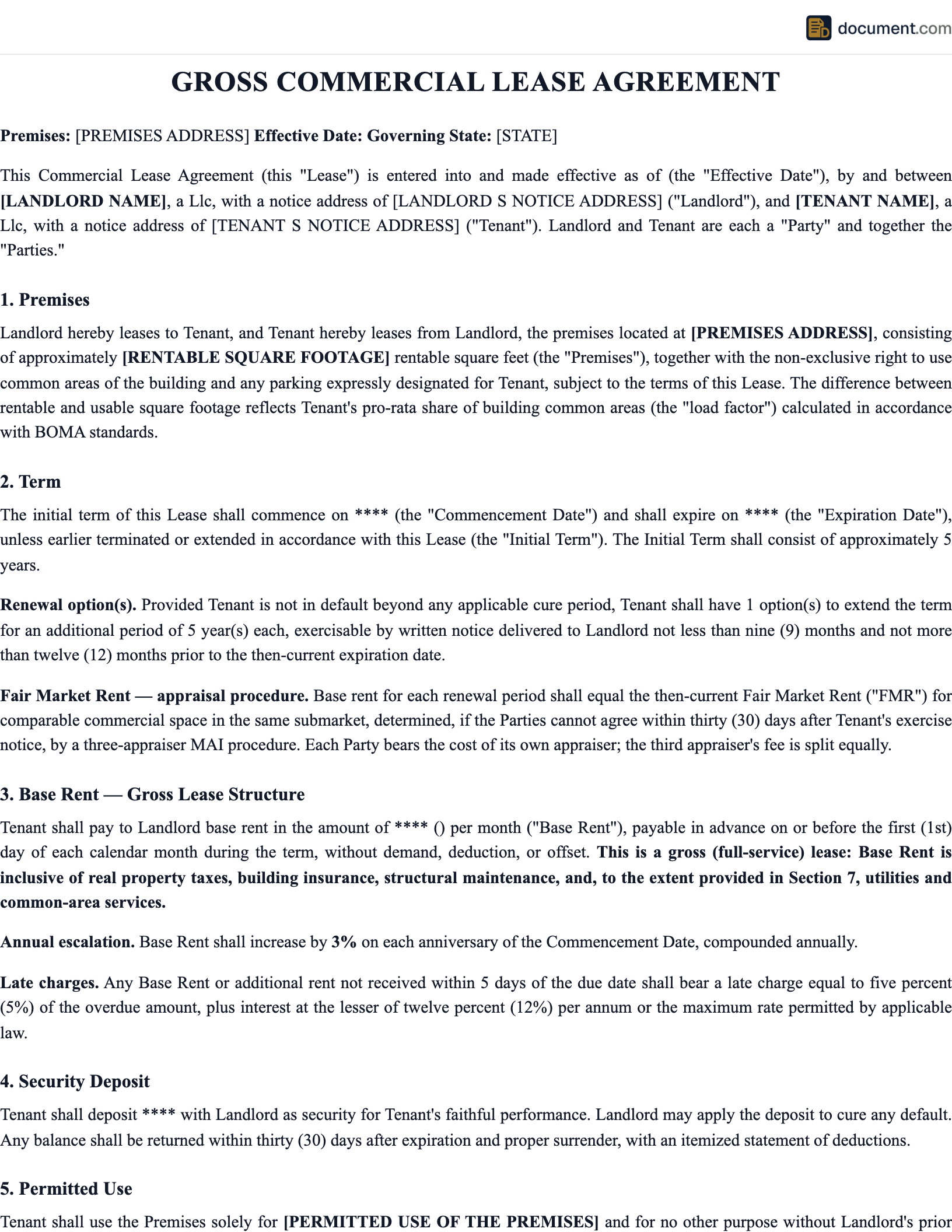
Sample Arkansas Gross Commercial Lease Agreement
Below is a preview of our Arkansas-specific template. Your customized document will include all fields and provisions required for filing in any Arkansas county.
GROSS COMMERCIAL LEASE AGREEMENT
STATE OF ARKANSAS
Legal Document Template
LANDLORD
Name: [Full Legal Name]
Address: [Business Address]
Contact: [Phone/Email]
TENANT
Name: [Full Legal Name / Entity]
Address: [Current Address]
Tax ID: [EIN/SSN]
PREMISES
Address: [Property Address]
Suite: [Number]
Rentable SF: [Square Feet]
Usable SF: [Square Feet]
FINANCIAL TERMS
Base Rent: $[Amount]/month
Expense Stop: $[Amount]/SF
Security Deposit: $[Amount]
Escalation: [%]/year
Arkansas Gross Commercial Lease Agreement FAQ
Answers to common questions about filing an gross commercial lease agreement in Arkansas, including requirements, fees, and procedures.
Official Arkansas Resources
Use these official state resources to verify requirements, find your local filing office, and access government forms for Arkansas.
Related Arkansas Documents
Depending on your situation, you may need additional documents alongside your Arkansas gross commercial lease agreement.
Create your Arkansas Commercial Gross Lease Agreement in under 5 minutes.
Answer a few questions and download a Arkansas-compliant document, ready for the state agency.