
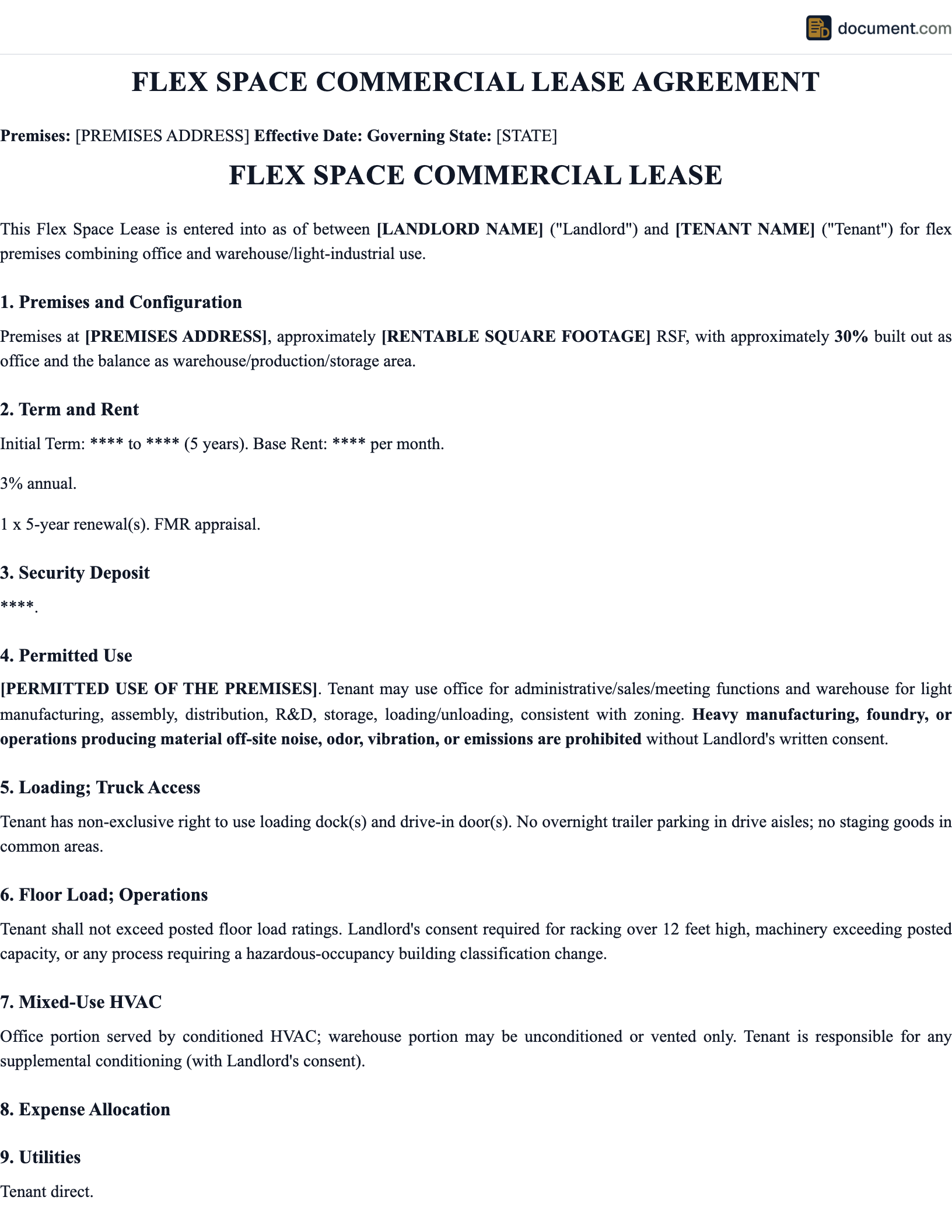



Connecticut Flex Space Rental Agreement Overview
Connecticut's flex space market serves a specialized mix of tenants including defense and aerospace contractors near Sikorsky and Pratt & Whitney facilities, pharmaceutical and biotech companies, precision manufacturing operations, and technology companies. The Hartford and New Haven markets have distinct flex space characteristics driven by their proximity to different anchor industries and research institutions.
Connecticut flex space tends to be older than in Sun Belt markets but often benefits from proximity to world-class research universities including Yale, UConn, and the University of Hartford. Companies that need proximity to academic research partners or a technically skilled workforce find Connecticut flex space valuable despite its age and higher operating costs.
$60
Filing fee
Required
Notarization
2
Witnesses required
Town
Filing office
Connecticut Requirements
Connecticut flex space leases must address the state's high energy costs, older building stock, and the defense industry's specific facility requirements. Property tax pass-through structures deserve particular attention given Connecticut's high and variable mill rates.
Connecticut Specific Note
Connecticut's energy costs are among the highest in the Northeast, and flex space tenants with energy-intensive operations including manufacturing, laboratory equipment, or data processing should model electricity and natural gas costs carefully. Eversource rates in Connecticut have historically been high relative to the national average, and this affects total occupancy cost significantly for any flex tenant with meaningful electrical loads.
Document Requirements
- Written Agreement: Connecticut requires leases for more than one year to be in writing.
- Use Clause: Define permitted uses including any manufacturing, laboratory, or chemical storage components.
- Energy Cost Allocation: Specify whether utility costs are included in base rent or paid directly by the tenant. Given Connecticut's high energy rates, this allocation is financially significant.
- HVAC Maintenance: Specify maintenance responsibilities for HVAC units serving both office and industrial portions.
- Property Tax Cap: Consider negotiating a cap on property tax pass-through increases given Connecticut's high and variable mill rates.
- Environmental Assessment: For older Connecticut industrial buildings, request Phase I environmental assessment information before signing.
How to File in Connecticut
Connecticut flex space execution requires modeling energy costs carefully, assessing building age and mechanical systems, and confirming defense industry compatibility if ITAR requirements are involved.
Model Energy Costs Carefully
Connecticut energy rates are among the country's highest. For flex space with manufacturing, laboratory, or data equipment loads, model electricity and gas costs as a separate material line item in total occupancy analysis.
Assess Building Age and Mechanical Systems
Connecticut flex inventory includes many older buildings. Inspect HVAC, electrical systems, and dock equipment for condition and remaining useful life. Negotiate landlord responsibility for capital replacements.
Confirm Defense Contractor Compatibility
If operations require ITAR or classified facility compliance, confirm that the building's security infrastructure can support these requirements. Connecticut has significant defense industry flex space with relevant experience.
Negotiate Property Tax Cap
Connecticut property taxes are high and can increase at reassessment. Negotiate a cap on property tax pass-through increases in any long-term flex lease.
Execute Lease and Establish Utilities
Sign the finalized lease and establish utility accounts with Eversource. Budget for Connecticut's above-average energy costs in ongoing operating expense projections.
Connecticut Fees & Costs
Below is a breakdown of the typical costs associated with filing this document in Connecticut. Actual fees may vary by county.
| Fee / Cost | Amount |
|---|---|
| Filing Fee | $60 per document |
| Notarization | $5 - $25 per signature |
| Certified Copy | $1 - $10 per page |
| Attorney Review (optional) | $150 - $500 |
Sample Connecticut Flex Space Rental Agreement
Below is a preview of our Connecticut-specific template. Your customized document will include all fields and provisions required for filing in any Connecticut county.
FLEX SPACE RENTAL AGREEMENT
STATE OF CONNECTICUT
Legal Document Template
LANDLORD
Name: [Full Legal Name]
Address: [Business Address]
Phone: [Contact Number]
TENANT
Name: [Full Legal Name / Entity]
Address: [Business Address]
EIN/SSN: [Tax ID]
PREMISES
Address: [Property Address]
Suite/Unit: [Unit Number]
Office SF: [Square Feet]
Warehouse SF: [Square Feet]
LEASE TERMS
Commencement: [Start Date]
Expiration: [End Date]
Base Rent: $[Amount]/month
CAM: $[Amount]/month
Connecticut Flex Space Rental Agreement FAQ
Answers to common questions about filing a flex space rental agreement in Connecticut, including requirements, fees, and procedures.
Official Connecticut Resources
Use these official state resources to verify requirements, find your local filing office, and access government forms for Connecticut.
Connecticut Tax Implications
Connecticut corporate income tax at 7.5% and progressive personal income tax up to 6.99% apply to income generated from Connecticut operations. Lease payments are deductible business expenses.
Property tax pass-throughs in Connecticut flex leases can be substantial. The town-by-town variation in property tax rates means that flex space in a high-mill-rate town carries substantially more property tax burden per square foot than equivalent space in a lower-rate suburban municipality.
Connecticut's 6.35% sales and use tax applies to equipment purchases. Manufacturing exemptions may apply for qualified production equipment. Engage a Connecticut CPA to identify applicable tax exemptions for your specific operations.
Connecticut Flex Space Lease Checklist
Before signing any Connecticut flex space lease, verify CAM reconciliation methodology, negotiate rent abatement for tenant improvement periods, and confirm in writing who owns improvements installed during the lease term.
Review the CAM expense pool definition carefully. Some landlords use gross-up provisions that inflate the expense pool even during partial vacancy. Request two prior years of actual CAM reconciliation statements before committing.
Professional Recommendation
Industrial leases are not standardized. Each landlord uses their own form. A commercial real estate attorney familiar with Connecticut industrial leasing can identify provisions that create undue risk before you are committed to the space.
Related Connecticut Documents
Depending on your situation, you may need additional documents alongside your Connecticut flex space rental agreement.
Create your Connecticut Commercial Flex Space Lease Agreement in under 5 minutes.
Answer a few questions and download a Connecticut-compliant document, ready for the state agency.