
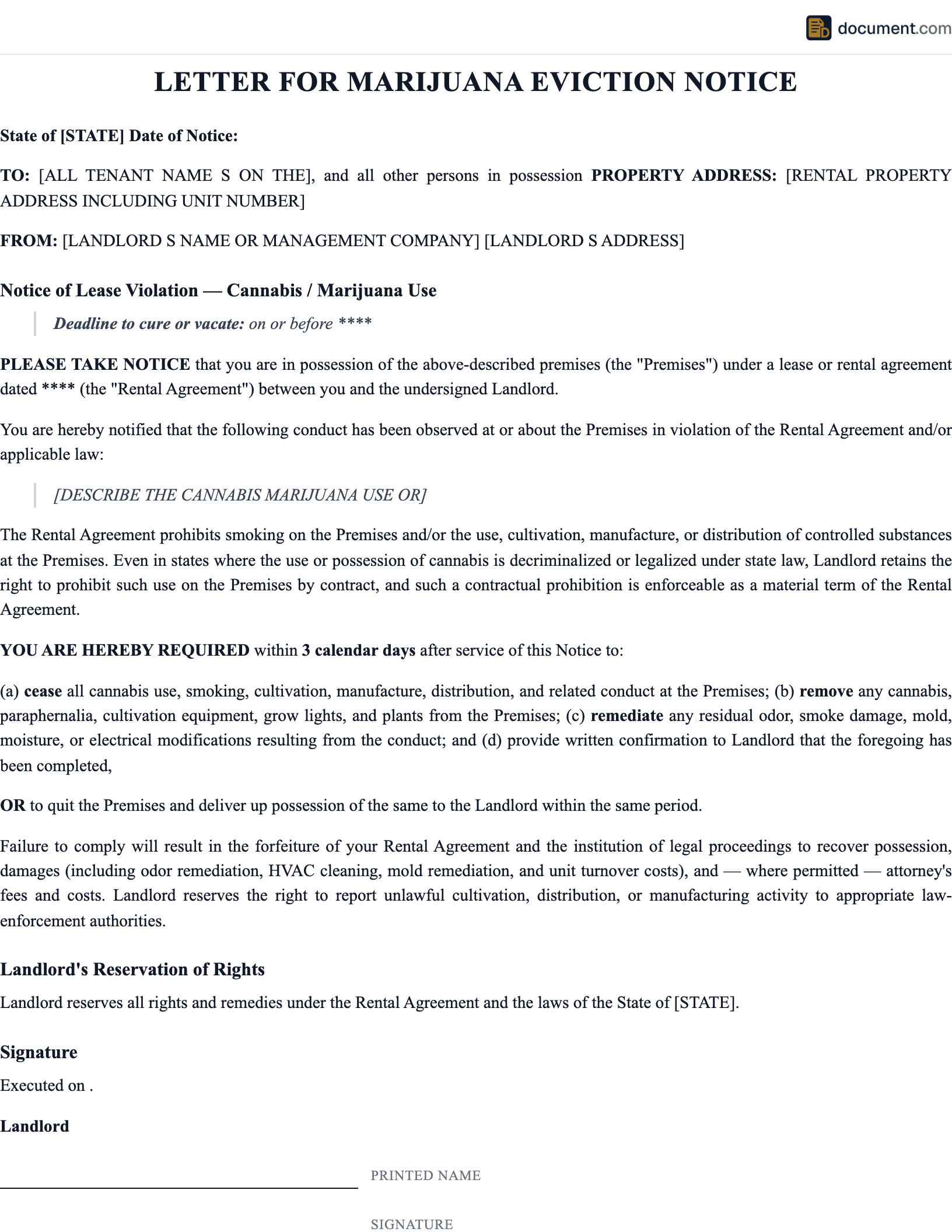



What Is a Warning Letter for Smoking Marijuana?
A warning letter for smoking marijuana is a formal written notice from a landlord to a tenant documenting that the tenant has been observed or reported smoking marijuana on the rental premises in violation of the lease agreement or property rules. This letter serves as the first step in addressing the violation and creates a documented record should further action become necessary.
Even in states where recreational or medical marijuana use is legal, landlords retain the right to prohibit smoking on their property. State marijuana legalization laws generally address criminal penalties and do not create a right to smoke in any location. Just as landlords can prohibit tobacco smoking, they can prohibit marijuana smoking in rental units, common areas, and on the property grounds. Most state marijuana legalization statutes specifically preserve the rights of property owners to restrict marijuana use on their premises.
This warning letter is particularly important in multi-unit housing where marijuana smoke can travel through shared walls, HVAC systems, and common areas, affecting neighboring tenants. Landlords have a responsibility to ensure all tenants can enjoy quiet use of their units, and persistent marijuana odor from one unit can substantially interfere with other tenants' comfort and health. Failure to address smoking complaints can expose the landlord to claims from affected tenants.
The letter should be professional, factual, and non-judgmental. It should document the specific violation, reference the lease provision or house rule being violated, clearly state that the behavior must stop, and warn of consequences if the violation continues (including potential eviction). The tone should emphasize compliance rather than punishment, giving the tenant a clear opportunity to correct the behavior.
It is important to note that this letter is distinct from a formal eviction notice. A warning letter is an informal step that documents the issue and gives the tenant a chance to comply before any formal legal action is taken. If the tenant continues to smoke marijuana after receiving the warning, the landlord can then proceed with a formal lease violation notice (cure or quit) as required by state law, which begins the actual eviction process. Having a documented warning letter strengthens the landlord's position in any subsequent proceedings.
Document Violations
Create a written record of the smoking violation for potential legal proceedings
Protect Other Tenants
Address secondhand smoke concerns affecting neighboring units and common areas
Enforce Lease Terms
Uphold no-smoking policies regardless of state marijuana legalization status
Warning Letter Form Preview
Our marijuana smoking warning letter template is professionally drafted to document the violation while maintaining a respectful tone. Below is a preview of the key sections.
WARNING LETTER
Smoking Policy Violation Notice
TENANT INFORMATION
Name: [Tenant Full Name]
Unit: [Property Address and Unit]
Date: [Date of Letter]
VIOLATION DESCRIPTION
This letter serves as a formal warning regarding marijuana smoking observed at the above rental unit in violation of the no-smoking provisions in your lease agreement (Section[X]).
REQUIRED ACTION
You must immediately cease all smoking activity on the premises. Continued violation may result in formal lease violation proceedings and potential eviction.
When to Use This Document
Create a free warning letter for smoking marijuana on rental premises. Even in states where marijuana is legal, landlords can prohibit smoking in rental units. This letter documents the violation and warns of potential eviction. Understanding the right circumstances for this document helps ensure it is used effectively and appropriately.
First-Time Violations
When the issue is being addressed for the first time and a formal approach is needed to document the violation and set expectations
Building a Paper Trail
Creating documented evidence of the issue and the landlord's reasonable efforts to resolve it before escalating to formal legal proceedings
Avoiding Costly Litigation
Attempting to resolve the situation amicably before incurring the time and expense of formal eviction proceedings
Multi-Unit Properties
When the behavior affects other tenants and the landlord needs to demonstrate responsiveness to complaints
Legal Considerations
While this document is not a formal eviction notice, there are important legal considerations to keep in mind when drafting and delivering it. Following proper procedures strengthens your position should formal legal action become necessary.
Important Note
Laws regarding landlord notices, tenant rights, and eviction procedures vary significantly by state and local jurisdiction. Some areas have additional requirements or restrictions that may affect how this document should be used. Always verify your local requirements.
- Written Documentation: Always put warnings and agreements in writing to create an enforceable record
- Lease Reference: Cite the specific lease provisions or house rules being violated
- Delivery Method: Use a delivery method that provides proof of receipt (certified mail, hand delivery with witness)
- Keep Copies: Retain copies of all notices, warnings, and communications for your records
- Fair Housing Compliance: Ensure all actions comply with federal, state, and local fair housing laws
Warning Letter for Smoking Marijuana by State
Select your state below to access state-specific forms, requirements, and filing information. Each state has unique rules and procedures that must be followed for a valid document.
Sample Warning Letter for Smoking Marijuana
Below is a condensed sample of our warning letter for smoking marijuana template. Your customized document will include all required sections, state-specific language, and proper formatting for your jurisdiction.
WARNING LETTER FOR SMOKING MARIJUANA
Sample Template - For Illustration Only
This document is provided as a sample only and should not be used without customization for your specific situation and state requirements. The actual template includes comprehensive provisions, state-specific language, and all legally required disclosures.
Key sections included in the full template:
- Complete party identification and property description
- Detailed terms and conditions specific to your transaction
- State-specific legal language and required disclosures
- Signature blocks with proper acknowledgment format
- Service/delivery certification where applicable