



Massachusetts Eviction Notice Overview
Massachusetts does not use a 7-day eviction notice. Under MGL Chapter 186, Section 11, landlords must give a 14-day notice to quit for non-payment of rent. This is one of the longer notice periods in the country. Massachusetts uses a specialized Housing Court system that handles all landlord-tenant disputes in major population areas.
Massachusetts has one of the most tenant-protective legal frameworks in the country. The state's landlord-tenant law is primarily found in MGL Chapters 186 (Estates and Rights Therein) and 239 (Summary Process for Possession of Land). Evictions are called 'summary process' cases and may be heard in Housing Court, District Court, or Boston Municipal Court. Massachusetts also has strong anti-retaliation protections, strict security deposit rules, and the right to a jury trial in eviction cases. Boston and Cambridge have additional local protections.
14 Days
Notice period
$180 - $240
Filing fee
MA Code
Governing law
Housing
Court level
Why Massachusetts Uses 14 Days, Not 7
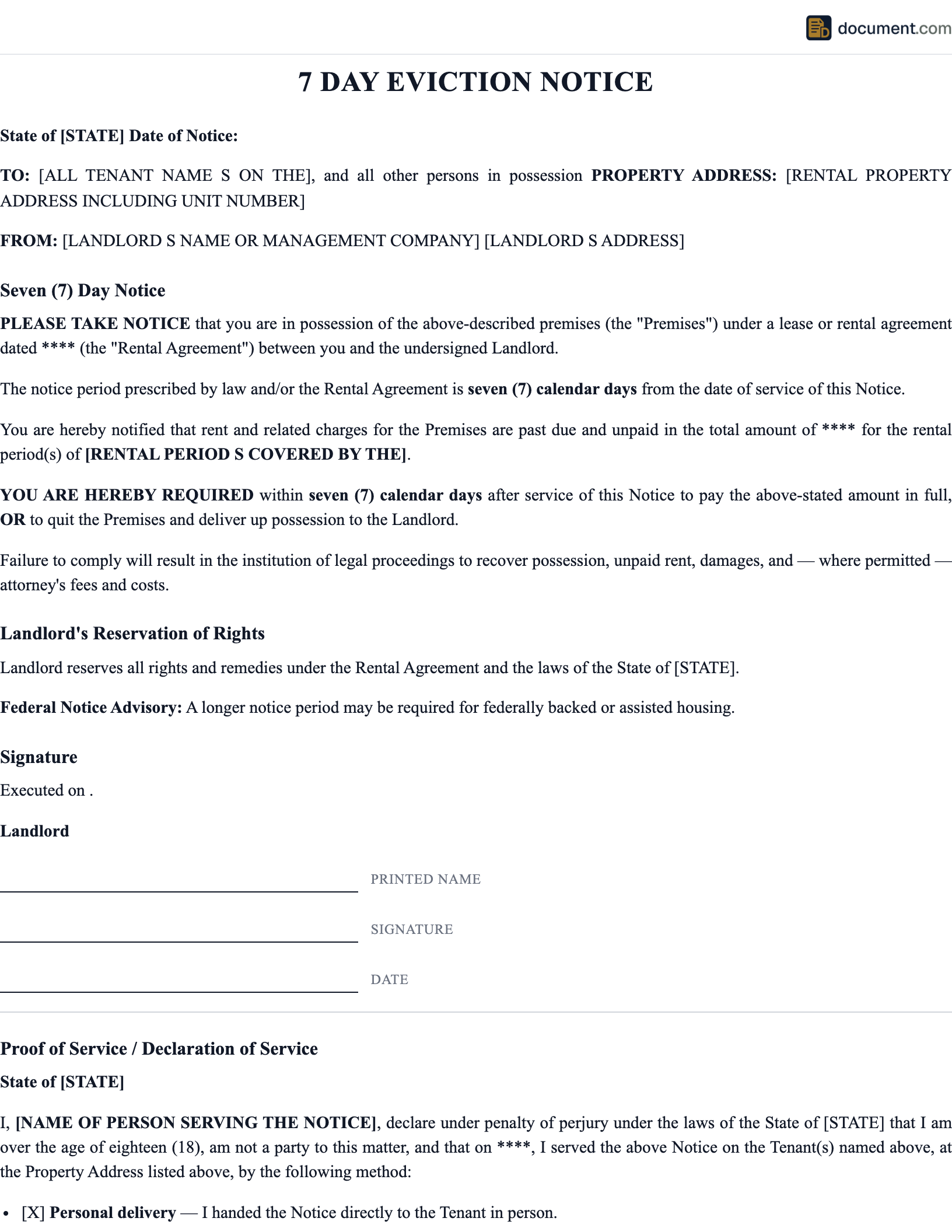
Important: Massachusetts Requires a 14-Day Notice, Not 7
MGL Chapter 186, Section 11 requires a 14-day notice to quit for non-payment of rent. Massachusetts is one of the most tenant-protective states. The notice must be in writing, clearly state the amount owed, and be properly served. Using a 7-day notice in Massachusetts would be insufficient and would result in dismissal of the summary process case.
Massachusetts Notice Periods at a Glance
- 14-Day Notice to Quit — Non-Payment (Ch. 186 §11): Tenant has 14 days from receipt to pay in full or vacate
- 30-Day Notice — Lease Violations/No-Cause: 30 days notice to terminate for cause or without cause
- 30-Day Notice — Month-to-Month (Ch. 186 §12): Either party must give 30 days or one rental period notice
- Rental Period Notice — Tenancy-at-Will: Notice equal to the rental period (typically 30 days)
Massachusetts Notice Requirements
Massachusetts courts require that eviction notices meet specific content and format standards. An incomplete or incorrectly timed notice will result in dismissal of the eviction case.
Required Notice Content
- Property Address: Full address including unit number, city, and zip code
- Tenant Names: All tenants named on the lease or rental agreement
- Amount Owed or Violation: Exact dollar amount of rent due, or specific description of the lease violation
- Correct Notice Period: 14 days for non-payment as required by Massachusetts law
- Consequence Statement: That eviction proceedings will be filed if the tenant does not cure or vacate
- Landlord Information: Name and contact information of the landlord or property manager
How to Serve an Eviction Notice in Massachusetts
Massachusetts law provides specific methods for serving eviction notices. Proper service and documentation are essential for the court filing.
Constable or Sheriff Service
Massachusetts strongly recommends having the notice served by a constable or sheriff. While not strictly required, it provides the strongest proof of service for Housing Court.
Personal Delivery
Hand-deliver to the tenant in person. Bring a witness to verify delivery. The notice period begins upon delivery.
Certified Mail
Send via certified mail with return receipt requested. The 14-day period begins upon receipt, not mailing.
Post and Mail
If the tenant cannot be found, leave at the tenant's last usual place of abode and mail a copy by first-class mail.
Massachusetts Eviction Timeline
The Massachusetts eviction process follows a specific timeline from notice through court proceedings to enforcement.
Serve 14-day notice to quit for non-payment per MGL Ch. 186 §11
If tenant has not paid, file summary process complaint in Housing Court or District Court
Court serves summons and complaint; entry date (return date) set at least 7 days after service
Trial or default judgment; Massachusetts allows jury trial in eviction cases
Execution issued; constable or sheriff scheduled for physical eviction (10-day stay may apply)
Massachusetts evictions are among the slowest in the country. Uncontested cases take 6-10 weeks. Contested cases regularly take 3-6 months, especially in Housing Court. Boston and Cambridge have the longest timelines. Massachusetts grants automatic stays of execution, jury trial rights, and extensive discovery rights that all contribute to longer timelines. Winter moratoriums may apply in some situations.
Massachusetts Eviction Fees & Costs
Below are the typical costs for an eviction proceeding in Massachusetts Housing Court. Actual fees may vary by county.
| Fee / Cost | Typical Amount |
|---|---|
| Housing Court/District Court Filing Fee | $180 - $240 |
| Constable Service of Process | $40 - $100 |
| Execution (Eviction) Fee | $100 - $250 |
| Attorney Fees (optional) | $1,500 - $5,000 |
| Appeal Filing Fee | $300 - $500 |
Sample Massachusetts Eviction Notice
Below is a preview of a Massachusetts-compliant eviction notice that meets the requirements of MGL Ch. 186 §11.
14-DAY NOTICE TO QUIT
STATE OF MASSACHUSETTS
Pursuant to MGL Ch. 186 §11
LANDLORD:
Name: [Full Legal Name]
Address: [Massachusetts Address]
TENANT(S):
Name(s): [All Tenant Names]
Rental Address: [Full Property Address]
NOTICE:
You are hereby notified to quit and vacate the premises at [Address] within FOURTEEN (14) DAYS of receipt of this notice for non-payment of rent in the amount of $[Amount] for the period of [Dates].
MASSACHUSETTS COMPLIANCE NOTE
Massachusetts requires a 14-day notice to quit for non-payment of rent (MGL Ch. 186 §11), not 7 days. The notice must strictly comply with Massachusetts law. Summary process cases are heard in Housing Court or District Court.