



Indiana Eviction Notice Overview
Indiana does not use a 7-day eviction notice. Under Indiana Code 32-31-1-6, landlords must give a 10-day notice to pay rent or vacate. This is one of the longer notice periods in the country for non-payment evictions. Indiana eviction cases are typically filed in Small Claims Court for amounts under $10,000, or in Circuit/Superior Court for larger amounts.
Indiana's landlord-tenant law is codified in IC 32-31 (Property — Landlord-Tenant Relations). The state does not have a comprehensive URLTA-style residential landlord-tenant act, but individual statutory provisions address key landlord-tenant issues. Indiana has 92 counties with Small Claims Court divisions. Marion County (Indianapolis) handles the highest volume of eviction filings and has a dedicated housing court division that processes cases more efficiently.
10 Days
Notice period
$97
Filing fee
IN Code
Governing law
Small Claims
Court level
Why Indiana Uses 10 Days, Not 7
Important: Indiana Requires a 10-Day Notice, Not 7
Indiana Code 32-31-1-6 requires a 10-day notice for non-payment of rent. Using a 7-day notice in Indiana would be insufficient and could result in dismissal of the eviction case. Indiana has one of the longer pre-filing notice periods in the country. The notice must clearly state the exact amount of rent owed.
Indiana Notice Periods at a Glance
- 10-Day Notice — Non-Payment (IC 32-31-1-6): Tenant has 10 days to pay all rent owed or vacate the premises
- Reasonable Notice — Lease Violations: Indiana does not specify a fixed cure period for lease violations; reasonable notice is required based on the circumstances
- 30-Day Notice — Month-to-Month (IC 32-31-1-1): Either party must give at least 30 days written notice to terminate a month-to-month tenancy
- Immediate — Emergency: For illegal activity or situations posing immediate danger to other residents
Indiana Notice Requirements
Indiana courts require that eviction notices meet specific content and format standards. An incomplete or incorrectly timed notice will result in dismissal of the eviction case.
Required Notice Content
- Property Address: Full address including unit number, city, and zip code
- Tenant Names: All tenants named on the lease or rental agreement
- Amount Owed or Violation: Exact dollar amount of rent due, or specific description of the lease violation
- Correct Notice Period: 10 days for non-payment as required by Indiana law
- Consequence Statement: That eviction proceedings will be filed if the tenant does not cure or vacate
- Landlord Information: Name and contact information of the landlord or property manager
How to Serve an Eviction Notice in Indiana
Indiana law provides specific methods for serving eviction notices. Proper service and documentation are essential for the court filing.
Personal Delivery
Hand-deliver the notice to the tenant in person. This is the most reliable method and starts the 10-day period immediately. Use a witness for documentation.
Certified Mail
Send via certified mail with return receipt requested. Provides strong proof of delivery that Indiana courts recognize. Allow additional days for mail transit.
Posting on Premises
Post the notice on the main entry door of the rental unit if the tenant cannot be found for personal delivery. Also mail a copy for additional documentation.
Document Service
Prepare a certificate of service with the date, time, and method of delivery. Indiana courts require proof of proper service when the eviction complaint is filed.
Indiana Eviction Timeline
The Indiana eviction process follows a specific timeline from notice through court proceedings to enforcement.
Serve 10-day notice for non-payment of rent per IC 32-31-1-6
If tenant has not paid, file eviction complaint in Small Claims Court or Circuit/Superior Court
Court serves the tenant with summons; hearing date is scheduled by the court
Hearing held; if landlord prevails, judgment for possession entered by the court
Writ of possession issued; sheriff enforces physical removal of the tenant
Uncontested Indiana evictions typically take 5-8 weeks from notice to removal. Contested cases can take 8-14 weeks or longer. Marion County (Indianapolis) has a dedicated housing court that processes cases more efficiently than some other Indiana courts. Some Indiana counties offer mediation programs that can help resolve landlord-tenant disputes more quickly.
Indiana Eviction Fees & Costs
Below are the typical costs for an eviction proceeding in Indiana Small Claims Court. Actual fees may vary by county.
| Fee / Cost | Typical Amount |
|---|---|
| Small Claims Court Filing Fee | $97 |
| Service of Process (Sheriff) | $25 - $50 |
| Writ of Possession | $35 - $75 |
| Attorney Fees (optional) | $500 - $2,000 |
| Appeal Filing Fee | $150 - $250 |
Sample Indiana Eviction Notice
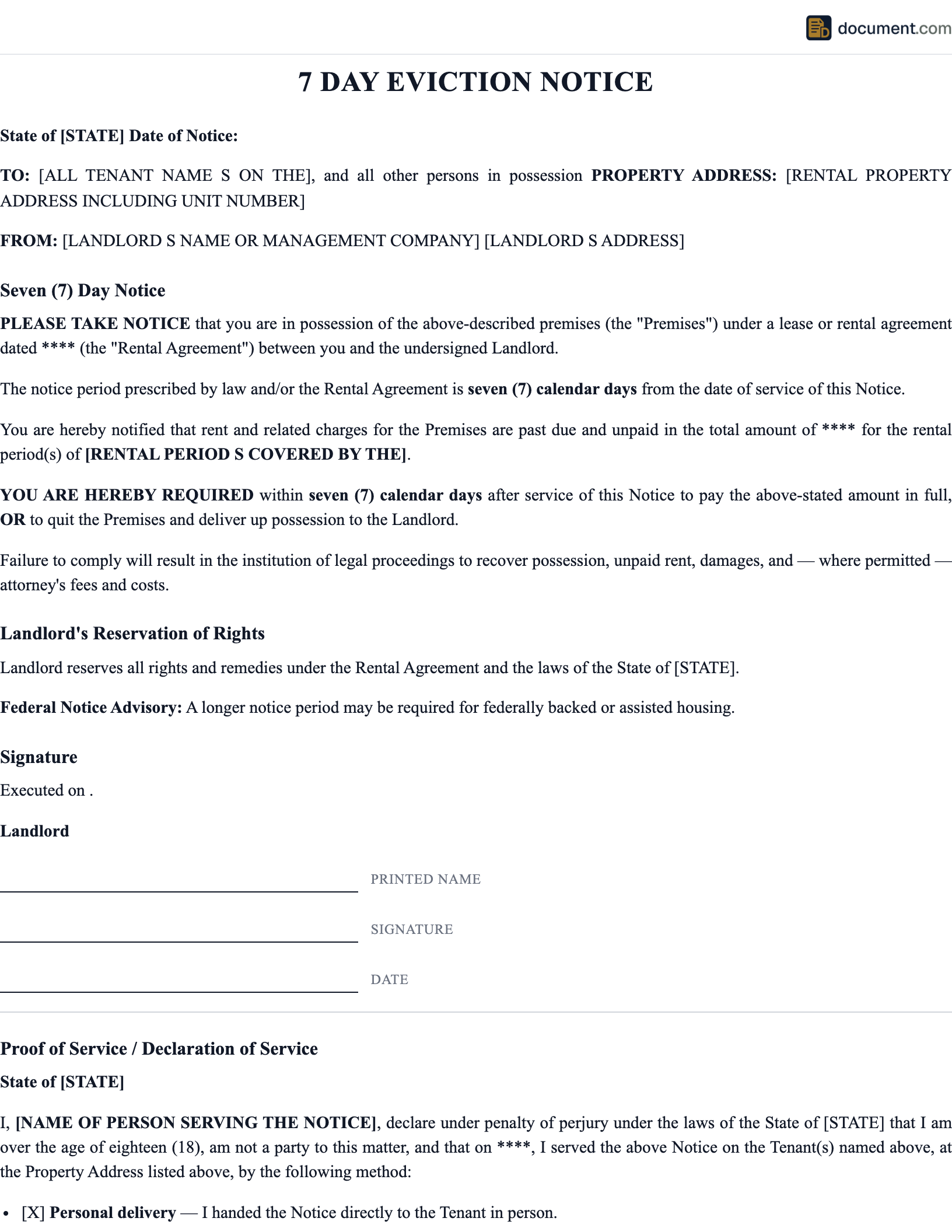
Below is a preview of a Indiana-compliant eviction notice that meets the requirements of IC 32-31-1-6.
10-DAY NOTICE TO PAY RENT OR VACATE
STATE OF INDIANA
Pursuant to IC 32-31-1-6
LANDLORD:
Name: [Full Legal Name]
Address: [Indiana Address]
TENANT(S):
Name(s): [All Tenant Names]
Rental Address: [Full Property Address]
NOTICE:
You are hereby notified that rent in the amount of $[Amount] for the rental period of [Dates] is past due. You have TEN (10) DAYS from the date of service of this notice to pay the above amount in full or vacate the premises and deliver possession to the landlord.
INDIANA COMPLIANCE NOTE
Indiana requires a 10-day notice for non-payment of rent (IC 32-31-1-6), not 7 days. Using a shorter notice period would be insufficient under Indiana law and could result in dismissal of the eviction case at the hearing.