



Georgia Eviction Notice Overview
Georgia does not use a 7-day eviction notice or any fixed statutory notice period for non-payment of rent. Under OCGA 44-7-50, a landlord may demand possession immediately once the tenant fails to pay rent when due. Georgia is one of the most landlord-favorable states in the country for eviction speed because there is no mandatory pre-filing notice period. The landlord simply makes a demand for possession and, if refused, files a dispossessory action.
Georgia evictions are called 'dispossessory proceedings' and are governed by OCGA 44-7-50 through 44-7-58. Cases are filed in Magistrate Court for claims under $15,000 (covering most residential disputes) or State Court for larger amounts. Georgia has 159 counties, each with a Magistrate Court. Fulton County (Atlanta), DeKalb County, Gwinnett County, and Cobb County handle the highest volume of dispossessory filings in the state.
No fixed Days
Notice period
$55 - $90
Filing fee
GA Code
Governing law
Magistrate
Court level
Why Georgia Uses No fixed Days, Not 7
Important: Georgia Has No Fixed Notice Period
Georgia does not require any specific number of days notice before filing an eviction for non-payment of rent. Under OCGA 44-7-50, the landlord may demand possession immediately when rent is overdue. A 7-day notice is not required by Georgia law. However, the lease agreement itself may specify a notice period or grace period that the landlord must honor before proceeding.
Georgia Notice Periods at a Glance
- Immediate Demand — Non-Payment (OCGA 44-7-50): No waiting period required; landlord may demand possession as soon as rent is past due
- Lease-Specified Period: If the lease requires a grace period or notice period, the landlord must honor those terms before filing
- 60-Day Notice — Month-to-Month (OCGA 44-7-7): Either party must give 60 days notice to terminate a month-to-month tenancy
- Immediate — Criminal Activity: For drug-related criminal activity on the premises, the landlord may file immediately with no notice
Georgia Notice Requirements
Georgia courts require that eviction notices meet specific content and format standards. An incomplete or incorrectly timed notice will result in dismissal of the eviction case.
Required Notice Content
- Property Address: Full address including unit number, city, and zip code
- Tenant Names: All tenants named on the lease or rental agreement
- Amount Owed or Violation: Exact dollar amount of rent due, or specific description of the lease violation
- Correct Notice Period: No fixed days for non-payment as required by Georgia law
- Consequence Statement: That eviction proceedings will be filed if the tenant does not cure or vacate
- Landlord Information: Name and contact information of the landlord or property manager
How to Serve an Eviction Notice in Georgia
Georgia law provides specific methods for serving eviction notices. Proper service and documentation are essential for the court filing.
Demand for Possession
Deliver a written or verbal demand that the tenant pay rent or vacate. This is the prerequisite before filing a dispossessory action in Georgia. A written demand creates better documentation.
Personal Service of Affidavit
After filing the dispossessory affidavit with the court, the sheriff or marshal serves it on the tenant personally. The tenant then has 7 days to file a written answer with the court.
Tacking (Posting)
If the tenant cannot be personally served by the sheriff or marshal, the dispossessory affidavit may be tacked (posted) to the front door of the rental premises.
Document the Demand
Keep detailed written records of the demand for possession including the date, method of delivery, and content of the demand. This evidence is presented at the dispossessory hearing.
Georgia Eviction Timeline
The Georgia eviction process follows a specific timeline from notice through court proceedings to enforcement.
Make demand for possession (oral or written) once rent is past due under OCGA 44-7-50
File dispossessory affidavit in Magistrate Court or State Court with the required filing fee
Court serves tenant with the affidavit; tenant has 7 days to file a written answer
If no answer is filed, landlord obtains default judgment; if answered, hearing is set within 7-14 days
Writ of possession issued; sheriff or marshal executes physical removal of the tenant
Georgia dispossessory proceedings are among the fastest eviction processes in the country. Uncontested cases can be resolved in just 2-4 weeks from filing. Contested cases typically take 4-8 weeks. Fulton County (Atlanta) may have longer wait times due to case volume. Under OCGA 44-7-54, the tenant must deposit rent into the court registry to stay the case during litigation.
Georgia Eviction Fees & Costs
Below are the typical costs for an eviction proceeding in Georgia Magistrate Court. Actual fees may vary by county.
| Fee / Cost | Typical Amount |
|---|---|
| Magistrate Court Filing Fee | $55 - $90 |
| Sheriff/Marshal Service | $25 - $50 |
| Writ of Possession | $25 - $50 |
| Attorney Fees (optional) | $500 - $2,000 |
| Appeal Filing Fee | $100 - $200 |
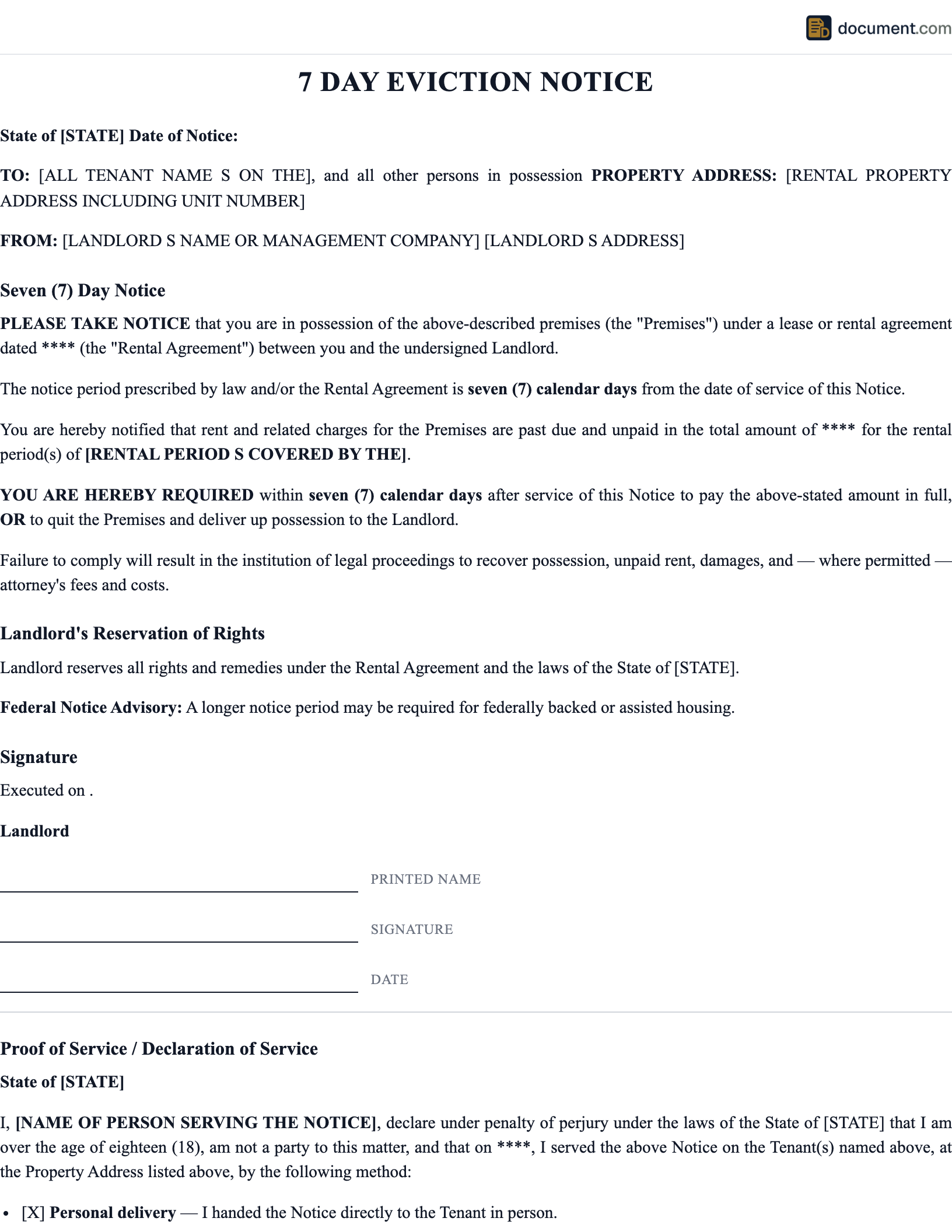
Sample Georgia Eviction Notice
Below is a preview of a Georgia-compliant eviction notice that meets the requirements of OCGA 44-7-50.
DEMAND FOR POSSESSION
STATE OF GEORGIA
Pursuant to OCGA 44-7-50
LANDLORD:
Name: [Full Legal Name]
Address: [Georgia Address]
TENANT(S):
Name(s): [All Tenant Names]
Rental Address: [Full Property Address]
NOTICE:
DEMAND IS HEREBY MADE that you immediately pay the past-due rent in the amount of $[Amount] for the rental period of [Dates] or deliver possession of the above-described premises to the landlord. Failure to comply will result in the filing of a dispossessory action in the appropriate Georgia court.
GEORGIA COMPLIANCE NOTE
Georgia does not require a specific number of days notice for non-payment eviction. Under OCGA 44-7-50, the landlord may demand possession immediately when rent is overdue. This demand for possession is the prerequisite before filing a dispossessory affidavit with the court.