



Connecticut Eviction Notice Overview
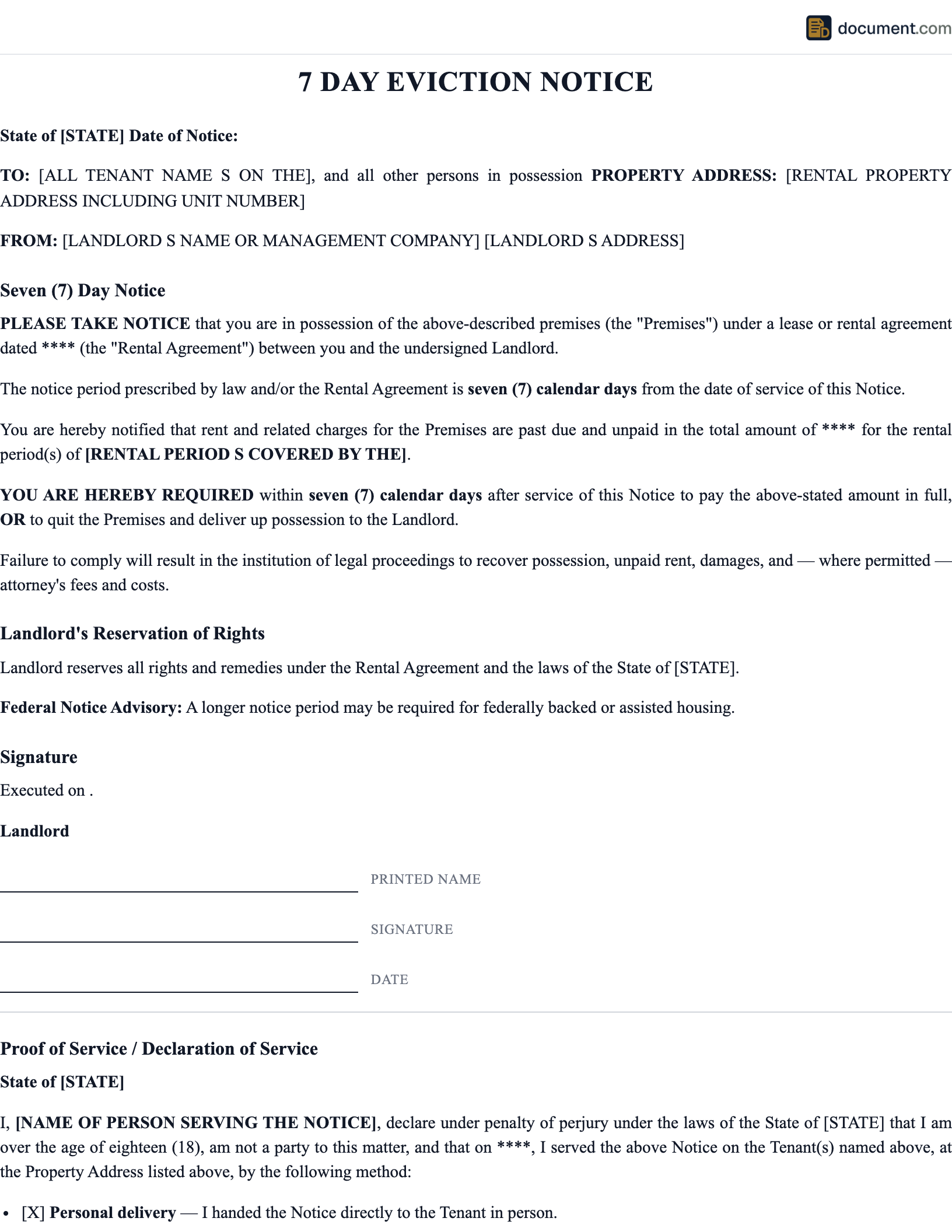
Connecticut does not use a 7-day eviction notice period. Under Connecticut General Statutes Section 47a-23, landlords must provide a 3-day notice to quit for non-payment of rent. This is technically a notice to quit the premises, not a notice to cure. In Connecticut, the notice to quit is the first step in the "summary process" eviction procedure. For lease violations, CGS 47a-15 may require a 15-day notice to cure before a notice to quit can be served.
Connecticut has a specialized Housing Session within the Superior Court system that handles all landlord-tenant matters in major cities including Hartford, New Haven, Bridgeport, Stamford, and Waterbury. The Housing Session provides dedicated judges and staff familiar with landlord-tenant law. In towns without a Housing Session, regular Superior Court handles evictions. Connecticut's summary process is governed by CGS 47a-23 through 47a-42 and includes specific procedural requirements that must be followed precisely.
3 Days
Notice period
$175
Filing fee
CT Code
Governing law
Superior
Court level
Why Connecticut Uses 3 Days, Not 7
Important: Connecticut Uses a 3-Day Notice to Quit
Connecticut requires a 3-day notice to quit for non-payment of rent under CGS 47a-23. This is a notice to vacate, not a notice to cure — the tenant cannot simply pay and stay (though in practice, courts often allow this). The notice must be served by a proper officer (state marshal) and must strictly comply with CGS 47a-23 requirements. A 7-day notice would not be the correct form in Connecticut.
Connecticut Notice Periods at a Glance
- 3-Day Notice to Quit — Non-Payment (CGS 47a-23): Tenant must vacate within 3 days; technically no right to cure, but courts often allow payment
- 15-Day Notice — Lease Violations (CGS 47a-15): Notice to cure material noncompliance; if not cured within 15 days, a notice to quit may follow
- 3-Day Notice to Quit — Holdover: For tenants remaining after lease expiration
- 3-Day Notice to Quit — Other Grounds: Nuisance, illegal activity, or serious lease violations
Connecticut Notice Requirements
Connecticut courts require that eviction notices meet specific content standards. An incomplete or incorrectly timed notice will result in dismissal of the eviction case.
Required Notice Content
- Property Address: Full address including unit number, city, and zip code
- Tenant Names: All tenants named on the lease or rental agreement
- Amount Owed or Violation: Exact dollar amount of rent due, or specific description of the lease violation
- Correct Notice Period: 3 days for non-payment as required by Connecticut law
- Consequence Statement: That the landlord will file eviction proceedings if the tenant does not cure or vacate
- Landlord Information: Name and contact information of the landlord or property manager
How to Serve an Eviction Notice in Connecticut
Connecticut law provides specific methods for serving eviction notices. Proper service and documentation are essential for the court filing.
Service by State Marshal (Required)
Connecticut law requires that notices to quit be served by a state marshal, constable, or other proper officer — NOT the landlord. This is mandatory.
In-Hand Service
The marshal delivers the notice directly to the tenant in person. This is the strongest and most common method.
Abode Service
If the tenant cannot be found, the marshal may leave the notice at the tenant's usual place of abode (dwelling).
Retain Return of Service
The state marshal provides a return of service documenting delivery. This is filed with the court. Keep all copies.
Connecticut Eviction Timeline
The Connecticut eviction process follows a specific timeline from notice to enforcement.
Have state marshal serve 3-day notice to quit per CGS 47a-23
If tenant has not vacated, file summary process complaint in Superior Court (Housing Session)
Court returns a 'return date' (first court date); complaint must be served 5+ days before return date
Return date hearing; if no answer, default judgment; if contested, trial scheduled
If landlord prevails, execution issued; tenant has 5 days to vacate; marshal enforces
Connecticut summary process cases typically take 5-8 weeks for uncontested cases. The Housing Session courts in Hartford, New Haven, and Bridgeport handle large volumes and delays are common. Contested cases with appeals can take 3-6 months. Connecticut offers a 'use and occupancy' payment option while cases are pending.
Connecticut Eviction Fees & Costs
Below are the typical costs for an eviction proceeding in Connecticut Superior Court (Housing Session).
| Fee / Cost | Typical Amount |
|---|---|
| Superior Court Filing Fee | $175 |
| State Marshal Service Fee | $40 - $80 |
| Execution (Writ of Possession) | $50 - $100 |
| Attorney Fees (optional) | $1,000 - $3,000 |
| Appeal Bond | Varies |
Sample Connecticut Eviction Notice
Below is a preview of a Connecticut-compliant eviction notice that meets the requirements of CGS 47a-23.
NOTICE TO QUIT POSSESSION
STATE OF CONNECTICUT
Pursuant to CGS 47a-23
LANDLORD:
Name: [Full Legal Name]
Address: [Connecticut Address]
TENANT(S):
Name(s): [All Tenant Names]
Rental Address: [Full Property Address]
NOTICE:
You are hereby notified to QUIT POSSESSION of the above-described premises within THREE (3) DAYS of service of this notice for nonpayment of rent.
CONNECTICUT COMPLIANCE NOTE
Connecticut requires a 3-day notice to quit for non-payment (CGS 47a-23). This notice must be served by a state marshal or other proper officer — landlord self-service is not permitted.