
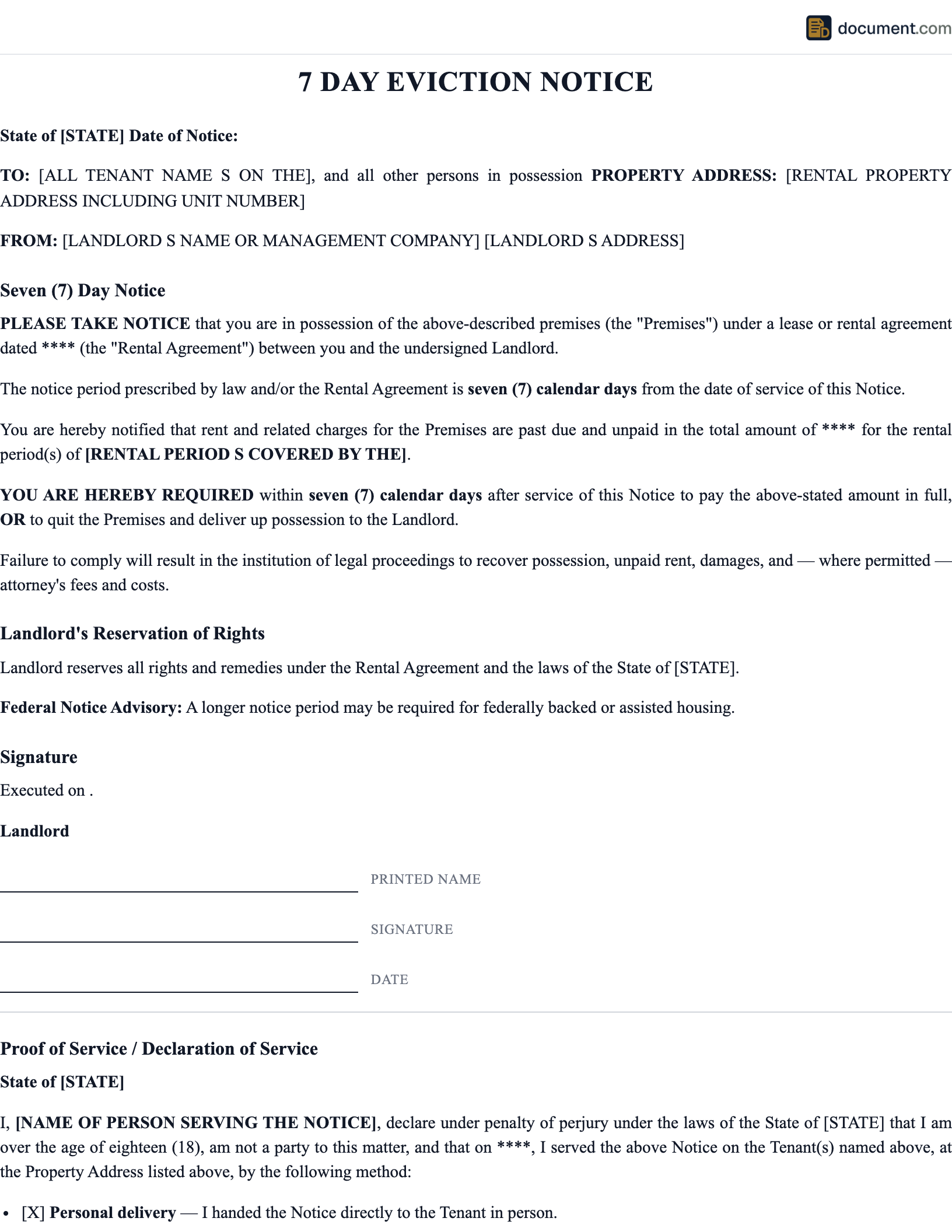



California Eviction Notice Overview
California does not use a 7-day eviction notice period for non-payment of rent. Under California Code of Civil Procedure Section 1161(2), landlords must give tenants a 3-day notice to pay rent or quit. This is one of the shortest notice periods in the country. For lease violations, CCP 1161(3) also requires a 3-day notice to perform covenants or quit. California's eviction process (called "unlawful detainer") is handled through the Superior Court system.
California's landlord-tenant law is among the most complex in the nation, governed primarily by Civil Code Sections 1940-1954.06 and the Tenant Protection Act of 2019 (AB 1482). Statewide rent control caps annual increases at 5% plus CPI (maximum 10%) for qualifying properties. Many California cities have additional local rent control and just-cause eviction ordinances, including Los Angeles, San Francisco, Oakland, Berkeley, and San Jose. The COVID-era protections and the Homelessness Prevention Act also affect eviction procedures.
3 Days
Notice period
$240 - $435
Filing fee
CA Code
Governing law
Superior
Court level
Why California Uses 3 Days, Not 7
Important: California Uses a 3-Day Notice, Not 7
California Code of Civil Procedure Section 1161 requires only a 3-day notice for both non-payment of rent and lease violations. Additionally, California's Tenant Protection Act (AB 1482) imposes just-cause eviction requirements statewide for properties built before 2005. Many cities have additional protections. Using the wrong notice period or failing to comply with AB 1482 can result in dismissal and potential liability.
California Notice Periods at a Glance
- 3-Day Notice — Non-Payment (CCP 1161(2)): Tenant has 3 days to pay all rent owed or vacate
- 3-Day Notice — Lease Violation (CCP 1161(3)): Tenant has 3 days to cure the violation or vacate
- 3-Day Unconditional Quit: For nuisance, illegal activity, or waste — no cure period
- 30/60-Day Notice — No-Fault (Civil Code 1946.2): 30 days if tenant has lived there less than 1 year, 60 days if more
California Notice Requirements
California courts require that eviction notices meet specific content standards. An incomplete or incorrectly timed notice will result in dismissal of the eviction case.
Required Notice Content
- Property Address: Full address including unit number, city, and zip code
- Tenant Names: All tenants named on the lease or rental agreement
- Amount Owed or Violation: Exact dollar amount of rent due, or specific description of the lease violation
- Correct Notice Period: 3 days for non-payment as required by California law
- Consequence Statement: That the landlord will file eviction proceedings if the tenant does not cure or vacate
- Landlord Information: Name and contact information of the landlord or property manager
How to Serve an Eviction Notice in California
California law provides specific methods for serving eviction notices. Proper service and documentation are essential for the court filing.
Personal Service (CCP 1162(a))
Hand-deliver to the tenant personally. Strongest method; starts the 3-day clock immediately.
Substituted Service (CCP 1162(b))
Leave with a competent member of the household (at least 18) AND mail a copy. Service is deemed complete when mailing is done.
Post and Mail (CCP 1162(c))
Affix to the property in a conspicuous place AND mail a copy. Only if personal and substituted service have been attempted and failed.
Document Service
Prepare a proof of service (declaration under penalty of perjury). California courts strictly require this with the UD complaint filing.
California Eviction Timeline
The California eviction process follows a specific timeline from notice to enforcement.
Serve 3-day notice per CCP 1161 (or applicable notice under AB 1482)
If tenant has not cured, file unlawful detainer (UD) complaint in Superior Court
Tenant served with summons; has 5 days to file a written response
If contested, trial within 20 days of request for trial setting; if default, request default judgment
Writ of possession issued; sheriff lockout scheduled (5-day posting required)
California UD cases have priority on the court calendar but can still take 5-8 weeks for uncontested cases and 2-4 months for contested ones. Los Angeles and San Francisco courts often have longer wait times. The sheriff's lockout schedule varies by county.
California Eviction Fees & Costs
Below are the typical costs for an eviction proceeding in California Superior Court.
| Fee / Cost | Typical Amount |
|---|---|
| Superior Court Filing Fee | $240 - $435 |
| Service of Process | $40 - $125 |
| Writ of Possession | $40 - $75 |
| Sheriff Lockout Fee | $125 - $300 |
| Attorney Fees (optional) | $1,500 - $5,000 |
Sample California Eviction Notice
Below is a preview of a California-compliant eviction notice that meets the requirements of CCP 1161.
3-DAY NOTICE TO PAY RENT OR QUIT
STATE OF CALIFORNIA
Pursuant to CCP 1161(2)
LANDLORD:
Name: [Full Legal Name]
Address: [California Address]
TENANT(S):
Name(s): [All Tenant Names]
Rental Address: [Full Property Address]
NOTICE:
You have THREE (3) DAYS (excluding weekends and court holidays) to pay the above amount in full or quit and deliver possession of the premises.
CALIFORNIA COMPLIANCE NOTE
California requires a 3-day notice for non-payment (CCP 1161), not 7 days. The notice must state only the amount of rent due — no late fees, utility charges, or other amounts. AB 1482 just-cause requirements may also apply.