



Nevada 60-Day Notice Overview
Nevada does not require a 60-day notice for standard residential tenancy terminations. Under NRS 40.251, a month-to-month tenancy can be terminated with 30 days written notice. Nevada's landlord-tenant laws have been significantly updated in recent years with increased tenant protections, particularly regarding eviction procedures and notice requirements through legislation like AB 486 (2019).
Nevada has modernized its landlord-tenant framework significantly. Recent legislation has added protections including limits on late fees, requirements for affidavit-based summary eviction, and extended cure periods. Security deposits are capped at three months' rent under NRS 118A.242. Clark County (Las Vegas) and Washoe County (Reno) handle the vast majority of Nevada's eviction cases.
30 Days
Statutory default
$67-$250
Court filing fees
Written
Notice required
2-4 wks
Court process
When a 60-Day Notice Applies in Nevada
Since Nevada's statutory default for month-to-month termination is 30 days, understanding when a 60-day notice is actually required or advisable is essential for landlords.
Lease-Required Extended Notice
Many Las Vegas and Reno property management companies include 60-day non-renewal clauses in their leases. The contractual obligation overrides the 30-day statutory minimum under NRS 40.251 when specified in the agreement.
Nevada Housing Division Programs
Federal Section 8 programs administered through the Nevada Housing Division and local PHAs like the Southern Nevada Regional Housing Authority frequently require 60-90 days notice before non-renewal of subsidized tenancies.
Las Vegas and Reno Market Pressure
Nevada's largest rental markets — Las Vegas, Henderson, and Reno — have experienced significant rent increases and low vacancy rates. Providing 60 days gives tenants time to find replacement housing in competitive markets.
Nevada Legal Requirements
Nevada's landlord-tenant statutes establish specific requirements for termination notices that must be followed precisely.
Nevada Summary Eviction Process
Nevada uses a unique summary eviction process. Under NRS 40.253-40.254, the landlord files an affidavit-based summary eviction in Justice Court. The tenant has the right to contest by filing an affidavit in opposition within 10 judicial days. If contested, the court holds a hearing. Nevada courts strictly enforce procedural requirements, and improperly filed summary evictions are routinely dismissed.
Notice Content Requirements
- Written Notice: NRS 40.251 requires written notice. Oral notice is insufficient under Nevada law for residential tenancy terminations
- Tenant and Property ID: Include all tenant names from the lease and the complete property address including city, county, and ZIP code
- Termination Date: State the exact date at least 60 days from service, aligned with the end of the monthly rental period
- Landlord Contact: Include the landlord or property manager name, Nevada mailing address, and telephone number
- Security Deposit Reference: NRS 118A.242 requires return within 30 days with an itemized statement. Deposits capped at three months' rent under Nevada law
How to Serve a 60-Day Eviction Notice in Nevada
Proper service is critical in Nevada. If the landlord cannot prove the notice was properly delivered, the court will dismiss the eviction action.
Prepare the Notice
Draft using a Nevada-specific template referencing NRS 40.251. Include all tenant names, property address, and the 60-day termination date
Personal Delivery (Preferred)
Hand-deliver to the tenant at the rental premises. Nevada courts prefer personal service. Use a process server or witness for documentation
Certified Mail Alternative
Send via certified mail with return receipt. Nevada also allows service by regular mail to the tenant's last known address of record
Complete Proof of Service
Document date, time, method, and location of service. Keep certified mail receipts and return cards for court proceedings
File Summary Eviction in Justice Court
After 60 days expire without the tenant vacating, file an eviction action in Justice Court where the property is located
Nevada Eviction Timeline
Nevada's summary eviction process (NRS 40.253-40.254) is filed in Justice Court by affidavit. The tenant has 10 judicial days to file an opposition affidavit. If no opposition is filed, a default order for removal can be obtained.
If the tenant files opposition, the Justice Court schedules a hearing within 10 days. At the hearing, both parties present evidence. If the landlord prevails, the court orders the tenant to vacate within 24 hours. The constable enforces removal.
Total court timeline: 2-4 weeks uncontested, 4-8 weeks contested. Clark County (Las Vegas) Justice Court has an extremely heavy caseload. Combined with the 60-day notice period, the full process spans 10-16 weeks.
Nevada Filing Fees & Costs
Eviction costs in Nevada vary by county and court type. Below are typical expenses.
| Fee / Cost | Typical Amount |
|---|---|
| Justice Court Filing Fee | $67 - $250 |
| Service of Process | $30 - $75 |
| Attorney Fees | $500 - $2,000 |
| Order for Removal | $25 - $50 |
| Constable Enforcement | $75 - $200 |
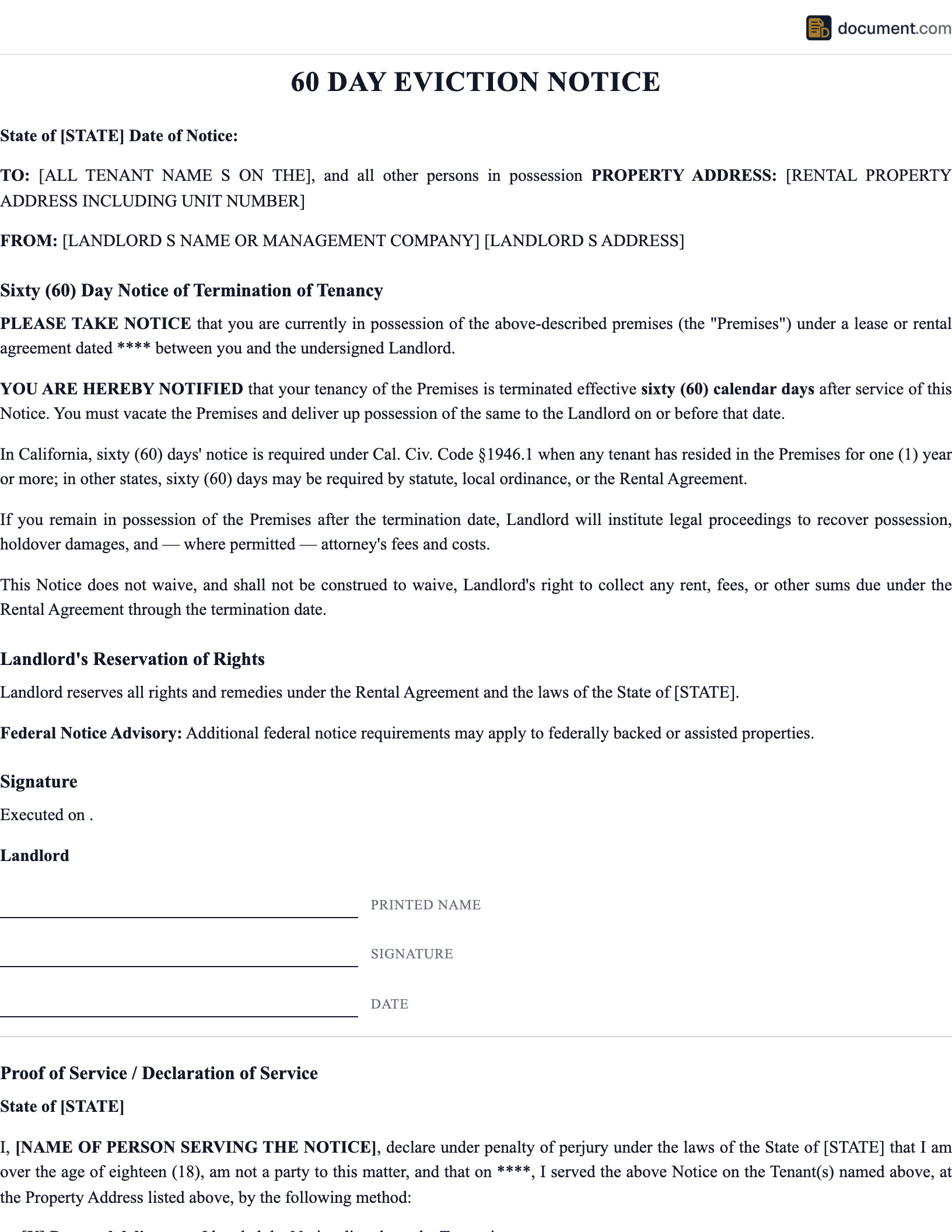
Sample Nevada 60-Day Notice
Below is a preview of our Nevada-specific 60-day termination notice template.
60-DAY NOTICE OF TERMINATION
STATE OF NEVADA
Pursuant to NRS 40.251
LANDLORD / PROPERTY OWNER:
Name: [Full Legal Name]
Address: [Nevada Mailing Address]
TENANT(S):
Name(s): [All Tenant Names]
Rental Address: [Full Property Address]
NOTICE OF TERMINATION:
You are hereby notified that your tenancy at the above premises will terminate on[Date — 60 days from service]. You must vacate and surrender possession by that date.
NEVADA COMPLIANCE NOTE
Your security deposit will be returned within 30 days of vacating per NRS 118A.242, with an itemized list of deductions. Nevada limits deposits to three months' rent. Please provide a forwarding address.