



North Carolina Eviction Notice Overview
North Carolina does not have a universal cure period for lease violations. Under N.C.G.S. §42-26, the landlord’s right to evict depends on the lease terms. There is no 14-day notice in North Carolina statute. The state does not have a comprehensive residential landlord-tenant act—eviction procedures are found in Chapter 42 of the General Statutes. Cases are filed as summary ejectment actions in Small Claims Court (Magistrate’s Court).
North Carolina is one of the faster eviction states. Mecklenburg County (Charlotte), Wake County (Raleigh), Guilford County (Greensboro), and Durham County handle the highest volumes. For non-payment, a 10-day demand letter is required. For lease violations, the cure period is determined by the lease agreement. If the lease is silent, "reasonable" notice is expected.
Varies
Statutory minimum
$96–$161
Small Claims Court filing
Written
Notice required
3–6 Wks
Total process
North Carolina Has No Universal Cure Period
North Carolina’s eviction statutes do not mandate a specific cure period for lease violations. Under N.C.G.S. §42-26, the landlord may terminate for any breach of the lease upon the terms specified in the agreement. Most NC leases include a cure provision (commonly 10–30 days). For non-payment, a 10-day demand letter is required by §42-3. A 14-day notice would be a contractual choice, not a statutory requirement.
North Carolina Notice Periods
10-day demand: Non-payment of rent (N.C.G.S. §42-3)
Lease terms control: Cure period for violations is contractual
Reasonable notice: Expected when lease is silent
Immediate termination: Criminal activity (N.C.G.S. §42-26(a)(2))
7-day termination: Month-to-month without cause (N.C.G.S. §42-14)
Common Violations Addressed by This Notice in North Carolina
- Any breach of lease terms
- Unauthorized pets, occupants, subletting
- Property damage or noise
- Non-payment of rent
- Holdover after lease expiration
- Criminal activity
North Carolina Legal Requirements
North Carolina courts require strict compliance with notice requirements. A deficient notice will result in dismissal of the eviction case, wasting time and filing fees. Here are the mandatory elements:
- Written Notice: Written notice is strongly recommended and usually required by the lease
- Lease Compliance: Follow the cure period specified in the lease exactly
- Violation Description: Describe the specific lease breach
- Demand to Cure or Vacate: State what the tenant must do and by when
- Landlord Info: Name, address, and contact information
Serving the Notice in North Carolina
Proper service is critical in North Carolina. The method of delivery determines when the notice period starts running and must be documented for court proceedings.
Personal Service
Hand the notice to the tenant directly.
Posting and Mailing
Post on door and mail via first-class or certified mail.
Certified Mail
Use certified mail for proof of delivery.
North Carolina Eviction Timeline
The complete eviction process in North Carolina, from notice to physical removal, follows this general timeline for uncontested cases:
North Carolina Eviction Fees & Costs
Below are the typical costs associated with the eviction process in North Carolina. Fees may vary by county or court location.
| Cost Item | Amount |
|---|---|
| Small Claims Court Filing | $96 – $161 |
| Sheriff Service | $30 – $55 |
| Writ of Possession | $30 – $50 |
| Sheriff Execution | $50 – $100 |
| Attorney Fees | $500 – $1,500 |
Sample North Carolina Eviction Notice
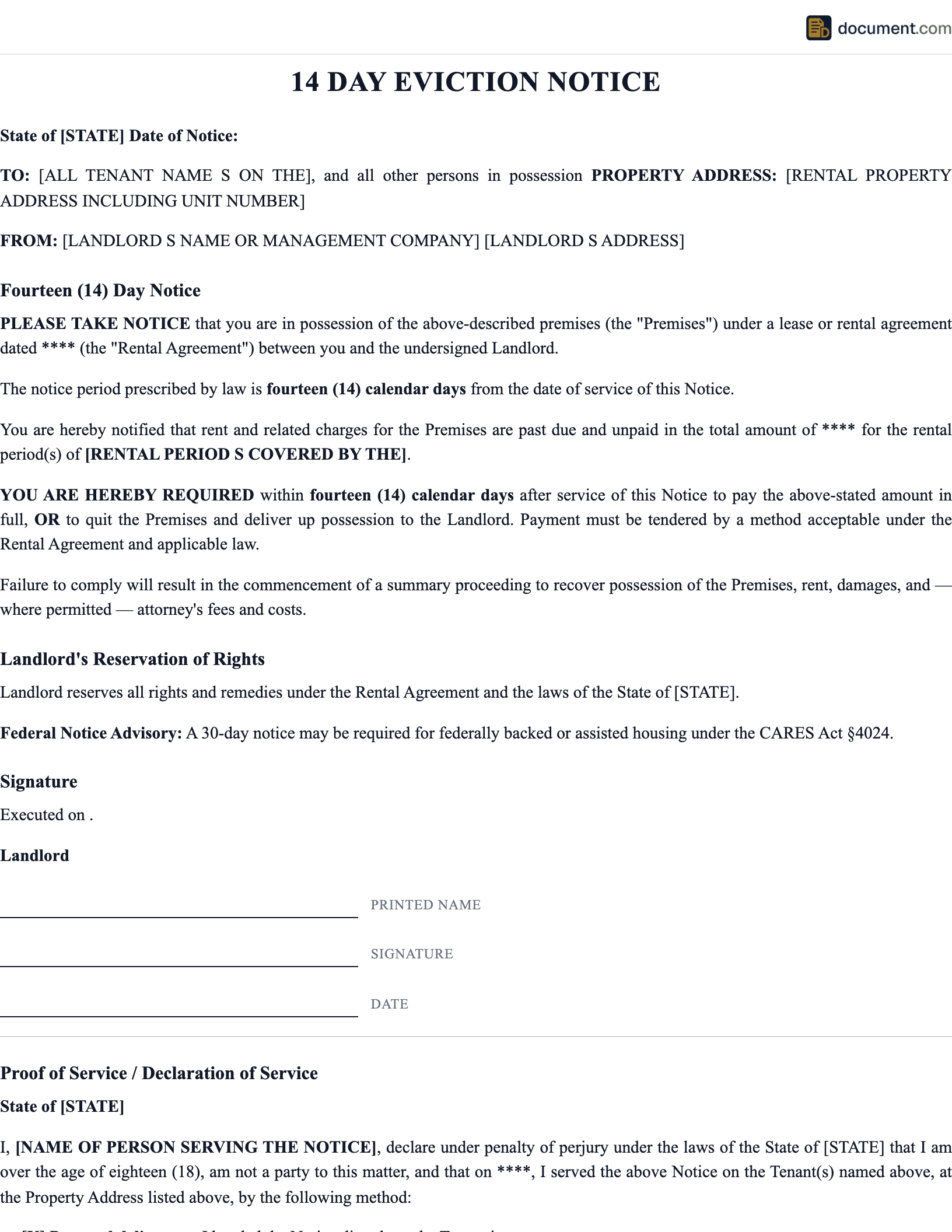
Below is a preview of a North Carolina-compliant eviction notice. The generated document includes all elements required under NC law.
NOTICE TO CURE LEASE VIOLATION
STATE OF NORTH CAROLINA
Per Lease Terms and N.C.G.S. §42-26
TO (TENANT):
Name: [Tenant Full Legal Name]
Address: [North Carolina Property Address]
VIOLATION / GROUNDS:
[Detailed description of violation with dates]
DEMAND
You are in violation of your lease agreement as described above. You must cure this violation or vacate the premises within the period specified. Failure to comply will result in summary ejectment proceedings.