



New Jersey Eviction Notice Overview
New Jersey does not have a standard 14-day eviction notice. The state’s Anti-Eviction Act (N.J.S.A. §2A:18-61.1) severely restricts landlord ability to evict, limiting evictions to specific "good cause" grounds. New Jersey is one of the most tenant-protective states in the country. Notice periods vary from no notice (for non-payment) to 30 days (for most violations). Evictions are filed in the Special Civil Part of the Superior Court.
New Jersey’s Anti-Eviction Act provides tenants with automatic lease renewal rights and limits eviction to enumerated causes including non-payment, habitual lateness, disorderly conduct, lease violations, and owner occupancy. Essex County (Newark), Hudson County (Jersey City), and Passaic County (Paterson) have the highest eviction rates. New Jersey’s system is complex, and landlords must carefully match the correct notice period to the specific "good cause" ground.
No Standard
Statutory minimum
$50–$185
Special Civil Part filing
Written
Notice required
6–12 Wks
Total process
New Jersey’s Anti-Eviction Act Framework
Under the Anti-Eviction Act (N.J.S.A. §2A:18-61.1), landlords can only evict for specified "good cause" reasons, each with its own notice requirement. For lease violations, the landlord typically provides a "Notice to Cease" followed by a "Notice to Quit" if the violation continues. There is no single standard notice period—it depends entirely on the specific ground for eviction.
New Jersey Notice Periods
No notice needed: Non-payment of rent (landlord files directly after rent is late)
Notice to Cease + Notice to Quit: Lease violations
3-day Notice to Quit: Disorderly conduct
1-month Notice to Quit: Habitual late payment (3+ times in 12 months)
18-month Notice to Quit: Owner occupancy conversion
Anti-Eviction Act: All evictions require "good cause" (N.J.S.A. §2A:18-61.1)
Common Violations Addressed by This Notice in New Jersey
- Lease violations that continue after Notice to Cease
- Unauthorized occupants or subletting
- Property damage or waste
- Disorderly conduct affecting neighbors
- Operating businesses without permission
- Habitual late rent payment
New Jersey Legal Requirements
New Jersey courts require strict compliance with notice requirements. A deficient notice will result in dismissal of the eviction case, wasting time and filing fees. Here are the mandatory elements:
- Notice to Cease: For lease violations, first serve a Notice to Cease describing the violation and demanding it stop
- Notice to Quit: If the violation continues, serve a Notice to Quit specifying the ground under the Anti-Eviction Act
- Good Cause Required: Must cite a specific ground from the Anti-Eviction Act
- Written Format: All notices must be in writing
- Tenant Names and Address: Include all tenant names and the full property address
Serving the Notice in New Jersey
Proper service is critical in New Jersey. The method of delivery determines when the notice period starts running and must be documented for court proceedings.
Personal Service
Hand the notice directly to the tenant.
Certified Mail
Send via certified mail with return receipt.
Post on Door
Post on the main entrance if tenant is unavailable.
New Jersey Eviction Timeline
The complete eviction process in New Jersey, from notice to physical removal, follows this general timeline for uncontested cases:
New Jersey Eviction Fees & Costs
Below are the typical costs associated with the eviction process in New Jersey. Fees may vary by county or court location.
| Cost Item | Amount |
|---|---|
| Special Civil Part Filing | $50 – $185 |
| Court Officer Service | $25 – $50 |
| Warrant of Removal | $25 – $50 |
| Attorney Fees | $800 – $3,000 |
Sample New Jersey Eviction Notice
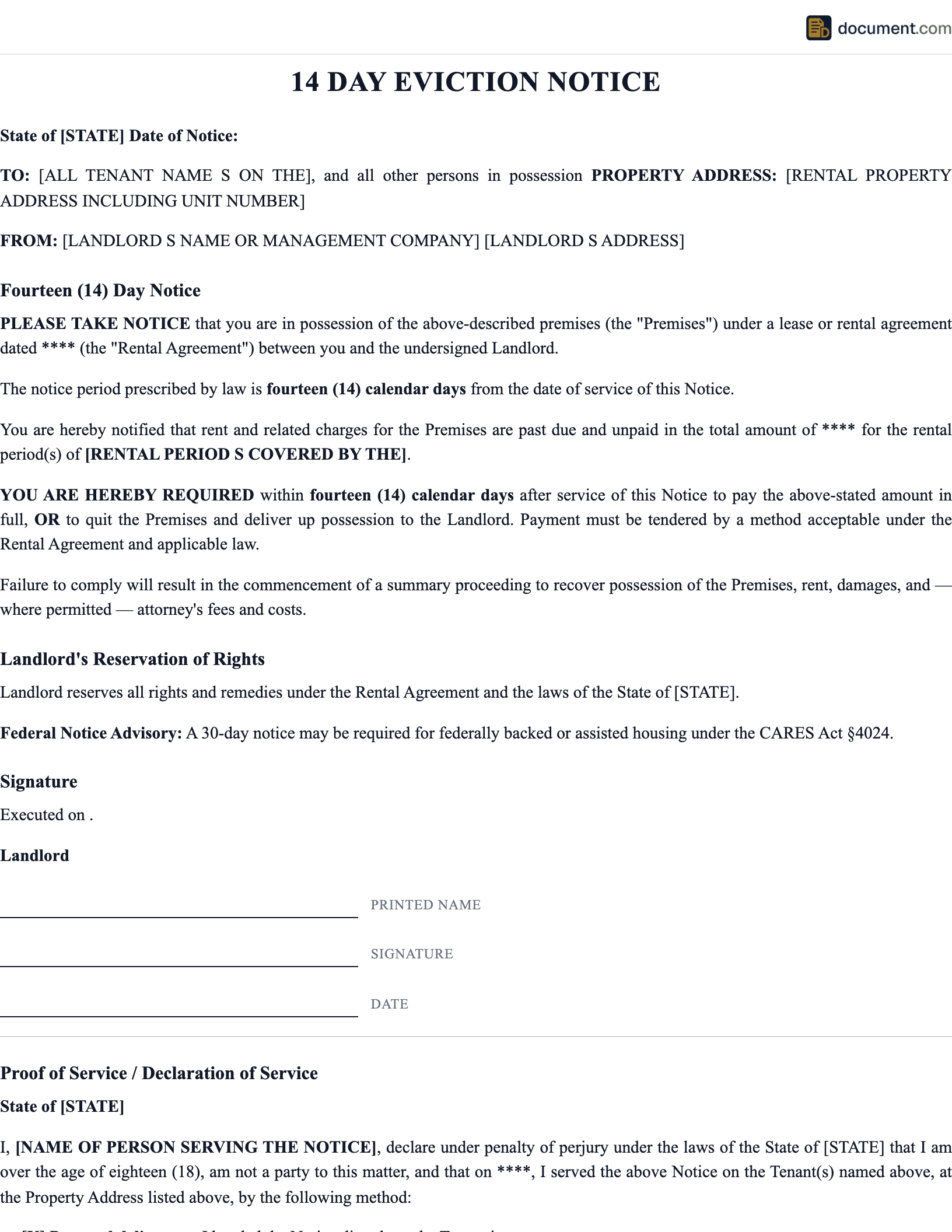
Below is a preview of a New Jersey-compliant eviction notice. The generated document includes all elements required under NJ law.
NOTICE TO CEASE AND DESIST
STATE OF NEW JERSEY
Pursuant to N.J.S.A. §2A:18-61.1
TO (TENANT):
Name: [Tenant Full Legal Name]
Address: [New Jersey Property Address]
VIOLATION / GROUNDS:
[Detailed description of violation with dates]
DEMAND
You are hereby notified to cease and desist from the above violation of your lease agreement. If you fail to comply, a Notice to Quit will be issued and eviction proceedings will be commenced in the Superior Court, Special Civil Part.