



Kansas Eviction Notice Overview
Kansas is a true 14-day cure state under K.S.A. §58-2564(a). The Kansas Residential Landlord and Tenant Act requires landlords to give tenants exactly 14 days to cure a material noncompliance with the rental agreement before the landlord can terminate the tenancy. This makes Kansas one of approximately 14 states that use the 14-day cure period for lease violations, alongside Alabama, Kentucky, Tennessee, and Wisconsin.
Kansas adopted the Residential Landlord and Tenant Act (K.S.A. §58-2540 through §58-2573), which provides a comprehensive framework for residential evictions. Evictions are filed as forcible detainer actions in the District Court of the county where the property is located. Johnson County (Overland Park/Olathe), Sedgwick County (Wichita), Wyandotte County (Kansas City), and Shawnee County (Topeka) handle the highest volumes. Kansas courts strictly enforce the 14-day cure requirement.
14 Days
Cure period
$55–$135
District Court filing
Written
Notice required
4–7 Wks
Total process
Kansas Is a True 14-Day Cure State
Under K.S.A. §58-2564(a), if a tenant commits a material noncompliance with the rental agreement, the landlord must deliver a written notice specifying the acts constituting the noncompliance and stating that the rental agreement will terminate on a date not less than 14 days after receipt unless the breach is remedied within 14 days. If the tenant cures within 14 days, the lease continues. If the same or similar violation recurs within 6 months, the landlord may serve a 14-day unconditional quit notice with no right to cure.
Kansas Notice Periods
14-day cure notice: Material noncompliance with rental agreement (K.S.A. §58-2564(a))
14-day unconditional quit: Repeat violation within 6 months (K.S.A. §58-2564(a))
3-day notice: Non-payment of rent (K.S.A. §58-2564(b))
30-day termination: Month-to-month without cause (K.S.A. §58-2570)
Immediate termination: Drug activity or threats to safety
Common Violations Addressed by This Notice in Kansas
- Unauthorized pets or animals violating lease restrictions
- Unauthorized occupants not on the rental agreement
- Excessive noise or disturbances affecting other tenants
- Failure to maintain the dwelling unit per lease terms
- Operating a business from residential premises without approval
- Parking violations or storing prohibited vehicles/items
Kansas Legal Requirements
Kansas courts require strict compliance with notice requirements. A deficient notice will result in dismissal of the eviction case, wasting time and filing fees. Here are the mandatory elements:
- Written Format: Kansas requires all eviction notices in writing under the RLTA
- Specific Acts: Describe the acts constituting the noncompliance with specificity and reference the lease clause violated
- 14-Day Cure Period: State that the tenant has 14 days to cure or the rental agreement terminates. Include the exact termination date
- Termination Statement: Clearly state that failure to cure will result in termination of the rental agreement
- Landlord Contact: Name, address, and phone number of the landlord or property management company (K.S.A. §58-2545)
Serving the Notice in Kansas
Proper service is critical in Kansas. The method of delivery determines when the notice period starts running and must be documented for court proceedings.
Personal Delivery
Hand the notice directly to the tenant. The 14-day period starts the next day. Use a witness or process server for documentation. This is the strongest method in Kansas District Court.
Certified Mail
Send via USPS certified mail with return receipt requested. The notice is deemed received on the delivery date. Kansas courts accept the return receipt as proof of service.
Post and Mail
If personal service fails, post conspicuously on the main entrance and mail a copy. The notice is considered received when both steps are complete.
Kansas Eviction Timeline
The complete eviction process in Kansas, from notice to physical removal, follows this general timeline for uncontested cases:
Kansas Eviction Fees & Costs
Below are the typical costs associated with the eviction process in Kansas. Fees may vary by county or court location.
| Cost Item | Amount |
|---|---|
| District Court Filing Fee | $55 – $135 |
| Sheriff Service of Process | $25 – $50 |
| Writ of Restitution | $20 – $35 |
| Sheriff Execution | $50 – $100 |
| Attorney Fees (if retained) | $500 – $1,500 |
Sample Kansas Eviction Notice
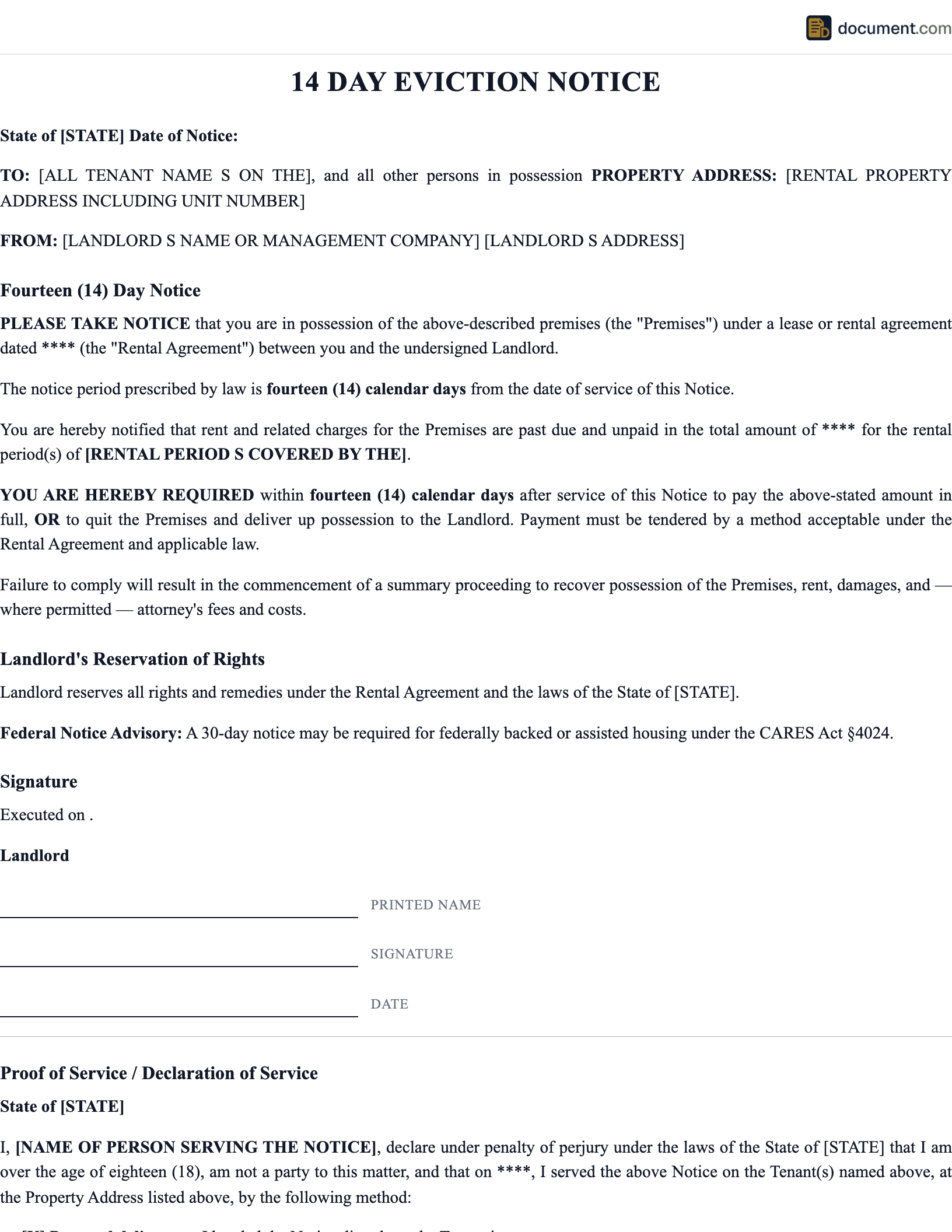
Below is a preview of a Kansas-compliant eviction notice. The generated document includes all elements required under KS law.
14-DAY NOTICE TO CURE OR QUIT
STATE OF KANSAS
Pursuant to K.S.A. §58-2564(a)
TO (TENANT):
Name: [Tenant Full Legal Name]
Address: [Kansas Property Address]
VIOLATION / GROUNDS:
[Detailed description of violation with dates]
DEMAND
You have fourteen (14) days from delivery of this notice to cure the above violation. If you fail to remedy the noncompliance within 14 days (by the date specified above), your rental agreement will terminate and you must surrender possession of the premises.