



Indiana Eviction Notice Overview
Indiana does not specify a fixed notice period for lease violations. Under IC 32-31-1-6, landlords must provide "reasonable" notice before filing for eviction. Indiana courts have generally interpreted "reasonable" as 10–30 days depending on the severity of the violation. There is no 14-day notice in Indiana statute, though 14 days would likely satisfy the reasonableness standard for most violations.
Indiana’s landlord-tenant law is found primarily in IC 32-31 (Landlord-Tenant Relations). The state does not have a comprehensive residential landlord-tenant act like many URLTA states. Evictions are filed as proceedings for possession in Small Claims Court (for claims under $10,000) or Circuit/Superior Court. Marion County (Indianapolis), Lake County (Gary/Hammond), Allen County (Fort Wayne), and Hamilton County handle the highest volumes.
Reasonable
Statutory minimum
$86–$157
Small Claims filing
Written
Notice required
3–6 Wks
Total process
Indiana’s "Reasonable" Notice Requirement
Indiana Code 32-31-1-6 requires landlords to give "reasonable" notice before terminating a tenancy for lease violations. Courts evaluate reasonableness based on the nature and severity of the violation. For minor violations (unauthorized pet, noise), 10–14 days is typically sufficient. For more serious violations (property damage, illegal activity), shorter notice may be deemed reasonable. Using a 14-day notice in Indiana is generally safe and well within the bounds of reasonableness.
Indiana Notice Periods
Reasonable notice: Lease violations (IC 32-31-1-6) — typically 10–30 days
10-day notice: Non-payment of rent (commonly used, though statute says "reasonable")
Immediate termination: Criminal activity or imminent danger
30-day termination: Month-to-month without cause (IC 32-31-1-1)
Common Violations Addressed by This Notice in Indiana
- Unauthorized pets or exceeding pet limits in the lease
- Unauthorized occupants or subletting
- Excessive noise or disturbances affecting other tenants
- Property damage beyond normal wear and tear
- Failure to maintain the unit per lease requirements
- Storing hazardous materials or operating illegal businesses
Indiana Legal Requirements
Indiana courts require strict compliance with notice requirements. A deficient notice will result in dismissal of the eviction case, wasting time and filing fees. Here are the mandatory elements:
- Written Notice: While Indiana law does not explicitly require written notice, all Indiana courts expect it and oral notices are practically unenforceable
- Reasonable Period: Provide a cure period that a court would consider reasonable—14 days is generally safe for most violations
- Violation Description: Describe the specific lease violation and the conduct that must change
- Demand to Cure or Vacate: State that the tenant must remedy the violation or surrender possession within the notice period
- Landlord Information: Include the landlord’s name, address, and contact information
Serving the Notice in Indiana
Proper service is critical in Indiana. The method of delivery determines when the notice period starts running and must be documented for court proceedings.
Personal Delivery
Hand the notice directly to the tenant. Indiana does not have statutory service requirements for pre-filing notices, but personal delivery is the strongest evidence. Use a witness.
Posting and Mailing
Post on the door and mail a copy via first-class or certified mail. Indiana courts accept this combination as adequate notice.
Certified Mail
Send via USPS certified mail with return receipt. The return receipt provides proof of delivery for court.
Indiana Eviction Timeline
The complete eviction process in Indiana, from notice to physical removal, follows this general timeline for uncontested cases:
Indiana Eviction Fees & Costs
Below are the typical costs associated with the eviction process in Indiana. Fees may vary by county or court location.
| Cost Item | Amount |
|---|---|
| Small Claims Court Filing Fee | $86 – $97 |
| Superior/Circuit Court Filing | $130 – $157 |
| Sheriff Service of Process | $30 – $55 |
| Writ of Possession | $25 – $50 |
| Attorney Fees (if retained) | $500 – $2,000 |
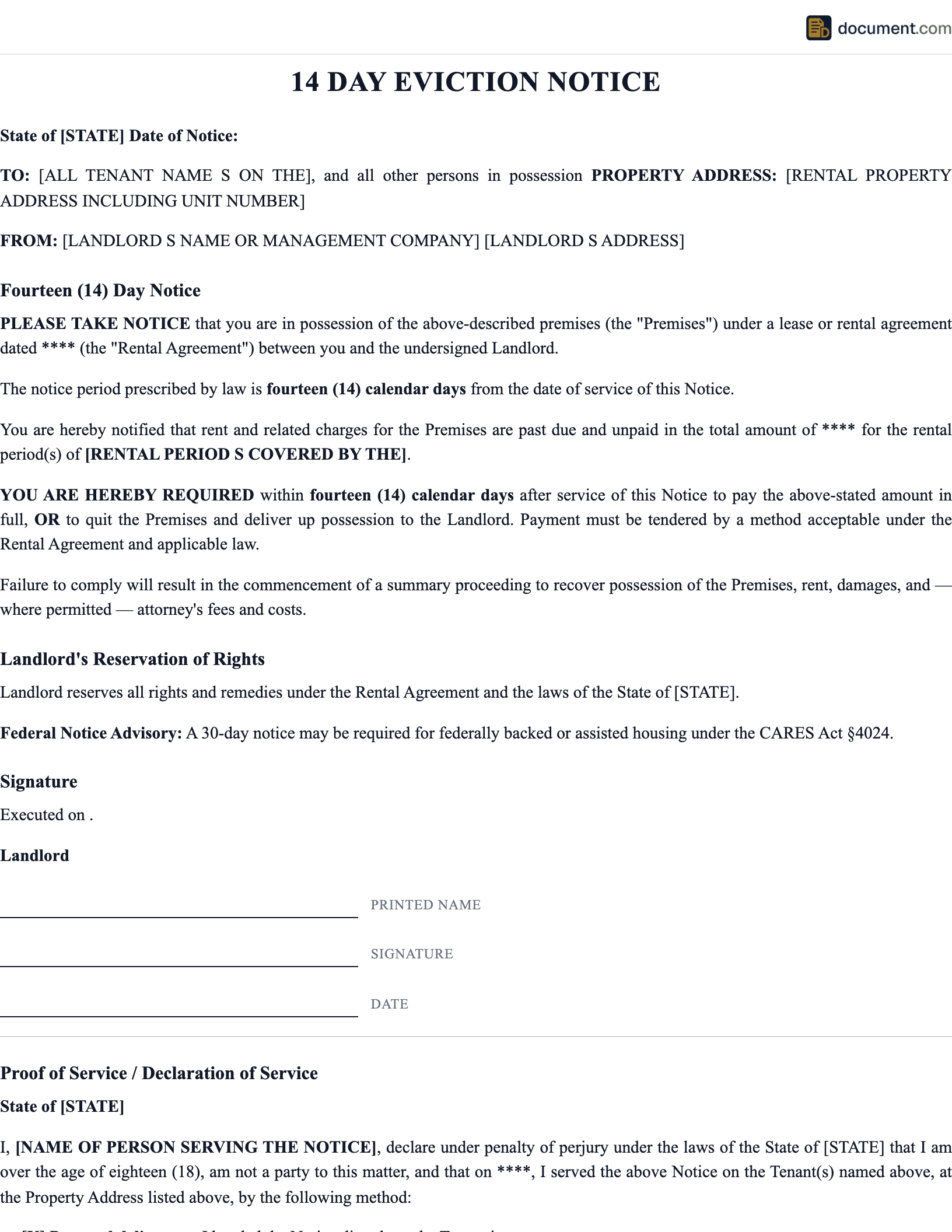
Sample Indiana Eviction Notice
Below is a preview of a Indiana-compliant eviction notice. The generated document includes all elements required under IN law.
NOTICE TO CURE OR VACATE
STATE OF INDIANA
Pursuant to IC 32-31-1-6
TO (TENANT):
Name: [Tenant Full Legal Name]
Address: [Indiana Property Address]
VIOLATION / GROUNDS:
[Detailed description of violation with dates]
DEMAND
You have fourteen (14) days from delivery of this notice to cure the above lease violation. If you fail to remedy the violation within 14 days, your tenancy will be terminated and you must surrender possession. Failure to vacate will result in proceedings for possession being filed in court.