



Hawaii Eviction Notice Overview
Hawaii requires a 10-day notice for material noncompliance under HRS §521-72(a), not 14 days. Hawaii’s Residential Landlord-Tenant Code (HRS Chapter 521) is one of the most tenant-protective in the nation, reflecting the state’s extreme housing costs and limited supply. Evictions (summary possession actions) are filed in District Court and are subject to stringent procedural requirements that favor providing tenants with additional time and mediation opportunities.
Hawaii’s rental market—particularly on Oahu (Honolulu)—has some of the highest rents in the country. The legislature responded with strong tenant protections: mandatory good-faith negotiation in some cases, strict notice requirements, and limits on security deposits. District Courts on Oahu, Maui, Hawaii Island (Big Island), and Kauai handle eviction cases. COVID-era tenant protections in Hawaii were among the longest-lasting nationally. Landlords operating in Hawaii face more procedural hurdles than in most mainland states.
10 Days
Statutory minimum
$155–$265
District Court filing
Written
Notice required
6–12 Wks
Total process
Hawaii Uses 10 Days for Material Noncompliance
Under HRS §521-72(a), when a tenant materially violates the rental agreement or the obligations of HRS §521-51 (tenant obligations), the landlord must deliver a written notice specifying the acts constituting the breach and providing at least 10 days for the tenant to cure. If the tenant fails to cure within 10 days, the landlord may terminate the rental agreement. For non-payment of rent, Hawaii uses a shorter 5-day notice under HRS §521-68.
Hawaii Notice Periods
10-day cure notice: Material noncompliance with rental agreement (HRS §521-72(a))
5-day notice: Non-payment of rent (HRS §521-68)
24-hour notice: Illegal activity or imminent harm to persons or property (HRS §521-69(2))
45-day termination: Month-to-month tenancy without cause (HRS §521-71)
Repeat violations: If same violation recurs within 12 months, shorter notice may apply
Common Violations Addressed by This Notice in Hawaii
- Unauthorized pets (Hawaii has strict quarantine laws making pet-related violations especially significant)
- Unauthorized occupants exceeding the lease’s occupancy limit
- Excessive noise in multi-family buildings or condominiums
- Improper disposal of trash or recycling (Hawaii has strict waste management rules)
- Operating a vacation rental without permits in violation of lease and county ordinances
- Damage to property or common areas beyond normal wear and tear
Hawaii Legal Requirements
Hawaii courts require strict compliance with notice requirements. A deficient notice will result in dismissal of the eviction case, wasting time and filing fees. Here are the mandatory elements:
- Written Format: Hawaii requires all eviction notices in writing under HRS §521-72. Oral notices have no legal effect
- Specific Acts Described: Describe the acts constituting the breach with enough detail for the tenant to understand what must be corrected
- 10-Day Cure Period: State that the tenant has at least 10 days to remedy the noncompliance. Include the exact calendar date for the cure deadline
- Termination Warning: State that failure to cure within 10 days will result in termination of the rental agreement
- Landlord Information: Include the landlord’s name, mailing address, and phone number as required by HRS §521-43
- Copy Retention: Keep a signed copy of the notice for your records—District Court will require proof of notice
Serving the Notice in Hawaii
Proper service is critical in Hawaii. The method of delivery determines when the notice period starts running and must be documented for court proceedings.
Personal Delivery
Hand the notice directly to the tenant. This is the strongest service method in Hawaii District Court. The 10-day period starts the next day after delivery. Bring a witness for verification.
Registered or Certified Mail
Send via USPS certified or registered mail to the tenant’s address at the premises. Hawaii courts accept the return receipt (green card) as proof of service. Keep tracking information.
Post and Mail
If personal service fails after reasonable attempts, post the notice on the main entrance of the dwelling and mail a copy by first-class mail. This is the last-resort method under HRS §521-72.
Hawaii Eviction Timeline
The complete eviction process in Hawaii, from notice to physical removal, follows this general timeline for uncontested cases:
Hawaii Eviction Fees & Costs
Below are the typical costs associated with the eviction process in Hawaii. Fees may vary by county or court location.
| Cost Item | Amount |
|---|---|
| District Court Filing Fee | $155 – $265 |
| Sheriff Service of Process | $50 – $100 |
| Writ of Possession | $40 – $75 |
| Sheriff Lockout Execution | $75 – $150 |
| Attorney Fees (Honolulu market) | $1,500 – $4,000 |
Sample Hawaii Eviction Notice
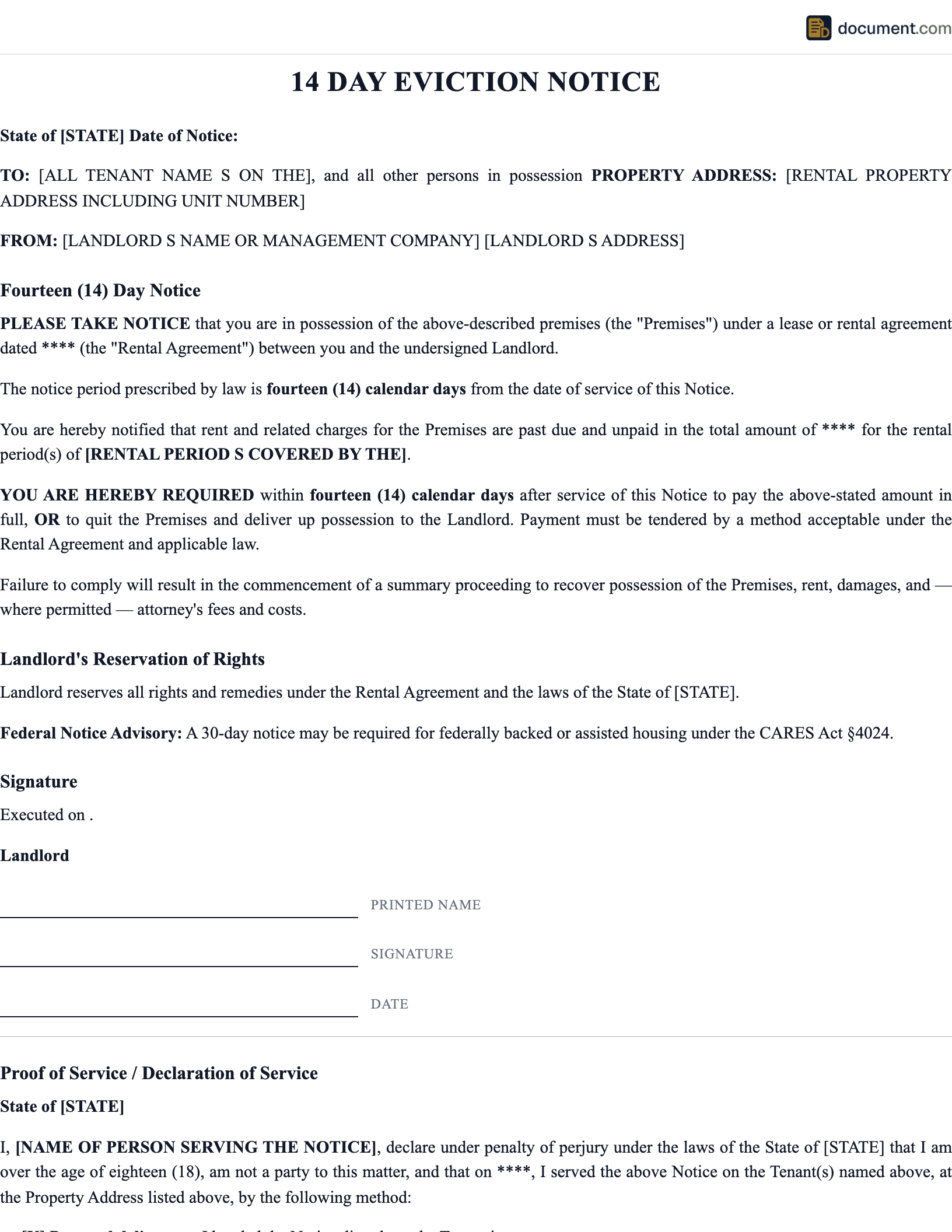
Below is a preview of a Hawaii-compliant eviction notice. The generated document includes all elements required under HI law.
10-DAY NOTICE OF MATERIAL NONCOMPLIANCE
STATE OF HAWAII
Pursuant to HRS §521-72(a)
TO (TENANT):
Name: [Tenant Full Legal Name]
Address: [Hawaii Property Address]
VIOLATION / GROUNDS:
[Detailed description of violation with dates]
DEMAND
You are hereby notified that you are in material noncompliance with your rental agreement as described above. You have ten (10) days from delivery of this notice to cure the above noncompliance. If you fail to remedy the breach within 10 days, your rental agreement will be terminated and summary possession proceedings will be commenced in District Court.