



Georgia Eviction Notice Overview
Georgia has no statutory cure period for lease violations. Under O.C.G.A. §44-7-50, a landlord can demand possession immediately upon any breach of the rental agreement. Georgia’s dispossessory proceeding (the state’s term for eviction) can be initiated with minimal notice—making it one of the most landlord-friendly eviction frameworks in the country. Cases are filed in the Magistrate Court of the county where the property is located.
Georgia does not have a comprehensive residential landlord-tenant act comparable to URLTA states. The primary eviction statutes (O.C.G.A. §44-7-49 through §44-7-61) provide a streamlined process: the landlord files a dispossessory affidavit in Magistrate Court, the tenant receives a summons with only 7 days to answer, and if the landlord prevails, a writ of possession is issued. Fulton County (Atlanta), DeKalb County, Gwinnett County, and Cobb County Magistrate Courts handle the highest volume of eviction filings statewide.
No Cure
Statutory minimum
$58–$80
Magistrate Court filing
Written
Notice required
2–4 Wks
Total process
Georgia Has No Statutory Cure Period for Lease Violations
Unlike states that require a 14-day, 10-day, or even 7-day cure period, Georgia law does not mandate any cure opportunity before a landlord can file for eviction. O.C.G.A. §44-7-50 allows a landlord to demand possession whenever the tenant has breached any term of the lease. While a landlord can voluntarily include a 14-day cure period, there is no statutory requirement to do so. Some leases contain contractual cure provisions, in which case the landlord must honor the lease terms.
Georgia Notice Periods
No statutory cure period: Lease violations may trigger immediate demand (O.C.G.A. §44-7-50)
Immediate demand for possession: Landlord may file after any breach
60-day notice: Required for termination of month-to-month without cause
Lease terms govern: Any cure period is contractual, not statutory
Criminal trespass: Available if tenant refuses to leave after valid termination
Common Violations Addressed by This Notice in Georgia
- Any violation of any lease term can trigger dispossessory proceedings immediately
- Unauthorized pets, occupants, or subletting without written consent
- Property damage, noise complaints, or nuisance behavior affecting neighbors
- Non-payment of rent (no separate notice type required in Georgia)
- Holdover after lease expiration or termination
- Criminal activity on the premises
Georgia Legal Requirements
Georgia courts require strict compliance with notice requirements. A deficient notice will result in dismissal of the eviction case, wasting time and filing fees. Here are the mandatory elements:
- Written Demand Recommended: While not strictly required by statute, a written demand for possession is strongly recommended and is expected by most Magistrate Court judges
- Tenant Identification: Name all tenants on the lease and provide the full property address including unit number
- Breach Description: Identify which lease provision has been breached, though Georgia law does not require extensive detail
- Demand to Vacate: State clearly that the tenant must vacate the premises immediately or by a specified date
- Date and Signature: Date the notice and sign it as the landlord, owner, or authorized property management agent
Serving the Notice in Georgia
Proper service is critical in Georgia. The method of delivery determines when the notice period starts running and must be documented for court proceedings.
Personal Delivery
Hand the demand directly to the tenant. Georgia does not require a waiting period after delivery—the dispossessory affidavit can be filed immediately. Use a witness to verify delivery.
Posting on Door
Affix the notice to the front door if the tenant is not available. Photograph the posted notice with a timestamp for evidence.
Certified Mail
Send via USPS certified mail with return receipt for additional documentation. While not required, this helps establish that the tenant received notice of the breach.
Georgia Eviction Timeline
The complete eviction process in Georgia, from notice to physical removal, follows this general timeline for uncontested cases:
Georgia Eviction Fees & Costs
Below are the typical costs associated with the eviction process in Georgia. Fees may vary by county or court location.
| Cost Item | Amount |
|---|---|
| Magistrate Court Filing Fee | $58 – $80 |
| Marshal/Sheriff Service | $25 – $50 |
| Writ of Possession | $25 – $50 |
| Marshal Lockout Execution | $50 – $100 |
| Attorney Fees (if retained) | $400 – $1,200 |
Sample Georgia Eviction Notice
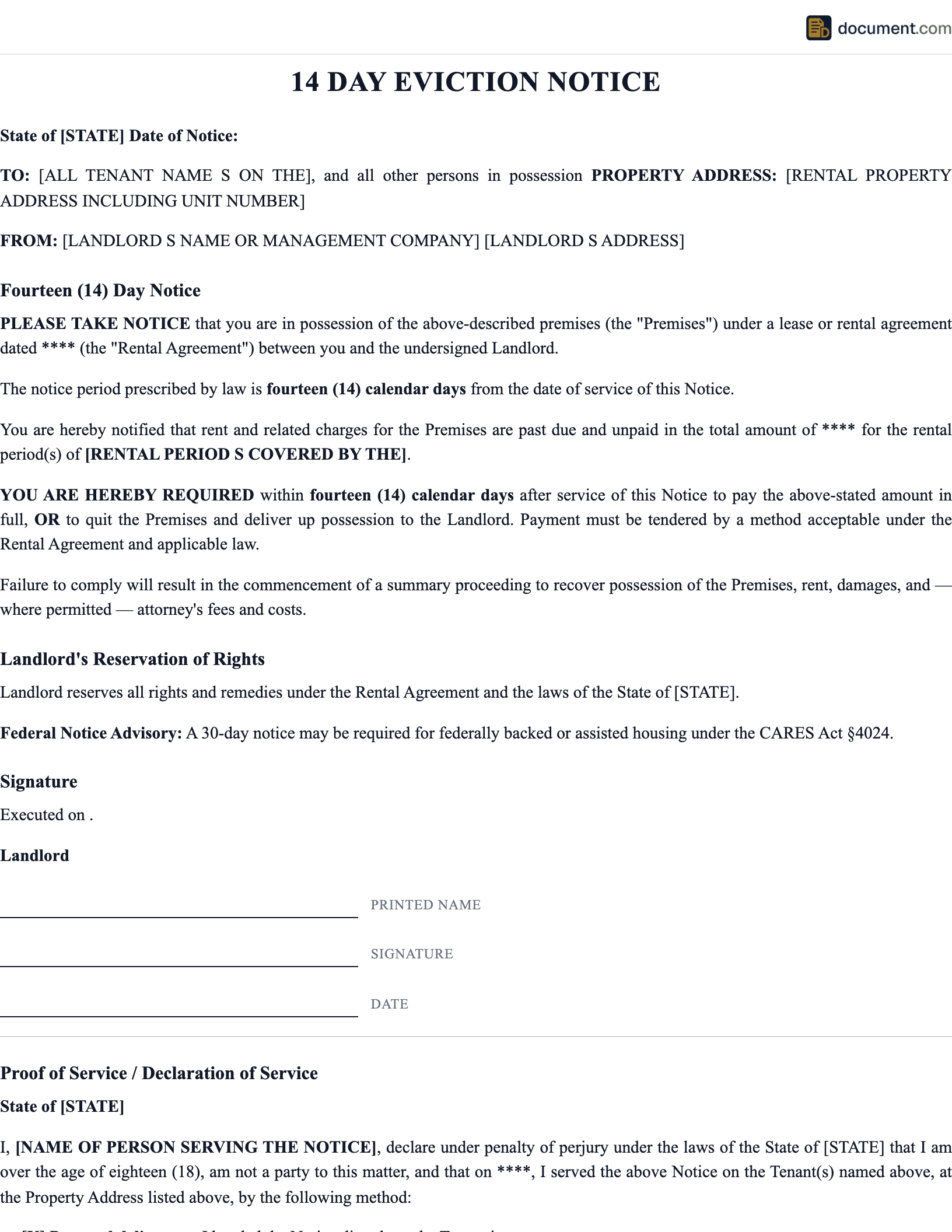
Below is a preview of a Georgia-compliant eviction notice. The generated document includes all elements required under GA law.
DEMAND FOR POSSESSION OF PREMISES
STATE OF GEORGIA
Pursuant to O.C.G.A. §44-7-50
TO (TENANT):
Name: [Tenant Full Legal Name]
Address: [Georgia Property Address]
VIOLATION / GROUNDS:
[Detailed description of violation with dates]
DEMAND
You are hereby demanded to immediately surrender possession of the above-described premises. You have violated the terms of your rental agreement as described above. Failure to vacate will result in the filing of a dispossessory proceeding in the Magistrate Court of the county in which the property is located.