



Colorado Eviction Notice Overview
Colorado requires a 10-day notice to cure for material lease violations under C.R.S. §38-12-902(1). The 14-day notice period does not exist in Colorado statute. Colorado significantly reformed its eviction laws in 2023 with HB 23-1120, expanding the previous 3-day notice to 10 days, adding mandatory mediation in some counties, and increasing tenant protections. Evictions are filed as Forcible Entry and Detainer (FED) actions in County Court.
Before HB 23-1120 took effect in October 2023, Colorado was a 3-day notice state for both non-payment and lease violations. The new 10-day period applies to both scenarios, making Colorado’s eviction timeline significantly longer than neighboring states like Wyoming (3 days) or Utah (3 days). Denver, Boulder, and other Front Range cities may have additional local tenant protections. The Colorado Division of Housing provides mediation services for landlord-tenant disputes.
10 Days
Statutory minimum
$85–$120
County Court filing
Written
Notice required
4–6 Wks
Total process
Colorado’s 10-Day Cure Period (Post-HB 23-1120)
Under C.R.S. §38-12-902(1), the landlord must give the tenant written notice specifying the acts constituting the noncompliance and stating that the rental agreement will terminate on a date not less than 10 days after receipt of the notice unless the breach is remedied. This provision replaced the former 3-day period. The 10-day cure applies to both lease violations and non-payment of rent.
Colorado Notice Periods
10-day notice to cure: Material lease violations (C.R.S. §38-12-902(1))
10-day notice to pay or quit: Non-payment of rent (C.R.S. §38-12-902(1)(b))
3-day notice: Substantial violation involving health and safety (C.R.S. §38-12-902(3))
21-day termination: Month-to-month without cause (C.R.S. §38-12-902(2))
HB 23-1120 requirements: Landlord must include rental assistance information in notice
Common Violations Addressed by This Notice in Colorado
- Unauthorized pets or animals exceeding lease limits
- Unauthorized occupants or subletting to unapproved individuals
- Excessive noise violating quiet enjoyment provisions
- Failure to maintain the unit per lease terms and Denver building codes
- Marijuana cultivation exceeding permitted plant count or violating lease smoking rules
- Operating a business from residential premises without landlord approval
Colorado Legal Requirements
Colorado courts require strict compliance with notice requirements. A deficient notice will result in dismissal of the eviction case, wasting time and filing fees. Here are the mandatory elements:
- Written Notice: All eviction notices must be in writing under Colorado law. Oral notices are not enforceable
- Specific Violation: Describe the breach with enough detail for the tenant to understand what must be corrected. Reference the lease clause violated
- 10-Day Cure Period: State that the tenant has at least 10 days to cure. Include the exact termination date if not cured
- Right to Cure Statement: Under HB 23-1120, inform the tenant of their right to remedy the violation within the notice period
- Rental Assistance Information: Include information about available rental assistance programs as required by HB 23-1120
- Landlord Information: Include landlord or property manager name, address, and contact information
Serving the Notice in Colorado
Proper service is critical in Colorado. The method of delivery determines when the notice period starts running and must be documented for court proceedings.
Personal Delivery
Hand the notice directly to the tenant. The 10-day period starts the next day. Use a witness or professional process server. This is the preferred method in Colorado County Courts.
Post and Mail
If personal delivery fails, post the notice on the main entrance in a sealed envelope and mail a copy via first-class mail. Under Colorado law, add 3 days for mailing. Take a timestamped photograph of the posted notice.
Certified Mail
Send via USPS certified mail with return receipt requested. The notice is deemed delivered upon receipt or refusal. The return receipt is strong evidence in County Court.
Colorado Eviction Timeline
The complete eviction process in Colorado, from notice to physical removal, follows this general timeline for uncontested cases:
Colorado Eviction Fees & Costs
Below are the typical costs associated with the eviction process in Colorado. Fees may vary by county or court location.
| Cost Item | Amount |
|---|---|
| County Court FED Filing Fee | $85 – $120 |
| Sheriff Service of Process | $30 – $60 |
| Private Process Server | $50 – $100 |
| Writ of Restitution | $25 – $50 |
| Sheriff Lockout Execution | $75 – $150 |
| Attorney Fees (if hired) | $800 – $2,500 |
Sample Colorado Eviction Notice
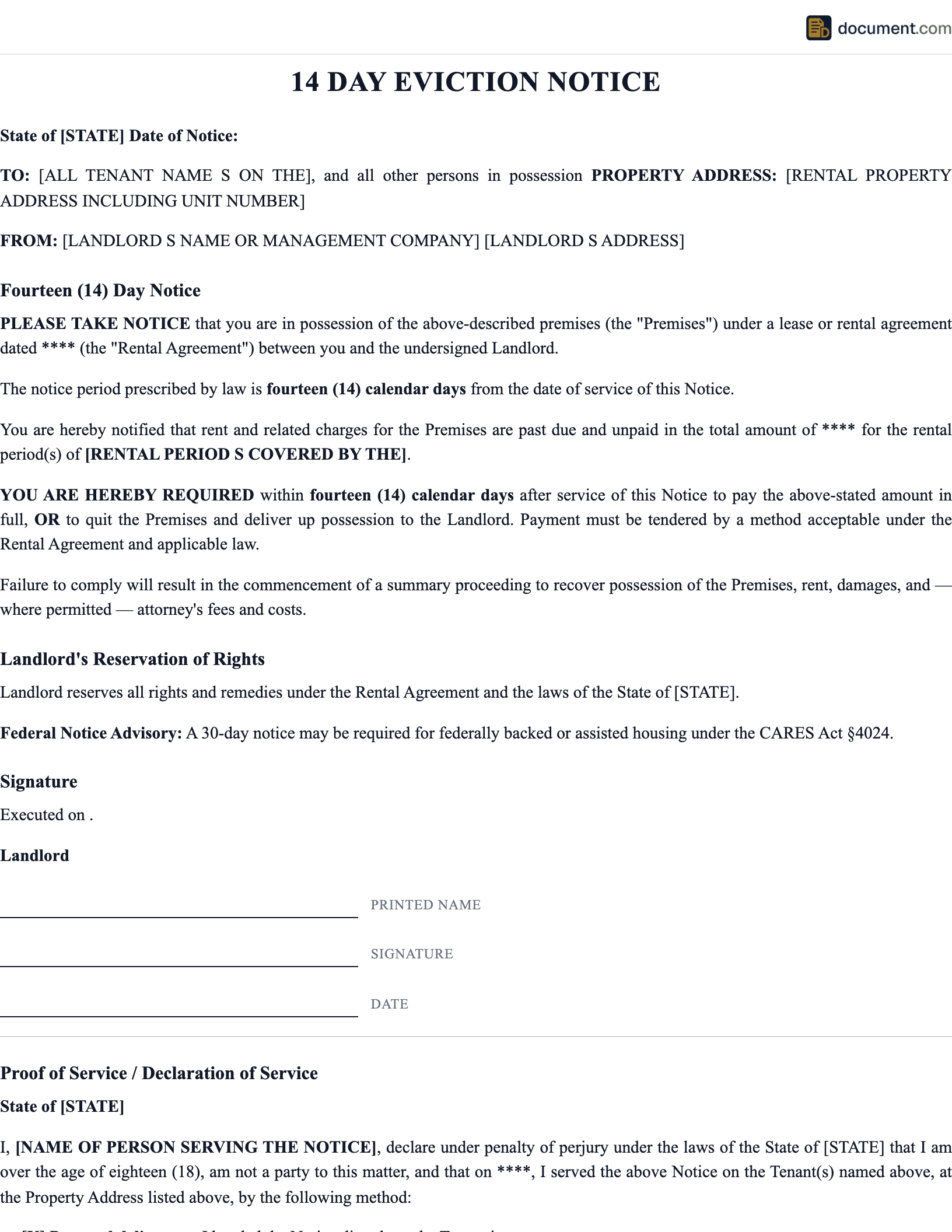
Below is a preview of a Colorado-compliant eviction notice. The generated document includes all elements required under CO law.
10-DAY NOTICE TO CURE OR VACATE
STATE OF COLORADO
Pursuant to C.R.S. §38-12-902(1)
TO (TENANT):
Name: [Tenant Full Legal Name]
Address: [Colorado Property Address]
VIOLATION / GROUNDS:
[Detailed description of violation with dates]
DEMAND
You have ten (10) days from delivery of this notice to remedy the above violation. If you fail to cure by the date specified above, your rental agreement will terminate and you must vacate the premises. You may be eligible for rental assistance—contact the Colorado Division of Housing at 1-800-866-7685.